




Vertical milling machines have become the icing on the cake for contemporary manufacturing, bolstering industries toward precision and efficiency. Equipment noted for its versatility and accuracy is rarely applied in the manufacturing of complex components for the aerospace, automotive, and electronics sectors. So, how do they work, and why has this become central to manufacturing today? This article delves into the workings and mechanics of vertical milling machines, examining their key features, operations, and benefits to production after the installation of aftermarket vertical mill cutters. Whether you are a machinist or someone seeking knowledge about manufacturing technology, this guide will clear the fog from your eyes regarding vertical milling machines and the future of manufacturing innovation.
Understanding the Vertical Milling Machine

What Is a Vertical Milling Machine?
The vertical milling machine is careered with the best machine in terms of versatility in manufacturing and machining. The cutting tool is held in the vertical spindle and moved along the Z-axis. It can cut, drill, and form pretty much anything-precision cutting action on plastics, metals, or wood. Currently, brushing up CNC technology is adventured by vertical mills.
Universal vertical CNC milling machines are chosen by many manufacturers primarily for their accessibility and ease of operation, as they ensure the highest level of visibility for accurate work. Elaborate or tiny work is more straightforward to carry out. These milling machines also accommodate an extensive set of attachments and cutting tools, allowing flexibility for manufacturing purposes. Design improvements have also been considered for some vertical mills in terms of energy efficiency, shorter production time, and reliability, the reason why they form the heart of the automotive, aerospace, finely engineered instrument, and woodworking industries.
Key Components of a Vertical Milling Machine
A vertical milling machine comprises several components essential to its operation and accuracy. Below is a detailed description of the essential parts:
- Column and Base: The column and base work together to provide foundational support for the machine, offering stability and a robust housing for vital components, such as the motor and drive system. This foundation further ensures that during milling, vibration is minimized and machining accuracy is maintained.
- Knee: As a vertically adjustable member supporting the saddle and table, the knee moves upward and downward along the column to adjust the working height. This arrangement provides flexibility for a variety of machining operations and workpiece dimensions.
- Saddle: This is mounted on the knee and allows the table to move horizontally, perpendicular to the spindle axis. This feature enables the operator to make accurate cuts and exert greater control over workpiece positioning.
- Table: The table typically holds the workpiece, usually through a fixture or vice. It moves in two directions, X and Y, thus facilitating intricate machining patterns with ease. Power feed systems assisted by the CNC carry out the movement of the table, thus carrying out the cutting activity very efficiently.
- Spindle: It is the most ancient and prominent segment of the machine that holds the cutting tool and rotates it at a very high speed. It is driven by a motor at various speeds for different materials and types of cuts. As the spindle is vertical, it cuts downward very precisely.
- Quill: The quill moves the spindle up and down to adjust the cutting depth from the surface of the workpiece. It comes handy for secondary operations such as drilling and slot cutting that add versatility to machining jobs.
- Head: The head is the region where the motor, spindle, and other control systems are housed. The head can be tilted or swiveled to make angled cuts, and a wide range of other operations can be performed. Inserting C-axis controllers and advanced motors in modern heads has promoted better accuracy and efficiency.
- Control Panel: Modern vertical milling machines typically feature numerical control or digital-readout interfaces, integrated into a control cabinet. Through these systems, operators can supervise dimensions, speed, and positioning, ensuring that machining tasks, even in the most complex cases, are executed with great accuracy and consistency.
Together, these components constitute the vital ingredients that make the vertical milling machine ingenious in manufacturing and engineering: combined precision, adaptability, and sturdy durability to handle various material processing tasks effectively. CNC capability with efficient motors is some of the design innovations that continuously push the performance boundaries of these milling machines.
Differences Between Vertical and Horizontal Mills
| Aspect | Vertical Mills | Horizontal Mills |
|---|---|---|
| Spindle Orientation | Vertically oriented spindle | Horizontally oriented spindle |
| Primary Applications | Surface profiling, slot cutting, drilling | Large, heavy materials requiring deep cuts |
| Cutter Types | Smaller end mill-size cutters | Larger cutting tools or multiple tools on shaft |
| Size & Cost | More compact and less expensive | Larger and more expensive |
| Best For | Smaller workshops, intricate detailed work | Industrial-scale production, heavy-duty operations |
The distinct vertical and horizontal milling machines are different; while they share design concepts and operation principles, the respective working of these machines differs, thereby intending different manufacturing requirements. The main difference between the two is the axis of the spindle. A vertical milling machine has a spindle mounted vertically so that the cutting tool can move up and down directly. Many times, the vertical mill is used for surface profiling, slot cutting, and drilling, thus being very versatile for intricate or detailed work. On the contrary, in case of horizontal milling machines, the axes of the spindle lay horizontally, with cutters working sideways on the material. It is most suitable for large, heavy work material programs requiring deep cuts and high production rates.
The cutter types present another distinct character that differentiates the two. Vertical mills typically use cutters smaller than the end mill-size cutters to deliver precision work, whereas horizontal milling employs larger cutting tools or multiple tools mounted on the shaft, which are simultaneously operative, thereby facilitating speed and efficiency for larger projects. Additionally, the horizontal mills feature heavy-load-supporting arbors, making them ideal for more demanding machining operations.
From a commerce viewpoint, the vertical mill, being compact and less expensive, is suitable for smaller workshops. The usually larger and more costly horizontal mill will provide a better stability and throughput for industrial-scale production. Both types of mills have recently undergone technological advancements, CNC being one of them; the system, therefore, has been enable to perform certain motions with greater accuracy and repeatability and with more complex pattern executions. The choice is to be made depending upon the design, material, or precision, etc., and hence the process manufacturers must understand these differences for optimization purposes.
How a Vertical Milling Machine Works

The Milling Process Explanation
Milling is considered an operation machining. In this process, the material is considered as ore, and a rotating tool is used to cut the material into the preferred form by the user. A vertical milling machine, in general, implies that the spindle is oriented vertically, permitting feed motion to occur in a direction perpendicular to the surface of the standard fixture table. This type of work is generally of precise nature-so as to align drilling, slotting, and cutting flat surfaces.
With the latest CNC control system, operators on CNC vertical milling machines can program and perform highly detailed and repeatable patterns, with manual intervention reduced to a bare minimum. This extends the machine’s micrometer-level precision to support applications in industries where the fabrication of intricate components, such as those in aerospace and electronics, is required.
The feed rate, cutting speed, and type of cutting tool must be set properly because their selection is all dependent on the material. Statistically, it has been proven that production is increased when these parameters are optimized, including tool life. The use of good quality materials such as carbide for cutting tools will also result in greater durability and accuracy when working at higher speeds. Securing all other factors provides proof for the competence and versatility of vertical milling in modern industries.
Role of CNC For Vertical Milling Machines
Modern CNCs have brought major changes in vertical milling operations. High precision is ensured, coupled with good production rates and proper versatility; these could never be achievable with manual operations. CNCs have removed the manual intermediate setting of the tool by the woodworker. Measurements were largely taken up to a fraction of a millimeter due to such technology. The CNC system also provides another kind of middle procedure where simultaneous cutting in different axes makes complex designs and cuts.
Modern CNC vertical milling machines offer real-time monitoring, adaptive feed rates, and automatic tool changers, all of which drastically increase productivity. In adaptive feed rate technology, cutting conditions are optimized in real-time to minimize tool wear while maintaining a certain level of performance. Some statistics even suggest that the use of CNC can lead to a 30% increase in operational efficiency and a significant reduction in waste, which, in turn, contributes to sustainable manufacturing.
Beside this, there seems a data collection and a performance analysis mechanism by smart sensing with IoT integration into the system. Based on the data that they had, manufacturers would get concrete evidence of cause for establishing improvements to processes, reduction in downtime, and keeping the quality from drifting in consistency of the product. This way of working would maintain CNC vertical milling with the imperious accuracy and scalability needed by aerospace, automotive, and electronics manufacturing.
Manual versus CNC Milling: A Comparative Analysis
| Factor | Manual Milling | CNC Milling |
|---|---|---|
| Control Method | Direct operator control | Computer-controlled automation |
| Precision | Prone to human error | High precision and consistency |
| Setup Cost | Lower initial investment | Higher setup costs |
| Production Speed | Time-consuming | Faster production times |
| Best For | Small jobs, prototypes, tight budgets | Mass production, complex geometries |
| Skill Requirements | Manual machinist skills | Programming knowledge required |
The differences, advantages, and disadvantages of manual and CNC milling revolve around the fact that one existed to accommodate distinct operational requirements. Manual milling is a direct operation in which the machinist controls the machine for all cuts and adjustments. This is more flexible for small jobs and detailed work and is less expensive to set up. However, it is time-consuming and prone to human error, which renders it inefficient in large or fairly heavy jobs where accuracy is of the utmost importance.
Conversely, CNC milling utilizes computerized systems to act as agents for cutting. This way, it can produce with precision and consistency that usually fit mass manufacturing or working with intricate details of multi-axis geometry. CNC machines reduce errors caused by the operator, providing higher repeatability and thereby reducing production time. Now, all said and done, increased setup costs come with the price of these advancements; programming skills are required, and one must invest in the machines.
For example, in industries that require tight tolerances like aerospace and certain medical device manufacturing, CNC milling is preferred for its precision and speed. In manual milling, this would usually be cheaper or when one wants to tweak this idea with a bit of human intervention. The usual parameters affecting the decision for CNC milling or manual milling include scale of production, budgetary constraints, and design complexity.
Applications of Vertical Milling Machines in Manufacturing

Key Instrument of Precision Engineering
Since very precise and demanding operations are carried out using these machines, they are paramount in the field of ultra-precision engineering. The machines mill unusual shapes, slots, holes, and grooves according to the designs and ensure accurate copying or repeatability as per the production batch. In tandem with the evolution of milling, the modern vertical mills have incorporated features such as digital read-outs, CNC operations, and many more that greatly improve the efficiency and accuracy of the machine. Used in aerospace, automotive, and medical sectors, this machinery is geared to final products that require the highest quality standards since even the smallest variation in measurement could threaten performance and safety standards. Hence, the prestigious versatility combined with the precision is what made vertical milling machines apt for manufacturers who are on the fast track toward innovation yet capable of standing on the backbone of tried-and-tested methods in cut-throat competition.
Industries That Benefit from Vertical Milling
Industries prefer vertical milling machines because of their versatility and precision, which can assert more intricate production requirements. Being part of the aerospace industry, these milling machines must generate parts that are extremely complicated with very tight specifications and safety requirements: engine parts, turbine blades, and structural members. On the other hand, for the automotive industry, these types of milling machines are used to manufacture gear systems, engine housings, and suspensions so they are installed into performance vehicles with the utmost reliability.
From a medical standpoint, vertical milling machines have been given truly due importance for manufacturing surgical instruments, prosthetics, and orthopedic implants of utmost precision. Similarly, the machines are used for mounting enclosures, heat sinks, and connectors of new-age equipment in electronics. This shows that even in the energy sphere, vertical milling machines contribute to the sustainable technology, being engaged with renewable energy systems in manufacturing turbine rotors and housing parts.
The industries depend on these vertical milling machines not only for their precision and efficiency but also for their ability to machine a diverse range of materials, including alloys, plastics, and composites. With such diverse applications, the vertical milling machine undoubtedly plays a significant role in enhancing innovations and the quality of products across many industries.
Uses of the Vertical Milling Machines
These mills have been utilized by myriad industries and applications, the mills providing precision, variety, and flexibility. These machines do anything from manufacturing very high-precision parts such as gears, molds, or custom-made metal or plastic components. Complex designs must be created with impeccable precision using the vertical mill in aerospace. These turbines scores and the structural components need to be manufactured with stringent tolerances.
Another foremost use in the automotive domain: Vertical mills produce engine parts, transmission components, and custom fixtures. It builds rapidly through prototyping and the efficient production of high-quality parts, due to the industry’s exacting nature. They can be a good source of dies for injection molding with detailed features and an excellent finish.
Vertical milling machines are then utilized in the medical field to manufacture surgical instruments, prosthetic devices, and other precision tools. Due to their high level of control and adaptability, they can manufacture complex, smaller parts that are crucial to the medical field. Regarding such flexibility, the machine has found its way into the energy sector for producing parts for renewable energy technologies, such as components for wind turbines and solar panel mounts.
These days, the vertical milling machines have found their place in various industries with unmatched accuracy, high precision, efficiency, and supporting the emerging frontiers of technology. These capabilities demonstrate that they are the backbone of modern manufacturing and are continually evolving to cater to modern-day demand trends.
Advantages and Limitations of Vertical Milling Machines

Advantages of Using a Vertical Mill
There are several advantages that vertical mills have, and these make an essential tool choice in precision machining and manufacturing:
- Accuracy and Precision: Vertical mills are known for their exceptional accuracy in cutting and drilling. Its upright spindle orientation enables the controlled cutting, drilling, and shaping of materials to suit complicated designs and delicate components.
- Ease of Operation: These mills are simpler to set up, making them easier to use for machinists of varying proficiency levels. The design of these mills allows the operator to have a clear view of the workpiece and cutting tools, leading to enhanced control and fewer errors.
- Versatility in Application: Irrespective of whether it is metals, plastics, or composite materials, vertical mills are engineered to meet the varied needs of the manufacturing sector. Typical applications involve slotting, cutting, boring, and die sinking, which serve equally essential functions in aerospace, automobile manufacturing, construction, and electronics.
- Cost-Effectiveness: Unlike horizontal mills, vertical mills usually tend toward a low initial cost and maintenance. Their user-friendliness, combined with flexibility, keeps running costs low while maintaining constant performance.
- Compact Design: Vertical milling machines are typically smaller in size, making them ideal for smaller workshops and spaces with limited space. Vertical milling tends toward the compact side without sacrificing functionality and sometimes is integrated with advanced technology to improve production.
- Evolution of CNC Technology: Importantly, modern vertical mills equipped with a CNC system maximize efficiency and productivity in a working environment. With automation and pre-programmed instructions, operators perform complex jobs that require manual input levels from very low to none. This guarantees repeatable precision and faster production time.
With unparalleled accuracy, operational efficiency, and versatility, vertical milling machines continue to hold a potent status in meeting the demands of modern manufacturing processes. From simple prototyping to full-scale production, these tools are behind almost every innovation movement and growth in various sectors.
Challenges Related to Vertical Milling
Few notable advantages exist while using vertical milling machines, yet being placed at the rear end, some problems must undergo a resolution by manufacturers to maintain optimum efficiency. Handling complex geometry stands forth an apparent difficulty. Generally, more complex shapes usually require more complicated tooling or other machining processes and do not lend themselves well to vertical mills. Further, tool wear can be quite an issue while machining hard materials and can cost in terms of frequent and long maintenance periods, eventually incurring great downtime and operating costs.
Another challenge arises from the limited capability of handling large or oddly shaped workpieces. Due to the vertical orientation of the spindle, working on parts that are extremely large or heavy will put extra strain on the machine setup or the arrangement of another fixture and clamp. This provides almost no flexibility toward handling other kinds of manufacturing demands. Precision is also compromised due to operator errors during manual positioning or a fault in the machine’s calibration. Thus, regular training and maintenance of the equipment become critical.
Material limitations can also be a concern, such as the extreme heat generated during machining metals like titanium or stainless steel, which compromises tool life and surface finish quality. A few ways to resolve these issues would be the use of high-performance cooling techniques, cutting-edge tools, and CAD/CAM integration to speed up the processes and thereby reduce bottlenecks in productivity.
When to Choose a Vertical Milling Machine Over Other Types
Vertical milling machines are well-suited for a range of machining scenarios, particularly where adaptability and precision are concerned. Applications requiring exact detail-type cutting are ideal for such milling machines, including die sinking, mold making, and prototype making. With a vertical spindle orientation, the vertical milling machine stands out as the best option for horizontal milling machines in terms of detailed face-milling and end-milling operations.
For machining with the highest precision, aerospace industries use vertical milling machines to offer better control over dimensions and surface finishes. However, they are also the most compact and inexpensive compared to horizontal milling machines, which makes them suitable for larger workshops or smaller operations that require minimal floor space.
New developments have evolved the capability of these machines. Most have implemented CNC (computer numerical control) systems for automation to bring consistency of performances, reduce the margin of human error, and cut down on production times. For instance, the more sophisticated the CNC, the greater even by 20% can be the accuracy of machining, and hence less rework and more consistent output.
A vertical milling machine is an excellent choice if other factors, such as operators frequently changing their applications, are taken into consideration. Equipped with the correct attachments, these machines can work with a variety of materials, ranging from metals to plastics, thus becoming a highly versatile investment for industries that work in small to medium production runs.
Future Trends in Vertical Milling Technology
Innovation in Milling Machine Design
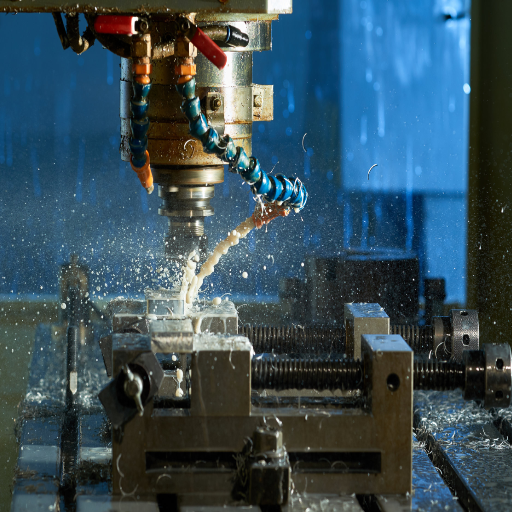
While the future aspects of milling machine design lean into automation and smart technologies, nowadays machines are rendered with IoT capabilities for instance, to be able to watch metrics of their performance in real-time. Hence, productivity can be increased while enabling predictive maintenance that avoids machine down-time and even elongates the service life of equipment. However, Adaptive Control Systems come into the limelight; hence such control can set speed and feed rate automatically according to material properties to achieve the precise results without extensive operator specifications.
Another area in innovation that’s pretty exciting is all about the hybrid setup, combining the possibilities of conventional milling with those of additive manufacturing. Hybrid systems allow both subtractive and additive machining on one installamenta machine, thus giving the manufacturer a versatility never seen before. Newer coatings, tools, and technologies continue to allow efficient machining of materials with complex shapes or properties. The industry is going towards intelligent and flexible solutions that will empower companies to act quickly upon new demands.
Automation Effects in Vertical Milling
Vertical milling has changed with automation, subsequently affecting my manufacturing processes. The study suggests that any system integrated with automation results in tasks that previously required significant manual effort to be simple and efficient. In my understanding, it can be said that automation has improved accuracy by reducing human error while maintaining a certain degree of consistency in output across production runs, which is essential for high tolerances or complex designs. For frictionless productivity, machines can be used without interruption, even after working hours, thus diminishing lead time-and this, of course, is thanks to automation.
Another thing I found to be an advantage was that overhead costs were, conversely, kept to a minimum. It saves on resources that otherwise would be spent on a manual operation when using automated vertical milling machines. Having an advanced software control and monitor system has equally been indispensable. This means that I do not have to idly wait around to maintain operational oversight.
This has made the whole factory an efficient whole. Yet, the data the process has generated allows me to horyzon-mine in the existing issues relating to performance and around optimization of my choices. Thus, automation enables me to cope with growing industry needs while assuring quality outputs. I can rely on the development side if only customization concerns have to be addressed, everything else being dealt with via automation. With the load of mundane tasks lifted by automation, I am able to implement more of me on actual development and customizations to stay on top of the competitions and provide quality outputs that could satisfy customers.
New Technologies in CNC Milling
The integration of AI and machine learning is one of the most fascinating new fronts to be explored in CNC milling automation. By analyzing data in real-time, CNC machines, through AI integration, can anticipate maintenance requirements and calculate the optimal cutting paths for maximum efficiency. Hence, one can reduce machine downtime and waste of raw materials while producing accurate outputs. From a practical perspective, I can say that insights driven by AI enable me to focus my energies more intelligently, ensuring consistent quality and fast turnaround times in projects, especially in strenuous production cycles.
Once hybrid and additive manufacturing settled beside CNC milling, the innovation potential of the world increased. The coupling of subtractive with additive techniques offers a kind of flexibility never seen before; that is, it broadens the scope of materials used and allows geometries that are impossible to pursue conventionally or at a very high price to be built. Hybrid technology is how I can now economically design and manufacture in a new way while allowing for a fast time to market.
In conclusion, the developments in IoT and connectivity have revolutionized the management aspect of my CNC operations. By linking machinery to intelligent networks, I now oversee actual and potential performance metrics, which are all the more significant due to distance. This development, in essence, has eased the dynamics of tracking and, among other things, improved collaboration in a multi-machine environment. On the whole, I find that the use of these emerging technologies appears to increase my productivity and place me ahead of my competition in a fast-growing technological industry.
Reference Sources
-
How Does A Vertical Milling Machine Work? – DTS UK
Explains the role of vertical milling machines in precision machining and part creation. -
The Ultimate Guide to Vertical Milling Machines – Rong Fu
Provides an in-depth guide on the types, uses, and operational principles of vertical milling machines. -
Vertical Milling Machine Working Principle And Operations – Ray Mechatronics
Details the working principle, spindle operations, and material removal process in vertical milling. -
Vertical Vs. Horizontal Milling: What’s The Difference And Which Is Right For Your Needs? – Rapid Axis
Compares vertical and horizontal milling, focusing on the unique features and applications of vertical milling.