





Small cnc lathes offer a high degree of precision and are known for their cost effectiveness, but only if the right attachments are used. Mini lathes come in handy in accomplishing many types of work such as fine machining, jewelry parts making among other repair works. But as useful as they are, these machines need to be paired with the right accessories. The following is a list of essential accessories for small machinist lathes which not only improve convenience but help machinists work better and have innovative results. Whether you have years of experience under your belt or you are in your formative years of learn-how-to do lapidary work, this spirit will guide you on how to stretch your small lathe to its limit.
Introduction to Mini Lathes and Their Importance

Hobbyists, DIY fanatics or even professional machinists would agree that mini lathes play an indispensable role due to their dense nature that aids in mission critical tasks. Mini lathes perform essential operations like shaping, cutting, drilling, and threading very efficiently. It doesn’t matter whether one is making a new component, repairing one or even making a prototype since these machines will come in handy. However, unlike their bigger counterparts, because of their small size, they are easy and more efficient in use even in the smallest of zones. They help a lot in a productive coat of shape and mini lathes are one effective option able to deliver that easily.
What is a Mini Lathe?
The small lathe is a small machine that is adaptable to this kind of work for making and turning, drilling and cutting, and threading. It is a precision machine in that it rotates the workpiece and cuts the workpiece to the required shape using tools inserted on the machine. Some of these mini lathes are manufactured for metal processing, wood or plastic which makes them very popular in model shops, small industries and even for do-it-yourself clients. This size is not limiting since mini lathes have new technology which allows them to perform tougher tasks with facilities such as no spinning. They are a good option for machinists of any skill level especially those who want precise work but at a reasonable working envelope.
Benefits of Using a Mini Lathe
- Precision and Accuracy: Due to their design, mini lathes are made for providing precision machining which makes them appropriate in detailed works.
- Compact Size: That is why they are easy to fit in most workshops or homes where space is a problem.
- Versatility: This is because the mini lathes are able to machine metals, wood, plastics and other materials allowing various applications.
- Cost-Effectiveness: In comparison to standard lathes, mini ones have lower prices which make them cost-effective models for amateurs and experts.
- Ease of Use: Such features include speed control knobs or dial and digital displays. These help in making the mini lathes easy to operate even for beginners.
Overview of Lathe Accessories
Essential tools in a tool kit often increase the capacity and efficiency of a mini lathe. Categories include:
They refine the accuracy and flexibility of the mini lathe itself, making the mini lathe versatile for any task-from do-it-yourself to professional work.
Key Accessories for Small Machinist Lathes
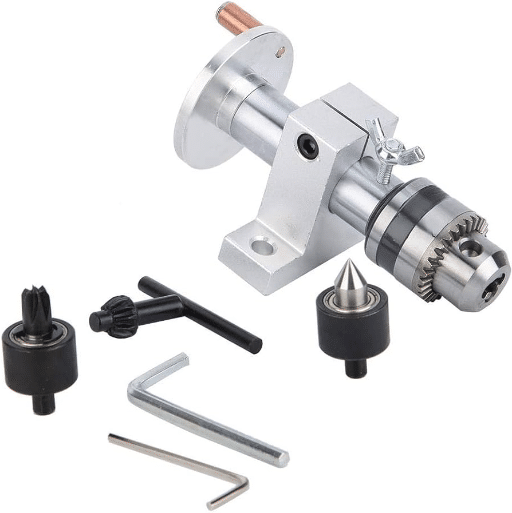
Not only does that enhance performance in these mini lathe machineries but it also holds the key to widening their application in the field of the hobbyist-turned-professional.
Tool Holders and Their Types
Tool holders are vital in turning since they assist in securing cutting tools in place while ensuring precision and firmness during operations. A tool holder can come in different types, and they include:
- Turning Tool Holders: Turning Tool Holders are well used in many turning jobs and enable very accurate shaping of the work.
- Boring Tool Holders: Boring Tool Holders are mainly used to hold boring bars to enlarge or get very accurate finishes on holes.
- Parting Tool Holders: These tool holders are specifically used in rapidly separating workpiece parts.
- Knurling Tool Holders: Knurling Tool Holders are purposely used for carving textured surfaces to offer an enhanced grip or for just the appearance of the workpiece object.
Each kind of tool holder is designed for a particular job so as to improve the performance and flexibility in the production of cutting tools.
Quick Change Tool Post Systems
The quick-change tool-post system is meant to add to the efficiency and precision in machining. Its job entails allowing the maximum number of tools to be exchanged at a fast pace to minimize the number of downtime increments between operations and thus, in essence, to put together a smooth workflow. The system, following the setup of the interchangeable tool-holders, with which the tips are easily shot into place, ensures a consistent alignment and stability. The change-over-from-one-state-to-another approach enables faster setups with better positioning of the tool, therefore leaving quick-change tool posts as one of the base components in any modern machining setup.
Essential Cutting Tools for Lathe Operations
Various cutting tools are indispensable in order to perform various tasks on a lathe machine. Some of the essential tools are highlighted below:
Each of these tools performs a very specific set of functions in order to ensure that successful machining occurs on a lathe.
Enhancing Precision with Specialized Accessories

Advanced accessories like steady rests, follow rests, and collets are integral in order to increase machining precision. Steady rests or follow rests aid to back up the work material, thus dampening vibrations during operation. The collets assure a tighter grip and greater accuracy than chucks do. This minimizes runout and proper alignment. Finally, these accessories greatly enhance machining stability and the accuracy necessary for the highest quality results.
Using a Dial Indicator for Precision Measurements
Dial indicators are precision instruments enabling this detection and correction of even small deviations from alignment, flatness, or concavity relative to the object in question. In order to make the best use of the dial indicator, take care in mounting it securely on a firm surface or holder and position the probe vertically to the measuring surface. Slowly bring the probe in contact with the work piece without applying too much force, or else the pointer might read erroneously. Look at how the needle moves over the graduated scale, identifying the degree of deviation. Calibrating the dial indicator regularly is important for ensuring that they remain accurate throughout their use.
The Role of Live Centers and Tailstocks
The support structures namely the live center and the tailstock are very instrumental when operating small machinist lathes in a bid to enhance the accuracy and the tolerance of the cut especially on long stock or fragile workpieces b stages of the parting off operation. The tailstock is a moveable part which carries the opposite end of the stock to the headstock and thereby increasing stiffness as well as decreasing vibrations on the workpiece while machining processes. When a live center is installed on the tailstock, it provides engagement to the workpiece by rotating without friction on ball bearings when the workpiece rotates. This leads to minimal frictional losses with heat and also helps in ensuring proper functioning and size stability of the component in the long run.
Every worker should be knowledgeable about the workpiece and how to work on it without losing the desired precision and accuracy especially when it is mounted in a lathe as a center and tailstock combination will present those advantages allow for such operations like turning, drilling and threading. In today’s context, small machine lathes that come with such accessories are highly recommended for precise or detailed work as they ensure that the surface finish of the product is maintained within the desired levels. The proper positioning of the tailstock and the driving pins so that they are always concentric to the center lines of the machine tools is also mandatory in order to ensure their utility for a longer period of time in such an environment.
Advantages of Steady Rests in Machining
- Reduction of Vibration: There are longer workpieces that likely cause vibration when machining, such workpieces must be supported and the fabrication process be made steady before machining operations begin.
- Improvement in Accuracy: Steady rests hold the workpiece in place and keep it from moving, enhancing the accuracy of the machining process.
- Minimisation of Deflection: Thin or slender workpieces are less susceptible to bending or deflecting under the application of cutting forces when a steady rest is used.
- Tool Longevity: Since there is less vibration as well as deflection, the cutting tools stay in better condition which increases their efficiency and life span.
- Better Surface Finish: The incorporation of steady rests facilitates some degree of finishing in the machining which produces delicate surfaces of above average standards.
Choosing the Right Chuck for Your Mini Lathe
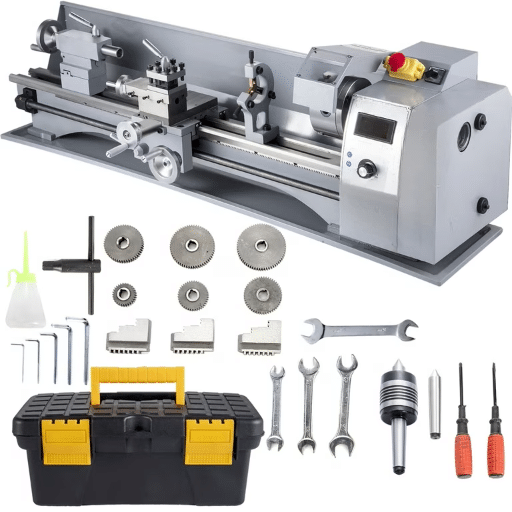
If you are in the search for the right chuck for a small lathe, you must first take into account several factors. To begin with, what sort of work is expected to be done — here, there are the three-jaws chucks which are universal and adapted well for work on anything round or hexagonal; however, in cases of heavy duty, conic, or irregularly shaped objects, four jaw independent chucks come in handy. Next is the alignment of the spindle diameter and the threading of the lathe to that of the chuck. Also, the usage of the chuck with regards to its material durability should meet the working conditions of particular projects. The last and most important thing is to look into machining performance aspects including the handling of the machine itself and the the accuracy in order to ensure that the work done is effective and of good maching purposes.
Comparing 3-Jaw and 4-Jaw Chucks
When comparing 3-jaw and 4-jaw chucks for small machinist lathes, key factors include versatility, precision, workpiece shape compatibility, setup time, and gripping strength.
| Key Point | 3-Jaw Chuck | 4-Jaw Chuck |
|---|---|---|
| Versatility | Limited shapes | Irregular shapes |
| Precision | Lower | Higher |
| Shape Fit | Round/Hexagonal | Any shape |
| Setup Time | Quicker | Slower |
| Gripping | Less strong | Stronger |
Understanding Collets and Their Applications
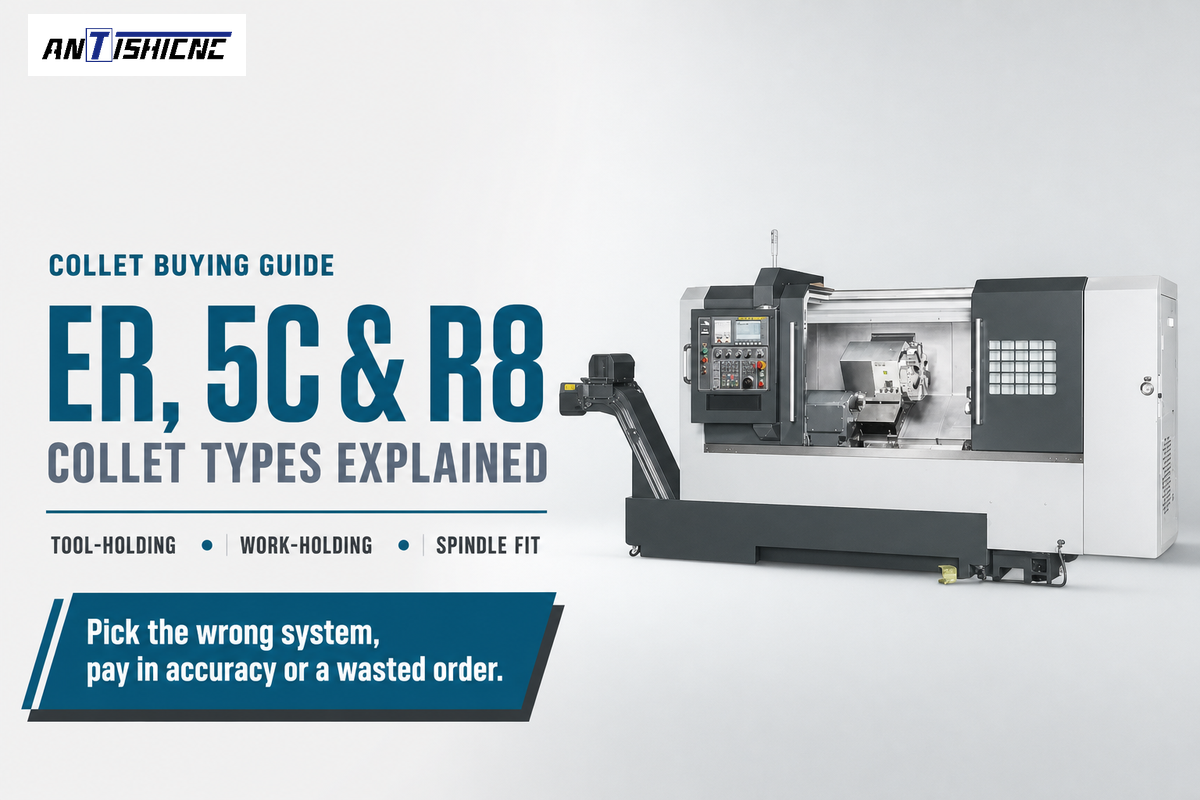
Collets are specially designed tools used to hold very small, long cylinders and concentric shaped materials in the lathe safely. Such components ensure superb accuracy, high holding power and the least run out, hence they are a favorite for tight tolerance and surface finish sensitive applications. While chucks can hold a range of sizes, collets are very specific and operate best when they are perfectly matched to the size of the workpiece. Firm grab, accuracy and reproducibility is ensured and so collet acts best in this context. Collets find wide applications in precision engineering tasks like turning, threading, and drilling where any scattered diameter requires special attention. The performance and durability of in-line collets have made these devices the most preferable and Essential Accessories for Small Machinist Lathes.
When to Use a Drill Chuck
Speaking of a drill chuck, I prefer to use it for the insertion of bigger drill bits or other tools that need collets’ accuracy for clamping. Without a doubt, drill chucks are universal as they are able to accommodate any size and can be used in general turning jobs such as thickest drilling, reaming, and tapping. They offer a wide range of different diameters, they are called boys in a reason! Imagine it’s really snug fit and nobody wants to struggle each time putting, say, drilling pieces, inside, especially when it’s critical to work fast and tools are interchangeable. I, on the other hand, steer clear of drill chucks when there is a need for extreme precision especially with small diameter tools where strength and size matter, instead preferring collets.
Optimizing Your Lathe Setup for Efficiency

While looking to optimize the performance of a lathe machine, the user should equip the machine with the right tool, ensure it is well aligned and maintained. Choose your chuck or collet wisely depending on the precision of the job and required gripping force. Check if the workpiece insertion is firm and also ensure that cutting edges are in good condition and in the correct position. Lubricate and clean the lathe machine parts on a regular basis as this prevents rapid wearing and also the machine functions smoothly. Finally, employ a reasonable rpm and feed for the type of material being worked on and to achieve the required surface clearances as the case may be so that time idles in any operation within the machining circle on that particular lathe is minimized.
Importance of Proper Clamping Techniques
The act of clamping is a very important requirement when operating small machinists’ lathes in order to maintain asafety, accuracy and performance. The machine’s workpiece should be firmly clamped in place to avoid its movement or slipping during machining that could potentially cause injury or damage any of the machine’s parts or the component. For example, it enhances accuracy in the manufactured part by preserving specific dimensions and availing the requisite surface finish. Use clamps that are suitable and appropriate suitable for the material being clamped and do not over clamp to avoid misuse i.e. twisting the material out of shape. The need for correct clamping of the work piece is not only important because it lengthens a toolbox’s serviceability but also because it enhances the work’s efficiency due to the absence of defects and consequent rework.
Best Practices for Tool Arrangement
Essential Accessories for Small Machinist Lathes help maintain precision, safety, and speed of performance during operations. First of all, arrange the tools and the fittings in a rational and unconcealed way that is logical and reduces non-productive time during the tasks. The cutting tools, inserts and the tool holders can be kept in an orderly mess, maybe in labeled trays or compartments, which will help to identify and reach for a specific part in the wink of an eye. Also, it is important to check the condition and wear of the tools very often and immediately replace any tools in order that the performance as well as the accuracy is not affected.
Furthermore, after each operation turn out chips and various dirt as it is not safe and accurate to work in a place that is full of clutter. Place the equipment in a correct sequence of use to facilitate work especially when performing repetitive operations. During use of the tools, apply necessary grease or oil to the surfaces while ensuring that they are fixed sufficiently to eliminate any vibrations or shaking in the process. Customers have access to various modular toolkits which come in handy for managing small machine tool lathes and this cuts down the time spend in tools set up.
By following these guidelines, tools that are utilized in the lathe are in healthy conditions for a longer period of time, machines function better and a higher standard of machining is attained.
Utilizing Indexable Cutting Tools
For any lathe operator, one of the most reliable ways of increasing productivity is by using cutting indexable tools. Such tools have inserts that can be easily replaced such that sharpening and reground edges are a thing of the past. When an insert gets blunt or serves its purpose, one or two more can be dropped and work resumed with little or no nuclear shutdown. On top of that, it is very easy to change indexable tools such that there are minimal disruptions in the machining process.
This is where it is important that the insert material and shape is selected for the particular machining process at hand. Carbide inserts, for instance, have ideal properties for high-speed cutting because they resist wear very effectively. Besides the selection of the components, no less attention should be paid to the condition of the tool holders and parts which must be inspected and serviced regularly to ensure that they sit firmly in the chuck void of vibration or distortion.
By mounting indexable cutting tools in different positions on the lathe, it is possible to perform Python string operations accurately, and avoid wasting time. Furthermore, time-efficient machining of the objects is obtained by using cutting tools. Essential Accessories for Small Machining Lathes
Frequently Asked Questions (FAQs)
What little know-how would suffice for a tiny lathe machinist, in terms of a perfect mill and mill bits?
For basic milling function on a small machinist lathe, the person could look into a milling machine adapter, a dividing head or rotary table, a solid vise, an er32 collet chuck or collet chucks systen and an adapter for standard tooling. The said mini mill would operate also with the set of change gears, center support, and milling cutters of high-speed steel, and indexable carbide end mills.
How accurate can the choice of a collet chuck or spindle be?
Spindle plus collet system is designed to get right centering and holding rigidity. ER collets (ER16, ER25, ER32) are very popular for their flexibility and range; typical of small lathes to pair a er32 collet chuck with. Collet chucks win over setups by 3 jaw chuck or 4 jaw chuck at finer diameters during turning and milling by virtue of less runout. Consider a collet chuck adapter, if you need it, to bring a Jacobs chuck or a drill chuck for tailstock drilling operations.
Which lathe tool holders, of OXA tool post or quick change tool holder types, work best with turning tools?
Humanscript specialist services affect the clientele in terms of quick change toolholders either an OXA tool post or similar QC toolpost to significantly speed up tool swaps and ensure repeatability. Making use of carbide or HSS tooling enables you also to choose holders that make up inserts, with some features of the said inserts being suitable for all sorts of production operations; HSS is slightly better for the general-purpose finishing or as far as very fine finishing is accomplished. Allowing holders to be mounted on the opposite side shall add some bit of flexibility. Even though a lathe set will have holders on it as per the finishing of the bore, with respect to tools like parting, threading, and facing-special, the essential part perform a part in lathe tooling.
When is a 4 jaw chuck used versus a 3 jaw chuck as opposed to the wedge type jaws for gripping work and not the bolt-on fixture?
A 3 jaw chuck is used for quick holding due to moderate run-out, which is practical for any workpiece. For off-center or irregular work, a 4 jaw chuck uses independent adjustment to center in the true sense. Some types of jaws or styles of work that would be appropriate are the wedge-type jaws for thin-walled material and softer materials while certainly, the change gears are important to facilitate thread cutting and allow tailstock engagement support using a center drill and live center.
Does thread cutting require gearbox sets, gear changing, or other accessories to engage threading on a small lathe?
Many small machine lathes require gear sets or the means to interchange them in order to cut threads. In the case of these lathes, cutting the screw thread requires the presence of a proper thread dial, correct gear ratios, and good carriage half-threading practice. Fine threading tools (HSS or indexable carbide), accurate item alignment via the tailstock tail-end, along with sufficient RPM adjustments with headstock gears, support the production of well-finished threads. For smooth and enhanced projects, think of computer control coordination (CNC) or, in the alternative, digital control support.
Reference Sources
-
Lathe Craft: A Study in “Part” Appreciation – This study explores the significance of lathe-produced parts and the systemic patterns in machining, particularly in small shops.
-
A Study on Components of Lathe Machine – A detailed analysis of lathe components, from small bench lathes for precision work to larger engine lathes.
-
Workshop Appliances: Including Descriptions of the Gauging and Measuring Instruments, the Hand Cutting Tools, Lathes, Drilling, Planing, and Other Tools – A comprehensive guide on workshop tools and accessories, emphasizing the importance of precision and efficiency in machining.
- Premium Metalworking Lathes for Sale
This comprehensive guide provides essential insights into the accessories and tools needed to maximize the performance and precision of small machinist lathes, from basic setups to advanced techniques.