




With so many different types of machinist lathe available on the market, it might become overwhelming to find the right one as a new user. No matter whether you want to work with metals or woods or even both, the right tool is important for skill building and getting good quality finish. The present guide is for new-comers in the field of machinists where small but powerful lathes options are provided which do not require a big budget and still perform precision and reliability tasks. The discussion will revolve around some top choices of small lathes which can be used for both metalworking and woodworking purposes and will include their characteristics, pros, and reasons of their popularity. By the time you reach the end, you will be clear about the best lathe for starting your metal or wood projects.
Introduction to Lathes for Beginners

Lathes are devices which could do various things on various types of material such as cutting, drilling, shaping, etc. A first-time operator would be better-off with small lathes because such machines tend to be less complex, smaller in size, and somewhat positively manageable. The lathe is a tool that can be used in the crafting of metals and wood because it helps turn tiny but heavy components used for gears in animation, decorative spindles in wood, and so forth. A small, but full metal and wood lathe can be a right choice for you. Such can not only grant you a decent learning experience but can also deliver with professional-grade results.
?What is a Lathe?
A lathe is a versatile machine tool that is primarily used to shape different materials such as metals, woods, or plastics by rotating the workpiece and using various cutting tools. The entire process is composed of tightly holding the material, rotating it at a high speed, and then, the operator being allowed to cut, sand, drill or even apply knurling techniques on it with high precision. The lathe market consists of several types like engine lathes, turret lathes, and CNC (computer numerical control) lathes, where the latter is the most sophisticated and the former two are low to medium automated. Lathes are present in almost every part of the industry, be it shop, wood, or metal workarts. They are capable of producing parts that are perfectly symmetrical and accurate to a tolerance that can range from simple shapes like cylinders and screws to equally complex parts.
Types of Lathes: Metal vs. Wood Lathes
Metal and wood lathes include engine, turret, CNC, mini, and wood-turning models, each designed for specific materials and tasks.
| Type | Material | Usage | Control | Size | Skill |
|---|---|---|---|---|---|
| Engine Lathe | Metal | General Cutting | Manual | Medium/Large | Moderate |
| Turret Lathe | Metal | Complex Parts | Manual | Large | Advanced |
| CNC Lathe | Metal/Wood | Precision Work | Automated | Various | Advanced |
| Mini Lathe | Metal/Wood | Small Projects | Manual | Small | Beginner |
| Wood-Turning Lathe | Wood | Shaping/Carving | Manual | Various | Beginner |
Importance of Choosing the Right Lathe
Selecting the right lathe for the projects to be made is very important to ensure that precision, efficiency, and quality are maintained. The FAQs indicate that lathes should be chosen according to project needs. Factors like the material’s texture, difficulty of the project, and proficiency of the user need be considered while making the choice. Depending on the above considerations, beginners or hobbyists lean toward mini lathes for small wood of metal projects while an engineer will most probably opt for CNC lathes for precise output accuracy. However, if chosen improperly, the uselessness of the lathe would lead to a complete loss of time, material, and effort. As such, it becomes crucial that the said individual conduct a complete and thorough investigation and plans first and foremost. The lathe, of course, not only speeds up the entire procedure and enhances its safety but also contributes to lengthening the life of the lathe machinery and ensuring the best lathe to output.
Key Features to Look for in Beginner-Friendly Lathes
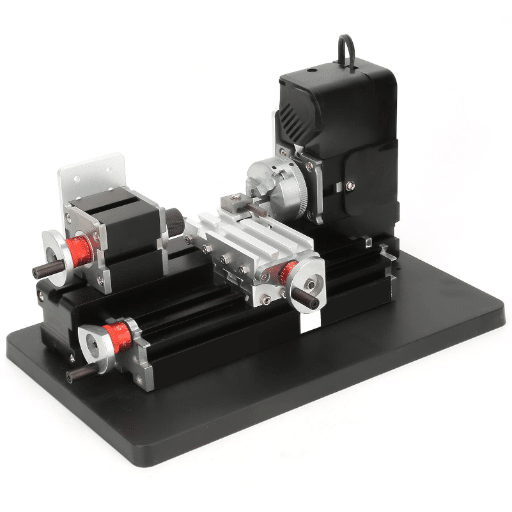
Variable Speed Control
The variable speed control is a key feature for beginner lathes as it permits the users to set the rotation speed according to the type of material and project. The feature contributes to greater flexibility and precision in the execution of the tasks, be it wood turning or metal crafting. Slower speeds can reduce the chances of errors, thus allowing beginners to grow in their skills and knowledge of lathe operation with more confidence. Most starter lathes have either a manual knob or digital controls to allow smooth speed changes, thus providing the best performance and user-friendliness at the same time.
Ease of Use and Setup
For people who are starting, the selection of a lathe should be mainly based on how easy it is to operate and set up because this will determine whether the learning process will be a pleasant one or not. It would be best to get a lathe that has a detailed user manual, pre-assembled parts, or a very little time-consuming assembly needed since these aspects will decrease the time needed for setup and the frustration that sometimes goes hand in hand with it. The user-friendly design that consists of intuitive controls and different parts that are very well marked can reduce the hardships of the beginners and direct their attention towards gaining knowledge instead of working with difficult operations.
In addition, safety features like an emergency stop button and protective guards will at least ensure safety to some extent. The adjustable tool rests as well as ergonomically designed lathes are others that make it easy for new users to become comfortable and confident while working. If you are one who cannot decide what to go for, checking out the popular brands and reading customer reviews on the Internet can really help you to find out what is the characteristic that makes a lathe truly beginner-friendly.
Safety Features and Considerations
To safety features considering beginner lathes, the first point to think about is the lathes, which have inherent safeguards. One of the things that you need to look for is an emergency stop button for quick shutdowns in case of an accident, and another thing is to check if the machine has protective guards that will keep the operator safe from moving parts and flying debris. A lathe that has the feature of automatic shutoff when the cover or guard is opened is extra safe. In addition, the use of nonslip feet or a sturdy base can prevent any unwanted movement during operating. Furthermore, having simple controls and clear instructions are also important for the safe and confident use of the lathe by beginners. However, always follow the manufacturer’s instructions and wear the right safety gear when operating the machine.
Choosing the Right Lathe Based on Specific Factors
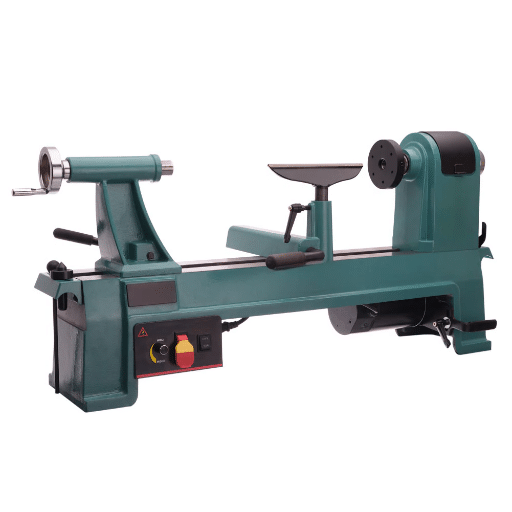
Skill Level Considerations
A simple and easy-going lathe with basic features is the best choice for a beginner. Look for models that have easy-to-use controls, built-in safety features, and user manuals that explain the processes in a very clear way so that the user can gain confidence and become skilled. A hobbyist or an intermediate user can do a lot with a mid-range lathe that provides versatility and precision to a great extent for different projects. On the other hand, advanced users or professionals would prefer to invest in lathes that are very powerful, have bigger capacities, and come with specialized features for easy handling of complicated and larger-size jobs. When the lathe is matched to the skill level of the user, it will certainly be case of performance improvement, safety, and long-term satisfaction.
Available Workspace and Size Constraints
The process of selecting a lathe involves considering the workspace and size limitations, which are the factors affecting the dimensions and safety of your operation. Even so, you can still do small to medium size projects. However, if you have larger workshop space or the need to work with bigger materials, then full-size floor lathes will match you perfectly as they will provide you more capacity and stability.
When space is at a premium, users typically choose to have a portable unit and storage space first. This is why collapsible and modular designs are so widely used. Moreover, if you take the precise measurements of your workspace, you will be able to avoid overcrowding and have even the essential tool storage and movement around the equipment. Working in a properly sized workshop helps you to be both user-friendly and safe, hence creates an environment where you can pour all your attention into your creativity and craftsmanship.
Budget Constraints and Value for Money
When you are in a certain budget range for a lathe, the best plan is to look for a middle ground where you can meet the price and product quality. To start looking for a good lathe, it would be of great help that you list the main features to watch out for before making a purchase, like the lathe’s capacity, speed, settings, and make of material. But if you are a beginner or someone who just needs it for small-scale projects, I recommend that you look for a cheap retail-entry lathe model that does the basic lathe work really well. On the flip side, the enclosed lathe would be one important investment in terms of performance and long life on any large or complicated projects. Cataloging prices of different suppliers frequently could be like a hunt for the best deal while some valid reviews can ensure that this is happening. Also, feel free to ask for warranties and other after-sales services as all these may again save you some bucks later. With this approach, you can have laid the foundation for an east choice of the lathe having the best price-quality ratio to meet your needs.
Maintenance Tips for Longevity and Performance
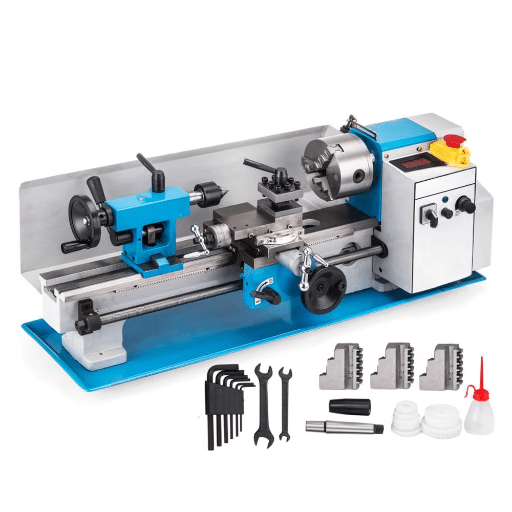
🔧Regular Cleaning and Lubrication
An otherwise long lasting feature and increased performance of the machine tool lathe largely depend on a proper cleaning job and necessary lubrication. Removal of any light soil deposit virtually requires a good cleaning treatment. Cleaning the lathe is always the easiest, starting with the working surfaces and chuck using a very soft brush or compressed air. All metal shavings, dust, and debris should be removed from chucks. Surface tools should never be used; scratches will damage this surface. Lathes must be swabbed at checking by a clean cloth, hence removing any remaining residue and filth.
In accordance with the manufacturer’s instructions, determine the type of suitable grease or oil required to lubricate the lube points of your milling machine and apply this grease or oil to all the moving parts like lead screws, gear mechanisms, and ways. This foresight definitely helps in reducing wear and tear as well as making the machine more efficient. Periodically make sure to view whether any rust or dirt is settling on any of the given parts; matter in such an instance has to be immediately looked into. Such a maintenance regimen-Consisting of cleanliness and lubrication-enhables to achieve a range that can keep your lathe running for long life in a timely manner with utmost precision of performance!
⚙️Checking and Adjusting the Tailstock
Checking and adjusting the tailstock on a machinist lathe should be done with the power off to avoid accidents. To find out the alignment, put a test bar or ground workpiece in between the headstock and tailstock centers. Turn the workpiece and measure the concentricity to see if there is any misalignment.
Whichever time the tailstock requires repositioning, make sure you slightly loosen the lock screws and then get the tailstock’s height correctly set in parallel to the axis of the headstock spindle. Tailstock alignment is supposed to be checked over and over again. Go ahead and fit, using its test bar and the workpiece, and align the lathe in perfect condition; after doing this, remember to tighten the lock screws. It is sure that the timely checking of the diagnostic alignment of the tailstock will only aid to keep the machining operational.
🔄Replacing Worn Tools and Components
Working on the lathe, precision and safety should be considered priorities all the time, thus, replacing worn-out tools and components should be done in the following manner:
- Identify Worn Tools or Components
Wear monitoring at the interval of the tools and lathe parts by looking for dull edges, cracks, or excessive vibration during the operation and also any deterioration of cutting tools or damage of key components like tool holders or chucks. - Safely Stop the Lathe
Switch off the lathe machine and unplug it from the power supply to avoid accidental movements. - Remove the Worn Tool or Component
Employ the right tools, for example, wrenches, to gently loosen and take out the worn part. Be cautious not to hurt other components of the machine. - Install the Replacement Part
Making sure the replacement tool or component is the correct size and specification for your lathe, examine it first. Follow the manufacturer’s instructions for securing properly. - Verify Alignment and Fit
Confirm the new part is installed in the correct position to the lathe and other components. If there are any misalignments, do the needed adjustments ensuring proper operation. - Test the Machine
Power up and slowly run the lathe to check the new part. It is only after confirming it is functioning well and does not produce any irregularities that you should resume normal use.
Important: Keeping a regular maintenance schedule and changing worn-out parts on time is very important for the lathe to retain its accuracy and productivity. Always check the user manual for the lathe to get the specific instructions.
Project Ideas for Beginners
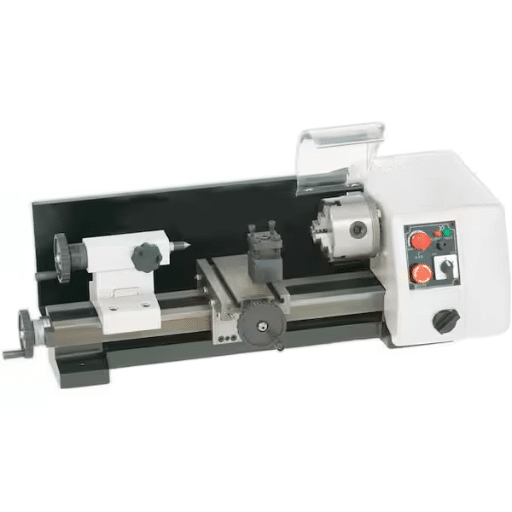
Simple Woodturning Projects
🖊️ Wooden Pen
Turning a wooden pen is probably the best beginner’s project as it allows the novice to master the skill of precision while making a nice and practical object.
🕯️ Candle Holder
An exquisite candle holder made with very little effort is the best piece for practicing basic shapes and symmetrical designs.
🥣 Wooden Bowl
Making a small bowl is an introductory course to hollowing techniques and the development of tool control at the same time.
🌀 Spinning Top
Spinning tops are really fun and quick to create; they are perfect for the practice of shaping and finishing as well as making a cheerful item.
🍯 Honey Dipper
The project is ideal for improving spindle turning skills thanks to its easy and repetitive design.
All these projects are suitable for beginners, don’t need many materials, and help the students to acquire the basic skills in woodturning.
Basic Machining Projects
🧰 Toolbox
This project is amazing for newbies to train on precision cutting and basic assembly skills. It fosters measuring, drilling, and fastening skills.
🔑 Keychain
Making a keychain from metal or wood is the simplest way to get involved in machining since it encompasses cutting, shaping, and polishing which are all the basic operations the project will be practicing the precision of the whole process.
🍺 Bottle Opener
A personalized bottle opener is a useful project that enables the use of various materials and basic machining tools, like a lathe or mill, introducing the concept of working with different machines simultaneously.
📱 Phone Stand
With this project, a novice gets the chance to play around with both design and function by means of simple cutting, sanding, and finishing techniques.
The projects involve making first layer of machines and tools but at the same time they are functional items and not just drawings or skill demonstrations.
Using a Lathe for Creative Woodworking
The artistic woodworking lathe opens a myriad of possibilities of art and functional use. This machine allows me to shape wood into very precise forms to produce very wonderfully-designed bowls, pens, or furniture legs. The most important thing is to choose the best wood, to fix it securely, so that the proper tools and techniques can be applied to obtain the desired results. Safety is always first; therefore good protective gear and working speeds according to the material are considered. The lathe will take me to simple spindle turning to complex hollow turning techniques which can iron wood into another dimension, while I polish my skills, even turning untreated timber into delicate handmade pieces.
Reference Sources
-
Engine Lathe Work: Practical Suggestions for Young Machinists – A foundational guide for beginners, covering principles of engine lathe work and small speed lathes.
-
Course of Study in Related Science for Beginning Machine Shop Practice – A study focusing on training machinists and beginners in the metals field, including small lathe operations.
-
A Manufacturing Processes Course for Mechanical Engineers – A course overview that includes training on engine lathes and manual/CNC machines, ideal for beginners.
-
The Pattern Maker’s Assistant: Embracing Lathe Work – A comprehensive resource on lathe work for both wood and metal, suitable for beginners.
- Premium Metalworking Lathes for Sale
Frequently Asked Questions (FAQs)
❓ How can I pick the right mini-lathe or inch mini-lathe for my small lathe setup on the bench?
In selecting a mini lathe, it is important to consider the dimensions of the expected parts, the area on the bench top that is not occupied, and the necessity of a 4-jaw chuck, for example, and other such features like taper capabilities. Inch mini lathes are suited for hobbyists and are frequently regarded as the best choice for small workshops and for turning metal parts of small size by woodworker makers. Look at the control of variable-speed, belt drive as opposed to direct drive, and whether the model allows for extras like live centers, chucks, and a tool rest for turning operations.
❓ What considerations of rpm and torque should I look for in a wood lathe machine or woodturning lathe?
Lathes for which wood and metal are the stock material have different torque and rpm needs. Turning small diameters of wood requires fast speeds; larger bowls require a slow speed with high torque. Control of speed is much needed for the safety of wood turning, and power (that is, one horsepower or higher, usually for more frequent bowl turning), will give the power and smoothness of a cut. It is essential to match the wood lathe tools and chisel selection to the speed and the type of wood you are turning.
❓ Are there any necessary accessories such as tool rests and chisel holders included with benchtop and small benchtop lathe options?
Basic tool rest and some chisels are commonly included in many benchtop and small benchtop lathe packages, but the level of included accessories is different for each brand and bundle. Additional wood lathe tools, a sturdy tool rest upgrade, and the purchase of a 4-jaw chuck for irregular stock would likely be necessary for quality woodturning or metalworking. It is important to check what else is included in the package like faceplates, live center, safety guards, and invest in the tools of higher quality as your skills progress.
❓ What is the difference between a wood lathe machine and a wood turning lathe for a beginner woodturner?
The terms are somewhat interchangeable: a wood lathe machine and a wood turning lathe denote the same genus of equipment for wood turning. The choice of the machine should be based on the new woodturner’s preferred swing and distance between centers for projects he/she is going to do, variable-speed control for wood turning, and compatibility with wood lathe tools. Midi wood lathes are between small hobby lathes and full-size lathes in terms of their capacity which although being more, they are still considered as suitable for small workshops.
❓ How useful is the readout or digital display and should beginners opt for a lathe with such advanced readout features?
The readout or digital display is a powerful tool in accelerating the setup time and improving the accuracy of the whole process for both metal and wood projects, especially when the work is precise or the number of identical parts is many. Newbies might even get by with a basic mechanical scale, but digital ones are not a bad hint at all regarding the area of accuracy, repeatability, and the techniques you might eventually master. It is part of the choice whether to go for the best you can afford or to start with a simpler machine and then gradually acquire upgrades.