




The maintenance of a CNC lathe is the foundation of its productive operation. No matter if you are a professional machinist or an owner, the proper maintenance of the CNC lathe is a must for getting accurate, top quality work and for the reduction of the downtime that is, in turn, costly. The reading of this article will show you all the essential maintenance tricks and tips that will prolong the life of your machine and enhance the performance too while preventing the occurrence of unexpected troubles. We will cover all the best practices from routine daily cleaning to periodic inspections to keep your CNC lathe in good running condition. Get ready to learn about effective and practical insights which will not only cut your time and money but also upgrade the dependability of your equipment.
Understanding CNC Lathe Maintenance

CNC lathe maintenance on a regular basis is very important for the performance of the machine to be at its best and for costly breakdowns to be avoided. Maintenance of the machine involves a daily cleaning of the machine to get rid of waste and coolant, checking the spindle and cutting tools for wear as the most critical parts of the machine, and looking at the lubrication levels to make sure that the entire process runs smoothly. Also, take the time to do inspections of belts, filters, and electrical connections after their scheduled periods so that any problems that might arise are detected and dealt with early on. It is very good practice to keep a maintenance log that will not only help track the jobs done but will also provide an easier way of anticipating future service needs. If you follow such practices it is guaranteed that you will have the reliability, precision and efficiency of your CNC lathe improved.
What is CNC Lathe Maintenance?
CNC Lathe Maintenance is a dedicated process of regularly taking care and servicing a CNC (Computer Numerical Control) lathe machine to keep its performance, life span, and precision at best. It includes performing various tasks such as cleaning, lubrication, and inspection which are routine, but also more technical procedures like machine component calibration and control system upgrading. The manufacturing sector, which uses accurate and continuous machining methods, considers regular maintenance as a preventive measure that can avoid machine failures, decrease non-operating time, and consequently, reduce repair costs. The present data have outlined the most important activities as: to check for the wear of the tools and spindles, to check the levels of the coolant and lubrication, to tighten the loose parts, and to ensure that the alignment is right. Up-to-date maintenance schedules and logs as well as following the manufacturer’s recommendations can make CNC lathe maintenance much more effective, thus, making the equipment reliable and productive during its entire life cycle.
Importance of Regular Maintenance
CNC lathes, maintenance on a regular basis, which may in turn have a say on their productivity rate, be least downtime and maintain machining accuracy. Inspections done frequently, and maintenance scheduled, companies may come across problems that if unattended could lead to lengthy downtime and therefore their productivity being less. One of the major benefits of regular maintenance is the elongation of the life of the equipment, the reduction of repair costs, and the increase of operational safety. If companies also abide by the recommendations of the manufacturer and make use of monitoring tools in real-time, they will be able to get even better than before out of their machines, which would mean that the machines could work at their best even under the most difficult production conditions.
Common Challenges in CNC Lathe Maintenance!
- Tool Wear and Breakage: Cutting tools may gradually lose their efficiency or even break, resulting in less precise production and possibly harming the workpieces. Hence, the procedures of inspection and new tool usage are highly emphasized.
- Coolant System Issues: If the coolant systems are blocked or work inefficiently, the heat from the process, supply of lubrication and very little cutting will all come to great losses in production.
- Misalignment of Components: Misalignment of machine parts like spindles or turrets can lead to imprecise cuts and lower quality products.
- Electrical Failures: Wiring, motor, and control system issues may cause the machine to stop and the necessity of technical troubleshooting by the specialist.
- Chip Buildup: When metal chips accumulate to a level that the machine cannot cope with, blockage of machine movement, internal mechanisms damage, and wear increase all take place. Thus, regular machine cleaning is indispensable for these problems’ prevention.
Best Practices for CNC Lathe Maintenance
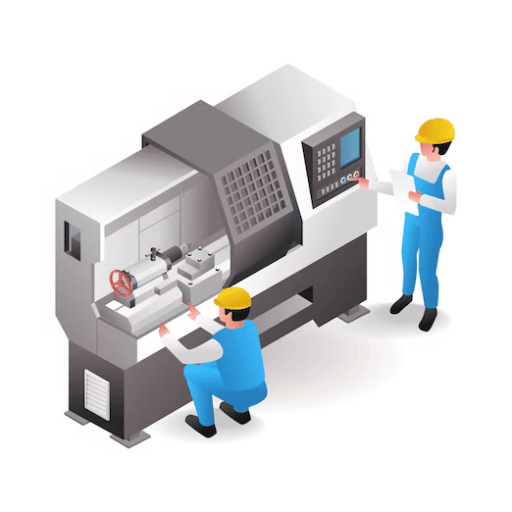
Daily Maintenance Tasks
- Inspect Lubrication Levels: If you want the machine parts to move without any trouble at all, you must regularly check and top up the lubrication oils.
- Clean the Machine: The lathe should be cleaned frequently in such a way that the metal chips and dust are removed, coolant isn’t left on the machine, and the machine continues to operate at its highest efficiency.
- Check for Loose Components: While doing your regular maintenance, check every single fastener, screw, and similar part very carefully for any signs of looseness, and if required, tighten them.
- Examine Tooling and Workpieces: Make sure the mistakes are not caused by unsharp tools, wrong positioning of tools, and loose clamping of workpieces.
- Test Emergency Stops: It is necessary to test that the buttons for emergency stop and other safety measures are functioning optimally.
Scheduled Maintenance Activities
Scheduled maintenance for a CNC lathe is a must to maintain its performance, accuracy, and safety of operation in the long run. Here are some tips for doing maintenance works at the right time that are usually practiced the most:
- Calibration and Testing the Machine: A CNC lathe can be calibrated to a point so that it still makes cuts that are as accurate as possible. Run a few tests to see if the machine is performing consistently.
- Check and Replace a Few Components: The spindle bearings, belts, and other main mechanical parts should be examined. If any wear and damaging signs are visible, then perform replacement to avoid any sudden failures.
- Lubrication in Moving Parts: The guide rails and ball screws and other moving parts will be lubricated to the designed manufacturer’s specifications. The lubrication will be done with minimum friction and wear.
- Review Software and Firmware Updates-Keep the control software and the firmware of CNC lathes in line with the latest technology; any necessary update should be applied.
- Clean and Maintain Coolant System: Clean the coolant system to ensure that the cooling solution does not get contaminated; change the coolant frequently to maintain good regulation of the heat as the system continues its operation. Keep a Check on Teeming Electric Connections: Check all electrical circuits on the machine, including cables and connections, for signs of contamination or loosening and fix any and all problems in time to forestall electrical breakdowns.
Performing such tasks as preventive maintenance will reduce the downtime that comes unprepared by a considerable percentage, as well as extend the lifespan of a CNC lathe and thus maintain the quality of its output in precision machining processes.
Preventive Maintenance Strategies
For a CNC lathe to perform at its best and last longer, following several preventive maintenance strategies are the keys:
Daily Cleaning
It is advisable to get through the condition of detailed dissembling immediately after a single operation. Retentively take away sculpture, cutting oil, or whatever else could interpose.
Lubrication
Regular checking and maintenance of the lubrication of moving parts are the preventive ways to avoid wear and tear and reduce friction.
Spindle and Tool Holder Care
It is necessary to examine spindle and tool holders on a regular basis for damage that would compromise the integrity of an operation.
Coolant System Maintenance
Coolant should be checked regularly and have its levels and quality maintained, changing it when needed in order to prevent overheating.
Alignment Checks
From time to time, verify that the parts are perfectly matched so that precision machining is going on.
If these strategies are followed, they can help the users to avoid sudden failures, raise the production rate and the quality of the machining results will still be high.
Key Maintenance Tips to Prolong the Life of Your CNC Lathe

Regular Inspections and their Importance
To make the most out of your CNC lathe and keep it in its most optimal state, regular inspections are a must. Machine operators, all over the world, list frequent maintenance as one of the top issues that concern them. By doing regular inspections, problems like wearing down of important parts can be detected early on and thus not lead to expensive breakdowns. This not only maintains the precision of machining but also lessens the amount of time during which the machine cannot be used and adds more years to the equipment’s life. The key focus areas are trying out spindle performance, looking at tool holders and making sure no signs of lubrication problems are present. By making it a point to do evaluations consistently, the operators can become more productive and stay away from the surprise stoppages in production.
Proper Cleaning Techniques
A meticulous cleaning is indeed essential in a CNC lathe if its productivity is to be maintained at its highest level apart from prolonging its full life. Therefore, start cleaning the inside of the machine by brushing or scraping the chips and rubbish with a brush or a chip scraper while trying to make sure that no fragment of metal is left there in the critical areas. Swipe down free from residual oils and dust from the surfaces with a clean and dry cloth. The cleaning agent shall be non-abrasive and specifically manufactured for CNC equipment needs cleans all surfaces, both inside and outside. Tool holders, chucks, and spindle must be meticulously cleaned, and certain dirt and dust must be removed. To avoid contamination, the maintenance of the coolant reservoir shall be carried out regularly. Well-managed cleaning, facilitated through appropriate practices, allows the machine to wear off less easily and run solider in contrast to the latter approach.
Lubrication Best Practices
My primary concern when it comes to maintaining a CNC lathe in top condition is the use of lubricants suggested by the manufacturers that match the specifications of the machine. I make it a point to check up on the lubrication system frequently to make sure all the moving components like guideways, ball screws, and the spindle are well-oiled. This in turn lowers the friction and also prevents any premature wear of the components. Consistency is the name of the game, thus I have set up a timetable for the replenishment and replacement of lubricants to keep contamination or breakdown of oil at bay. On top of that, I have made it a habit of inspecting the lubrication system for leaks or blockages so that any problems can be dealt with promptly. By following these measures, I keep the machine’s efficiency and longevity at a high level.
Creating a CNC Lathe Maintenance Plan

Developing a Maintenance Schedule
If engineers are ever going to develop a maintenance schedule for a CNC lathe, then they should work on breaking that list of work tasks according to different frequencies: say, daily, weekly, annually, and so on. For this purpose all the daily exercises for cleaning, searching out for the damages clearly visible to the naked eye, or even levels of oil and coolant must be completed. The week includes the inspection of all belts, hoses, and seals, cleaning and possible replacement of filters, and cleaning out any foreign material found in the coolant tank. For the record, any 30-days’ task would be to install and verify electrical connections, calibrate the tools for precision, and tightening and securing fasteners during clamp-down tightening. One year—complete checkout of some major areas (spindle, tool changeover unit, or other drive systems) on the machine to detect wear and ensure the important functions will not break down. Obviously, when this practice is followed religiously, it assures good productivity as well as minimum downtime.
Essential Maintenance Checklist
Daily Maintenance
- It is essential to remove dust on the machinery’s smooth surface areas and also the rails or surroundings.
- It is also important that the coolant should not run dry and to refill as necessary or with due diligence
- Check for visible signs of wear or damage.
Weekly Maintenance
- The machine parts is to be lubricated with lubricants specified by the equipment manufacturer.
- A visual inspection is to be carried out on the coolant tank, it to be cleaned, and chips and debris to be removed.
- One must verify the working condition of the pneumatic and hydraulic systems.
Monthly Maintenance
- Check electrical connections for signs of wear or looseness and replace if necessary.
- Calibrate and test the tools to guarantee precision and accuracy.
- Examine belts and fasteners, and tighten or replace as needed.
Annual Maintenance
- Conduct a comprehensive check on the spindles, bearings, drives.
- Realign and recalibrate the machines with the respective manufacturer’s specifications.
- Exchange any worn-out part with other parts to ensure the reliability of machines.
The CNC lathe will do well as per the given list ensuring a longer period of service. The machine’s machinery manual serves as your best guidance for detailed sets of instructions.
Monitoring and Adjusting Your Maintenance Plan
Monitoring the operational data of the CNC lathe in a proactive manner in order to maintain its maximum productivity and adapt the maintenance schedule accordingly. Begin with the creation of a complete record for maintenance operations and performance parameters of the pieces of equipment. Use IoT-connected sensors and other monitoring devices for prompt readings of parameters, such as spindle temperature, vibration intensity, and power usage, and compare the data to the manufacturer’s suggested averages for any deviations-reaching a conclusion that could potentially signal something wrong with the equipment.
Addressing Common CNC Lathe Issues

Identifying Wear and Tear
Key parameters and several other maintenance observation measures may present the ill health spreading round a CNC lathe. Every instance such as that more or less carried some major vibratory conditions in it with a broader range of pockets and tolerances. Massive roughness is manifest in the components produced. These problems include everything from deterioration of highly valuable machine bearings, obviously the leading suspect in machine wear and tear. Additionally, the machine might also be noisy, jumping at unusual backlash while it moves, and it might also indicate mechanical wear that is being subjected to maintainability issues. Therefore, it is pertinent to check the main components such as gears, belts, and lubrication systems regularly and possibly keep an eye out for problems or wear areas. If care is taken to respect the maintenance schedule and address any signs of wear or other notable problems immediately upon their presentation, good performance on an intermediate, forever-lengthened machine life may be guaranteed for the enterprise.
Resolving Lubrication Problems
CNC lathes suffering from lubrication issues can face operational inefficiencies, a significant increase in wear, or even a total machine breakdown if the problems aren’t solved immediately. Typical problems are, for instance, insufficient lubrication, lubricant getting contaminated, or over-lubrication, which then results in either clogged pathways or dripping. Solving these problems effectively, first off, make sure that the exact lubricant type which is recommended by the manufacturer is being used. Lubrication lines should be inspected and cleaned regularly to avoid the possibility of blockages, and filters should be replaced when necessary so that a clean flow can be maintained. If not already, introducing an automated lubrication system can be of help in regulating the precise amount of oil or grease required.Conducting regular lubrication audits will let you keep an eye on oil levels and contamination in early stages for minimizing downtime and increasing the life of the machine. Always adhere to what the manufacturer specifies and use top-quality lubricants to improve performance.
Fixing Component Misalignment
In a CNC lathe, component misalignment causes defects in the cutting, excessive wear of the tool, and reduction in accuracy. The following steps can be followed to eliminate this problem:
- Attack the Setup: Fix the workpiece and tools in the right fashion, that is, however it must be mounted and aligned properly. To verify the alignment, measure with a dial indicator.
- Inspect the spindle and Chuck: Ensure the spindle is running perfectly true and the chuck jaws are grabbing the work piece uniformly. Clean and tighten those parts which have to be tightened if the need arises.
- Verify the geometrical leveling of the machine: Check the CNC lathe leveling from every direction. Inappropriate ground leveling under the machine ends up misaligning it. Utilize a high-precision spirit level, if required, to adjust the legs of the machine.
- Calibration of Tooling: Refer tools and tool post to the calibrator to ensure that their height and angle concerning the workpiece centerline are correct.
- Do trial cuts: Take a few trial cuts and observe how well accuracy was achieved. Adjust alignment settings accordingly to attain accuracy.
Correct and on-time maintenance and calibration of machines are important preventive measures for alignment and consistent output.
Reference Sources
-
A Fuzzy ANP-Based Criticality Analyses Approach of Reliability-Centered Maintenance for CNC Lathe Machine Components
This paper discusses predictive maintenance strategies for CNC lathe components using advanced methodologies. -
The Development and Application of CNC Lathe for Electrical Maintenance of Teaching Machine
This research focuses on the development of CNC lathe systems for educational and maintenance purposes. -
A Brief Discussion on Lathe
This document provides an overview of lathe machines, including CNC capabilities and maintenance considerations. - Premium Metalworking Lathes for Sale
Frequently Asked Questions (FAQs)
Why do maintenance matters for a cnc machine and how does it prevent costly repairs?
Maintenance is a crucial task because adhering to a well-written maintenance agreement and a preventive maintenance schedule ensures a great reduction in unexpected breakdowns as well as maintenance costs. By developing a preventive maintenance strategy for a CNC machine, one can be made aware of faults such as loosely connected screws, mismatched belts, and lack in lubrication before time to take preventive measures to prevent expensive repercussions under correct situations. Frequent inspections, a securely maintained maintenance log, and record, in accordance with the manufacturer’s recommendation, are the best weaponry and techniques a responsible maintenance manager must always adopt to maintain the CNC machine with drivers and his machines and the floor indicators (productivity) of your job shop floor.
How can a cnc machine maintenance program extend the life of a cnc lathe?
The focus in maintenance of CNC lathe equipment is on the scheduled maintenance, which is in turn based on the machine’s proper lubrication, checking linear guides, monitoring spindle health, and ensuring alignment of the machine’s axes routine tasks. Maintenance is essential to life extension of the equipment in that it prevents excessive tool wear, improves surface finish, and avoids reactive maintenance. Following important secrets and maintaining good records will greatly help in the life of a metal lathe and make your lathe running reliably.
What machine components should be checked during regular cnc maintenance?
The primary machine components to be visually inspected during CNC maintenance include- linear guides, ball screws, spindle bearings, holders of tools, cooling systems, electric panel, and the control cabinet. A check should be made for loose connections, worn seals, or possibility of contamination in the coolant or lubrication lines, which, if untended, could turn minor issues into major problems. If practicable, service the machine on the basis of all the instructions provided in the instruction manual. This would streamline easier growth management, allowing the keepers of the records to duly act in quick timely measures as days go by on ideal locations where the machine is still lagging concern.
How often should I perform maintenance on a cnc machine to avoid unexpected breakdowns?
It is usage and operating environment dependent, however, a fundamental plan can be made which consists of daily cleanliness and lubrication checks, tool holders and coolant inspections every week, alignment and electrical connections checks monthly, and in-depth maintenance done quarterly or annually. The installation of a preventive maintenance schedule that is customized for your floor and the life of the equipment will lead to reduced maintenance costs, and it will also help to avoid unexpected breakdowns and reactive maintenance scenarios.
How does maintenance management and maintenance records improve shop floor reliability?
With proper maintenance management, maintenance records and a structured maintenance schedule are being used to monitor interventions, component replacements and failure trends. The ability to implement a preventive maintenance program, to anticipate parts revealing their dysfunction, and to minimize the downtime of the shop floor are all based on this data. Moreover, documentation is the basis for cost analysis—demonstrating that maintenance can decrease the total maintenance costs and avoid expensive repairs through proactive measures.