




A Comprehensive Guide to CNC Turning and Milling: Master the fundamentals of Computer Numerical Control technology and unlock precision manufacturing capabilities.
The introduction of CNC (Computer Numerical Control) technology has revolutionized manufacturing and precision engineering, with CNC lathes serving as cornerstones of this transformation. Whether you’re an aspiring machinist, a hobbyist wishing to upskill, or simply curious about the precision involved in making complex components, learning the basics of CNC lathes is the right path forward.
This comprehensive guide will demystify CNC turning and milling by breaking down core concepts, functions, and processes into easily understandable terms. By the time you finish reading, you will possess a solid foundation in CNC lathe operation and its application—from intricate aerospace parts to household mechanical components.
📚 Learning Objectives
✓ Understand CNC lathe fundamentals and components
✓ Master basic CNC turning operations
✓ Learn machine setup and operation procedures
✓ Recognize benefits and industry applications
Introduction to CNC Lathes
CNC lathes are high-precision tools for shaping materials, including metal, wood, and plastic, by rotating the workpiece and cutting it with specialized tools. They operate via computer numerical control (CNC)—an automated process that ensures high precision and consistency. These machines are essential for manufacturing cylindrical parts such as shafts, bolts, and rings, with applications across virtually every industry, from automotive to aerospace.
Industry Impact: By handling intricate designs and performing repetitive tasks with consistent accuracy, CNC lathes have become indispensable in modern manufacturing processes.
What is a CNC Lathe?
A CNC lathe is a precision machining tool that uses computer numerical control to automate and accurately execute cutting and shaping operations on various materials. These machines perform shaping by rotating a workpiece around a fixed axis while various cutting tools simultaneously shape the material into desired forms.
CNC lathes process various materials, including metals, plastics, and wood. Modern CNC lathes feature advanced software that enables precise control of cutting speed, depth, and toolpath, thereby allowing the creation of complex designs and accurate parts.
🏭 Industry Applications
CNC lathes have extensive applications in industries involving aircraft, automobiles, and healthcare products, thanks to their ability to deliver high efficiency, reliability, and repeatable outcomes—essential for both large production volumes and intricate custom designs.
Computer-aided programming integration leads to quicker production times while maintaining the highest quality standards.
The Importance of CNC Lathes in Modern Manufacturing
Modern manufacturing cannot function without CNC lathes, as they enable the production of precise, high-quality parts quickly and cost-effectively. Computer numerical control enables these machines to perform repetitive tasks with high precision, reducing human error and ensuring uniformity across production cycles.
Their capabilities extend beyond simple symmetrical shapes to include innovative designs found in industries such as aerospace, automotive, and healthcare. Software and automation integration have led to faster production, significant material savings, and lower production costs.
Extended Operation
Machines can operate for extended periods without constant supervision, thereby significantly increasing output.
Complex Designs
The capability to handle complex designs and compatibility with a wide range of materials.
Competitive Edge
Vital for product innovation and maintaining competitive advantages in current manufacturing.
Overview of CNC Technology
CNC (Computer Numerical Control) technology is a manufacturing process that uses computers to control machine tools and other equipment to produce precise parts. This technique substitutes manual craftsmanship with machine-based operations that deliver accuracy, consistency, and speed beyond human capabilities.
CNC is invaluable in industries such as aerospace, automotive, and electronics, where complex shapes made of various materials pose the most significant challenges for creating, cutting, and finishing features. The system uses CAD (Computer-Aided Design) and CAM (Computer-Aided Manufacturing) software during the design phase to generate machine instructions, thereby ensuring product quality and repeatability.
Technology Impact: This trend has significantly transformed contemporary manufacturing processes by reducing human error, increasing productivity, and lowering production costs.
Fundamental Components of CNC Lathes
CNC lathes comprise numerous vital components that work together to perform machining with exceptional accuracy. Understanding these components is essential for effective machine operation and maintenance.
Headstock and Tailstock
The headstock and tailstock are critical components of a lathe, providing support and ensuring accurate, high-precision machining. The headstock contains the main spindle, bearings, and components that rotate and power the workpiece. It typically features speed-control systems that regulate spindle rotation to meet material and task requirements.
The tailstock provides stability for longer workpieces during processes such as drilling, reaming, and turning. It can slide along the machine bed and lock in position, offering operators flexibility for different machining needs. When used in combination, these components provide accuracy and resistance to deflection, making them vital for producing consistent results in cylindrical and symmetrical workpieces.
Chuck and Tool Turret
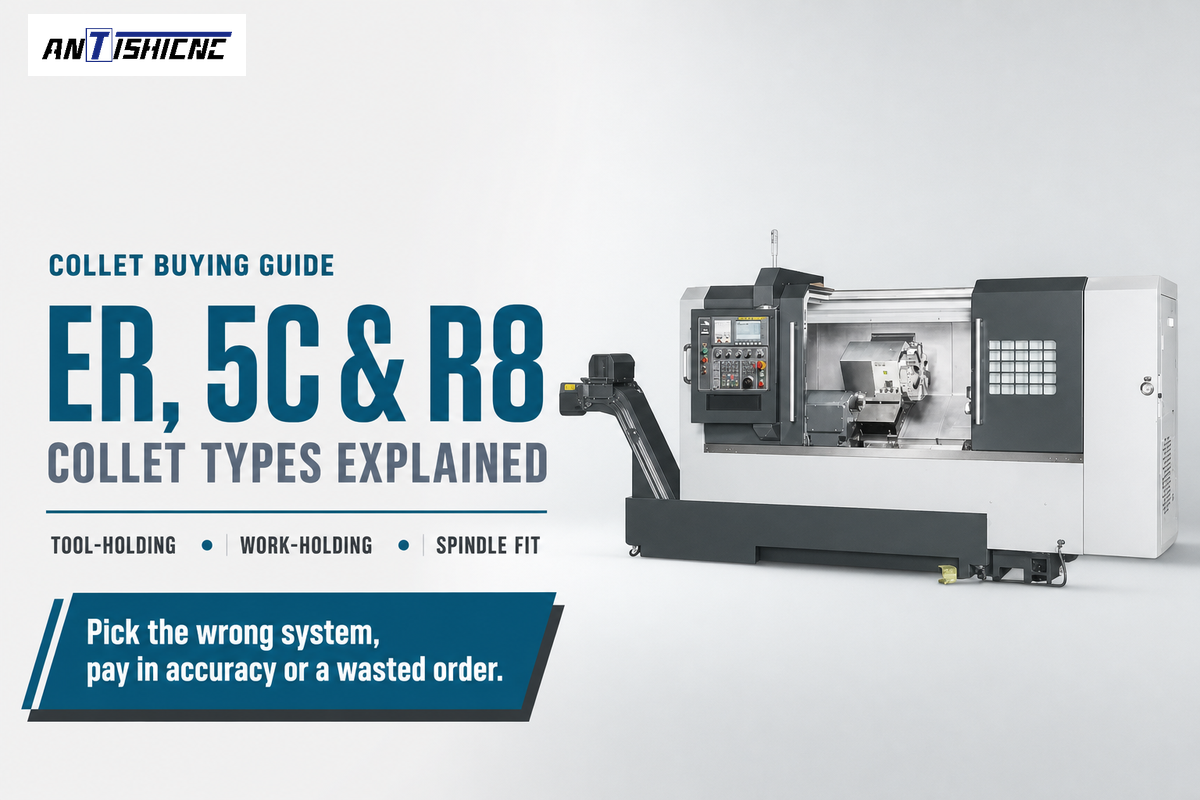
The chuck and tool turret are fundamental elements in machining procedures. The chuck is a gripping element mounted on the spindle that securely holds workpieces during machining. The tool turret, by contrast, is a rotating surface that accommodates several tools for various cutting and machining operations.
Efficiency Advantage: This feature enables rapid tool changes, reducing operational time and supporting more complex procedures. These components add substantially to machine versatility and accuracy.
Understanding the CNC Machine Axis
The axis system in CNC machines is an essential component that controls the direction of machining motion. CNC machines typically use three principal axes: X, Y, and Z. The X-axis controls horizontal plane movement, the Y-axis manages vertical movement, and the Z-axis handles depth or up-and-down motion.
Advanced CNC machines can employ additional axes, such as A, B, and C, enabling rotation and the machining of very complex shapes. These axes operate independently yet precisely in synchronization, under computer control, enabling consistent and accurate material removal.
🎯 Axis Configuration Benefits
This axis configuration presents great advantages for manufacturing detailed components typically required in industries such as aerospace, automotive, and medical equipment. By understanding how axes work, operators can utilize machines to fullest extent while producing parts with extremely high precision levels in minimal time.
How CNC Lathes Work
CNC lathes operate by rotating workpieces and cutting material into desired shapes by moving the tool along multiple axes. Computers control machines through programs that provide precise directions for tool movements. Important machine parts include the spindle supporting and rotating pieces and the tool turret holding several cutting tools for different machining tasks.
Despite being labor-saving devices, CNC lathes maintain high precision standards, resulting in fewer human errors and higher output—giving them pivotal roles in mass production of intricate and complicated parts across various industries.
Comparison with Manual Lathes
Understanding the differences between CNC and manual lathes helps clarify the advantages of computer-controlled automation. The comparison below highlights critical distinctions:
| Key Point | CNC Lathe | Manual Lathe |
|---|---|---|
| Automation | Fully Automated | Manual Control |
| Precision | High | Moderate |
| Speed | Fast | Slower |
| Complexity | Handles Complex Parts | Simple Parts |
| User Skill | Minimal | Skilled Operator |
| Error Rate | Low | Higher |
| Efficiency | High | Lower |
| Initial Cost | Expensive | Cheaper |
| Maintenance | Advanced | Simpler |
| Production Volume | Large Scale | Small Scale |
Basic CNC Turning Operations
CNC turning is a machining process in which cutting tools remove material from rotating workpieces, enabling the precise production of cylindrical parts. It is one of the fundamental operations in Computer Numerical Control, enabling highly automated and accurate processes. Computer programming efficiently manages tool paths and cutting parameters.
Facing
Creating flat surfaces on the workpiece ends by cutting perpendicular to the rotation axis.
Turning
Material removal along the workpiece length to achieve the desired diameter specifications.
Grooving
Cutting outer surfaces to create channels for functional or decorative purposes.
Parting-off
Efficiently disconnecting finished parts from remaining stock material.
Threading
Creating helical grooves for screw threads with precision accuracy.
Versatility: CNC turning handles both complex designs and simple components thanks to computer programming that efficiently manages all machining parameters.
Programming CNC Lathes: An Overview
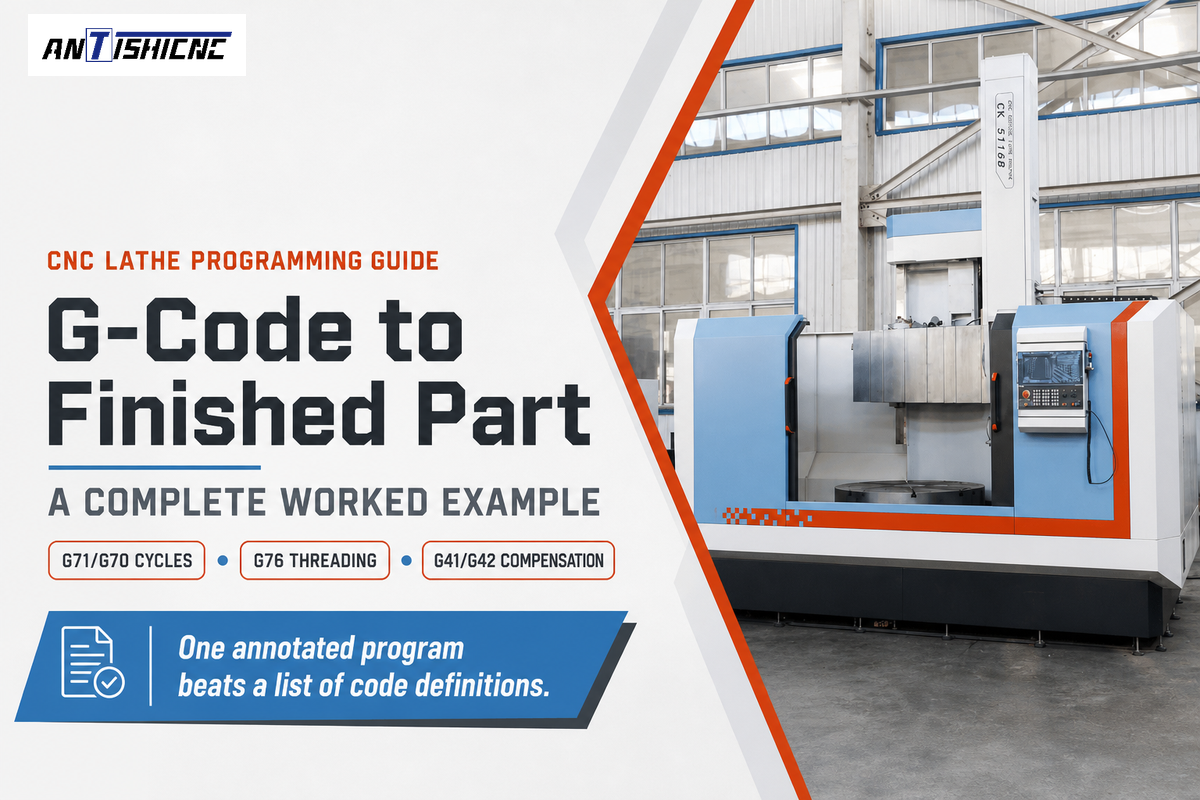
Programming CNC lathes requires preparing precise instruction sets that specify machine motion and cutting operations. This is usually accomplished with G-code, a standard language for CNC machine programming. The process begins with part design using CAD (Computer-Aided Design), followed by conversion of designs into manufacturable formats using CAM (Computer-Aided Manufacturing) software.
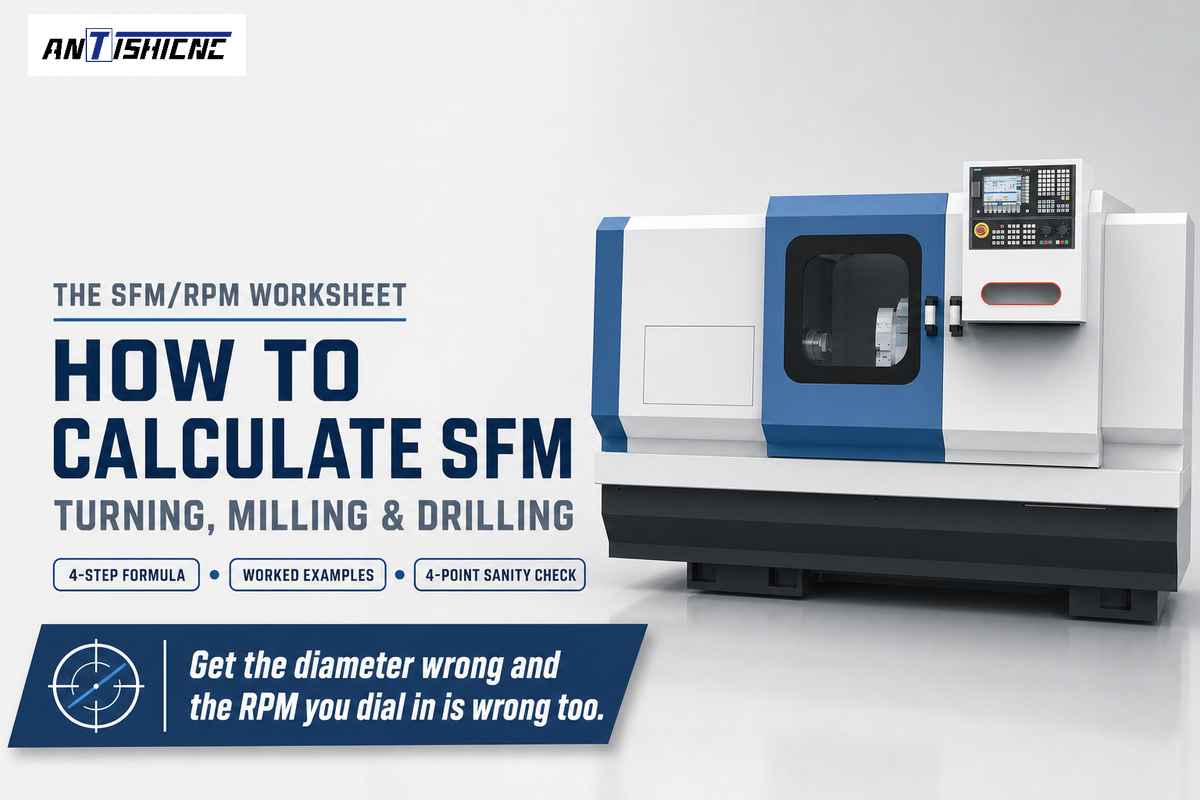
Main programming elements include defining toolpaths, cutting speeds and feed rates, and operations such as turning, grooving, and threading. Operators carefully set each parameter to ensure efficient, precise machining that maximizes material utilization.
Benefits of Using CNC Lathes
CNC lathes deliver numerous advantages that significantly impact manufacturing quality, efficiency, and cost-effectiveness. Understanding these benefits helps manufacturers make informed technology investment decisions.
🌟 Key Advantages
1. High Precision and Accuracy
Machines perform extremely accurate processing with minimal mistakes, guaranteeing consistent production quality even for difficult designs.
2. Efficiency and Speed
Operate at very high pace, cutting production time greatly while maintaining precision—ideal for mass production.
3. Reduced Human Error
Automation practically eliminates errors associated with manual machining processes.
4. Versatility
Work with a wide range of materials, shapes, and sizes, providing manufacturers with the necessary flexibility to produce diverse components.
5. Cost-Effectiveness
Although initial costs are higher, long-term savings result from reduced waste, faster production cycles, and decreased need for skilled workers.
Precision and Accuracy in Production
Precision and accuracy are necessary in manufacturing processes. Precision means avoiding discrepancies in measuring or producing parts, thereby guaranteeing each item meets identical high specification standards. Accuracy confirms finished products match intended designs and dimensions exactly.
CNC lathes operate with sophisticated programming, minimal human intervention, and state-of-the-art technologies such as high-resolution encoders and real-time monitoring systems. Recent data and trends show industries place a high value on precision and accuracy as competitive differentiators.
Industry Research: Studies indicate that firms utilizing CNC technology experience fewer defects, better quality assurance, and improved customer satisfaction. Maintaining extreme tolerances and performing flawless repetitions makes CNC lathes essential in aerospace, automotive, and medical device manufacturing, where precision is mandatory.
Efficiency and Time Savings
By automating complex manufacturing processes, CNC lathes significantly improve efficiency and reduce time. They operate almost entirely without human involvement, eliminating downtime and cutting labor costs. The entire process becomes faster while maintaining expected quality levels—no projects face delays due to quality issues.
Additionally, CNC technology’s precise cutting capabilities reduce material waste, thereby saving money and supporting environmental sustainability. These benefits make CNC lathes essential for quickly meeting deadlines and satisfying high production demands.
Flexibility in Machining Different Materials
CNC lathes are versatile machines that process a range of materials, including metals, plastics, and composites. This flexibility enables manufacturers to produce a range of parts for other markets, using the same lathes for the aerospace and automotive industries.
CNC lathes maintain precision when machining a range of materials, regardless of their hardness or density. Moreover, users can switch between materials quickly with minimal adjustments, enabling increased production while reducing downtime. Therefore, CNC lathes are well-suited for companies that require a range of machining capabilities.
Beginner’s Guide to Operating CNC Lathes
Operating CNC lathes effectively requires following systematic procedures to ensure safety and quality. Newcomers can develop skills and confidence through regular practice and adherence to these fundamental steps:
Understand the Basics
Familiarize yourself with the CNC lathe machine, its parts, controls, and operations. Standard parts include the chuck, tool turret, and control panel. Read the manufacturer’s user manual to understand their specific instructions.
Set Up the Machine
Clamp the workpiece in the chuck, then check and adjust the alignment. Pick and mount the necessary cutting tools in the tool turret. Enter parameters such as speed, feed rate, and tool path into the control system.
Load the Program
Write or upload the CNC program specifically tailored for the task. Most machines allow simulation of operations before actual machining to verify program accuracy.
Run a Test
Perform a test run without contact between the cutting tool and the material to verify the correctness of the program and machine setup. This step helps prevent errors and protects against potential damage.
Monitor the Operation
Once the trials are successful, begin the machining process. Monitor operations continuously to ensure that machines perform as expected, and make adjustments as necessary.
Setting Up the CNC Lathe Machine
Several significant steps are involved in CNC lathe machine setup to guarantee operational safety and effectiveness:
Safety First: Following these steps allows operators to set up CNC lathes correctly and safely, reducing risk and increasing efficiency.
Tool Selection and Usage
Choosing the right tools is essential for producing machined parts with precision and efficiency. Tool selection should be based on material type, operation (e.g., cutting, drilling, milling), and finish requirements. It’s essential to ensure that tools are sharp, well-maintained, and suitable for the specified speed and feed rates.
Best Practices: To achieve optimal results and prolong tool life, always consult the manufacturer’s guidelines and specifications for proper use.
Frequently Asked Questions (FAQs)
❓ What is a CNC mill, and how does it relate to CNC lathe basics?
A CNC mill is a machine that removes material by rotating a workpiece, producing complex shapes and flat surfaces. When beginners learn the basics of CNC lathes, mills are often compared with CNC lathes and milling centers. While CNC lathes turn workpieces, leaving cylindrical shapes, milling machines cut parts by moving cutting tools. This distinction aids decision-making regarding the prioritization of turning or milling for respective jobs. CNC mills use G-code, CAD files, and CAM-generated toolpaths for automated activities, making them indispensable tools for both prototyping and high-volume production.
❓ How does CNC milling complement CNC turning operations?
CNC milling complements CNC turning by enabling features that are difficult to machine on lathes alone, such as slots, pockets, and complex multi-face shapes. In machining centers, parts may be rotated to achieve diameter tolerances, after which features are added by milling using rotary cutting or multi-axis toolpaths. CAM software, such as Mastercam, is commonly used for part simulation and for generating canned cycles to expedite production. Choosing the right machine type—whether dedicated CNC lathe, mill-turn, or gantry mill—depends on part geometry, volume, and required tolerances.
❓ When does a beginner use parting on a CNC lathe versus a mill?
Beginners use parting on CNC lathes to separate stock from finished parts (parting off). It’s most often used on circumferential, mass-turned pieces where there’s an uptime advantage over manual and other CNC operations. Milling is typically used for parting, but only for features along lathe axes and faces. For newcomers, parting is facilitated by loaded lathe control systems, proper tool selection, and well-constructed peripheries to prevent chatter or tool breakage. In production environments where many identical parts are produced, lathe parting is often faster and more efficient than transferring workpieces to mills for separation.
❓ How is diameter control different on a lathe versus milling?
Diameter control on lathes is achieved by controlling the tool position as the workpiece rotates, enabling precise manual or CNC turning to achieve target diameters with tight tolerances. Milling considerations regard cutter sizes and rotary toolpaths for creating cylindrical features in mills or mill-turn centers. For novice machinists, understanding the effects of feed rate, speed, and tooling on surface finish and diameter accuracy is essential. CAM simulation and good G-code programming ensure reliable consistency. Control systems such as Haas feature offset and tool compensation capabilities that maintain proper diameters throughout operations.
❓ How is chamfering done on a lathe versus a mill?
Creating chamfers on lathes is done with chamfering tools or insert tools depending on cutability, spin, and possible fixturing. It produces neat concave bevels on edges or shoulders to impart generator profiles. Lathe chamfering benefits from efficiency in processing cylindrical parts and maintaining uniform edge break generation. Mill chamfering is performed on flat faces, complex shapes, or changing sizes—requirements standard in non-rotational geometry. Beginners should work with both manual and CNC techniques to simulate chamfer toolpaths, particularly when integrating chamfer operations into multi-stage machining processes in mixed-machine-shop settings.
❓ What is the role of G-code and canned cycles in CNC operations?
G-code is the universal language spoken by CNC machines, enabling automatic operations that control speed, feed rate, movements, spindle speed, and tool changes. Canned cycles help speed up editing when code is garbled or erroneous; some can delete entire code sections. This “filling in” contributes to much lower programming time and reduced human error. Learning G-code and how canned cycles apply to controls like Haas speeds up moves from manual turning to full automation on CNC machines. Simulation software verifies toolpaths, checking for unintended collisions and excessive tool demands, and optimizes G-code and cycle calls for maximum efficiency.
Conclusion
Understanding CNC lathe basics provides a solid foundation for anyone entering the world of precision manufacturing. From fundamental components and operational principles to programming and practical applications, this comprehensive guide covers essential knowledge required for successful CNC lathe operation.
As technology continues to advance and manufacturing demands evolve, CNC lathes remain indispensable tools for producing precise, high-quality components across numerous industries. By mastering these basics and practicing regularly, beginners can develop the skills and confidence needed to excel in modern manufacturing environments and contribute to the continued evolution of precision engineering.
Reference Sources
-
CNC Machining: The Complete Engineering Guide
- A comprehensive guide that breaks down the CNC process into steps, covering both CNC milling and lathe operations.
-
CNC Lathe Programming Manual Simple
- A beginner-friendly manual that explains basic CNC lathe programming, commands, and practical exercises.
-
An Introduction to CNC Turning
- Provides an overview of CNC turning, including the process, machines, and differences from CNC milling, tailored for beginners.
- Premium Metalworking Lathes for Sale