




CNC machines have undoubtedly revolutionized the precision manufacturing landscape, offering capabilities in accuracy and efficiency that cannot be rivaled. Among the various CNC machines, CNC lathes and CNC turning centers are often used interchangeably due to their similar functions and applications. However, they vary in their machining capabilities, significantly affecting the machining process, productivity, and outcomes. This blog outlines the key differences between CNC lathes and CNC turning centers, highlighting their distinct characteristics, strengths, and potential applications. Consequently, this should guide you in deciding the most appropriate machine to fit your needs, whether you are a seasoned professional or a greenhorn in machining. Continue reading to become familiar with the world of these two essential tools and their relevance in the modern manufacturing landscape.
CNC Lathe Machines

CNC lathes are versatile machines that function to rotate the workpiece while the cutting tools shape it into the desired form. The machines would thus be most suitable for cylindrically shaped parts, such as shafts, bushings, and threaded parts. CNC lathes are well-regarded for their precision in manufacturing, as well as their robustness and capability for producing repetitive tasks. They are typically used in industries such as automotive, aerospace, and manufacturing, where precision and consistency are crucial. With easy-to-understand controls and automation, CNC lathes minimize machining time.
What is a CNC Lathe?
CNC lathes are High-Precision tool machines, used for shaping, cutting, and forming workpieces, generally cylindrical, by holding the work and rotating it against a cutting tool. In the modern-day manufacturing industry, these lathes, programmed via software, give the utmost precision and repeatability.
Additionally, these machines enable operations such as turning, facing, threading, drilling, and knurling. Depending on the complexity of the workpiece, CNC lathes can work on multiple axes. The most common are 2-axis machines; however, there are very advanced machines with 3-axis and 5-axis settings. For example, a 5-axis lathe can cut complex geometries without requiring repeated part repositioning, thereby saving time and maintaining precise results.
Market Growth & Industry Impact:
The efficiency and versatility of CNC lathes are used in aerospace, defense, construction, and medical device manufacturing industries. With the expected rise in demand for precision components in automotive and electronics applications, CNC machining processes, including lathe operations, are projected to witness a compound annual growth rate (CAGR) of almost 7% from 2023 to 2030. Further globalization of industrial production through CNC lathe automation, aided by AI and IoT integrations, continues to mark them as core industrial equipment.
Productivity-wise, CNC lathes are one of those tools that prevent human error, minimize wastage of materials, guarantee product uniformity, and thus deliver ROI to those whose businesses are seeking more substantial competitiveness in the fast-changing market.
Key Features of CNC Lathes
🎯 Unyielding Precision and Accuracy
Modern CNC lathes can manufacture intricate components with an allowance of ±0.0001 inches. This is required in aerospace, medical, and electronics fields, where specifications are stringent.
🤖 Heightened Automation
CNC lathes, being highly automated, can operate even with minimal human intervention. In the production life cycle, tool changers and parts feeders contribute to higher efficiency and lower downtime.
AI and IoT Integration
Cutting-edge CNC lathes can be integrated with AI and IoT technologies to enhance their capabilities. These functions include monitoring real-time, predictive maintenance, and operationalization remotely to ensure improved OEE and greater cost reductions.
Material Versatility
CNC lathes are capable of machining a variety of materials, including metals such as aluminum, brass, and steel, as well as engineering-grade plastics like PEEK and PTFE. Such versatility enables them to function across a broader range of manufacturing sectors.
Speed and Efficiency
Achieving spindle speeds of up to 8,000 rpm, CNC lathes significantly reduce machining time while finishing the workpiece to high standards of quality. Such an advantage is indeed crucial in meeting tight production deadlines under a competitive market.
Environmental Enhancements
Newer models prioritize environmentally friendly aspects by minimizing material waste and reducing energy consumption wherever possible. Regenerative braking systems, for instance, are features that help manufacturers lower their environmental impact.
These features have thus made CNC lathes indispensable within modern manufacturing, fostering innovation and efficiency while satisfying the demands of leading industries.
Applications of CNC Lathe Machines
CNC lathe machines find applications across various industries due to their accuracy, efficiency, and sometimes, complex designs. Below are some major applications and how they vary according to industries:
📈 Industry Growth Statistics
According to recent industry reports, the global aerospace CNC market is projected to grow at a CAGR of 6.9% from 2023 to 2030, indicating an increase in the use of CNC machines for aerospace manufacturing.
| Industry | Applications | Key Requirements | Growth Impact |
|---|---|---|---|
| Aerospace | Turbine blades, landing gear components, and engine components | High precision, stringent quality, and safety standards | 6.9% CAGR growth expected |
| Automotive | Engine parts, transmission systems, sophisticated gears | Mass production, uniform quality, cost reduction | The electric vehicle trend is driving demand |
| Medical | Surgical instruments, implants, prosthetics | Micron-level precision, biocompatibility | Improved patient outcomes focus |
| Oil & Gas | Pipes, valves, joints | Strength, accuracy, and weather resistance | Increasing energy requirements |
| Electronics | Button cases, connectors, complex components | Adaptability, quick design changes | Rapid market evolution |
Specific Industry Applications:
- Aerospace Sector: CNC lathes are utilized to manufacture highly intricate parts, including turbine blades, landing gear components, and engine components. This high precision ensures that the parts adhere to stringent quality and safety standards.
- The Automotive Industry: CNC lathes are used to manufacture engine parts, transmission systems, and sophisticated gears for automobiles. These machines, in effect, enable the mass production of goods while maintaining uniform quality, thereby reducing costs and time. As the trend of electric vehicles gains momentum, CNC lathe machines play a crucial role in producing high-efficiency parts, such as drivetrain components and lightweight materials.
- Medical Sector: CNC lathe machines in the medical industry ensure that surgical instruments, implants, and prosthetics are manufactured precisely enough. Exceptional accuracy, in many cases, down to the microns, is expected of these items. It produces titanium bone screws and dental implants; CNC lathes assist in achieving improved patient outcomes.
- The Oil and Gas Industry: CNC lathes are used to manufacture parts that require strength and accuracy, such as pipes, valves, and joints, for the oil and gas sector. These parts are exposed to inclement weather; therefore, the reliability provided by CNC machining must be ensured. This growth in the industry has led to the widespread adoption of CNC technology, further driven by increasing energy requirements.
- Electronics and Consumer Products: From simple button cases for cell phones to highly complex connectors, CNC lathe machines help manufacture a wide range of electronic and consumer products. This adaptability allows manufacturers to shift to new designs as market demands can change quickly.
By and large, CNC lathe machines are placed to give a further boost in achieving versatility and precision during manufacturing in diverse industries, where production of fine quality can lead to innovations in technology and manufacturing standards.
CNC Turning Centers

Turning centers can be defined as advanced manufacturing machines that primarily function by rotating a machining workpiece, which is then cut into modules of a specific design using cutting tools. These machines are capable of performing complex operations, such as drilling, threading, and facing, to meet the varied requirements of production. For these reasons, they are further appreciated in industries that require consistent detailing of parts with great accuracy, repeatability, and efficiency. This further enhances the promise that CNC turning centers opened, working with metals, plastics, and composites for a wide range of applications.
Defining CNC Turning Centers
CNC turning centers, being highly advanced manufacturing machines, automate the turning process, which is critical in the formation of cylindrical parts. These motors are controlled by computer numerical control (CNC) systems, which enable precise and repeatable operations to minimize human error. Typically, they come with a lathe machine setup, where CNC turning centers rotate a workpiece to be shaped according to desired dimensions using various cutting tools.
Advanced Technical Capabilities:
- Multi-Axis Systems: Present-day CNC turning centers typically possess a multitude of axes, usually 2-axis, but advanced CNC turning centers may have 3, 4, or even 5 axes, resulting in increased flexibility to generate sophisticated geometries.
- Live Tooling: They also generally have live tooling to perform secondary operations such as milling or drilling. At the same time, the workpiece is still held in the CNC turning center, thus saving time and improving workflow efficiencies.
- High Performance: High-end CNC turning machines can achieve spindle speeds of 6,000 RPM or more. On the other hand, precision maintains a tolerance level of ±0.0002 inches.
A CNC turning center is characterized by speed and accuracy-the two elements of efficiency. Speed is one thing; high-end CNC turning machines can achieve spindle speeds of 6,000 RPM or more. On the other hand, precision maintains a tolerance level of ±0.0002 inches. Such a level of precision is required in cases where even slight deviations can lead to serious problems, as seen in industries such as aerospace engineering, automotive, and medical devices.
The materials to be machined are another consideration. CNC turning centers can process metals such as aluminum, stainless steel, and titanium, as well as non-metallic materials like plastics and composites. Due to this, it is considered an excellent solution by various industries across multiple fields.
Another consideration is the integration of IoT and automated monitoring systems with CNC technologies in modern days. These features allow real-time performance monitoring, predictive maintenance, and enhanced productivity. With such capabilities, CNC turning centers have firmly established themselves as a vital part of modern manufacturing processes.
Advantages of CNC Turning Centers
🏆 Key Performance Benefits
CNC turning centers combine utmost precision and consistency to produce highly complex parts within tighter tolerances. The key specifications include automation, which virtually eliminates human error, thereby enhancing trim ability. Despite this, manufactured parts possess tolerances inclusively up to ±0.0001 inches, thereby meeting the requirements of aerospace and medical manufacturing.
Enhanced Operational Efficiency
CNC turning centers enhance efficiency in operations by reducing setup times and allowing for multiple operations to be performed in a single setup. Modern machines are equipped with multi-axis capabilities that enable simultaneous turning, drilling, and milling, as well as phase integration, which markedly reduces lead time and increases throughput.
Scalability & Flexibility
These CNC turning centers have become synonymous with scalability. They are suitable for both small-batch, customizable jobs and large-scale industrial production, thanks to their ability to maintain high-speed output while ensuring quality.
Productivity Improvements
Reports even state that productivity improvements of up to 40% can be achieved after manufacturers incorporate CNC technologies into their operations, thereby directly influencing operational efficiency.
Smart Technology Integration
Additionally, the integration of innovative solutions and IoT connectivity enables operators to monitor machine performance in real-time, schedule predictive maintenance, and optimize workflows. Doing so reduces downtime and extends equipment life, thus deriving savings over time.
This, in addition to their capability to handle materials ranging from metals to plastics, composites, and the table, has made CNC turning centers indispensable in modern manufacturing.
Industries Utilizing CNC Turning Centers
CNC turning centers are the backbone of heavy industries due to their precision, speed, and versatility in processing various materials. For the aerospace industry, these machines are used to produce complex turbine blades, fuel system parts, and landing gear components in compliance with stringent quality and safety standards. Meanwhile, CNC turning centers also find use in the automotive industry, where they are used to forge high-precision engine parts, transmission components, and custom prototypes that require reliability and performance.
📊 Global Market Growth
With recent data, the worldwide CNC machine market was expected to grow at a roughly 7% CAGR from 2021 to 2028. The rise in demand indicates a growing acceptance of CNC technology among industries, where production costs are said to be reduced, operational effectiveness is increased, and product demand for high quality is upheld. Hence, these newer market trends validate the indispensability of CNC turning centres in present-day manufacturing landscapes.
CNC turning centers also find applications in the healthcare and medical device industries, where they are used for the manufacture of surgical instruments, orthopedic implants, and dental devices with micron-level accuracy. On the other hand, the electronics section utilizes CNC machines to produce intricate, miniaturized parts that are essential for phones and computers. In addition to the oil and gas sectors, CNC turning centers produce more heavy-duty parts, such as those that comprise valves, rigging, and pipeline equipment, which must withstand adverse environments during operations.
Comparative Analysis: CNC Lathe vs CNC Turning Center

🔄 Head-to-Head Comparison
The CNC turning center and the CNC lathe are two machining tools that share similar functions, yet they differ in complexity and capabilities. CNC lathes tend to be simpler machines, with operations limited to the basic turning process, including cutting, facing, and threading. They are well-suited to produce cylindrical parts accurately, but lack certain features necessary for advanced automation.
Conversely, CNC turning centers are more versatile. Besides turning, they come with live tooling features, a Y-axis, and automated ways of handling the parts. These tools are well-suited for multi-tasking environments and can produce complex parts with fewer setups.
Choosing one over the other depends on the application’s requirements. For simpler jobs and cost savings, CNC lathes work well. For intricate processes and high production volumes, the CNC turning center is the best fit.
Lathe vs CNC Turning Center: Key Differences
| Aspect | CNC Lathe | CNC Turning Center | Key Advantage |
|---|---|---|---|
| Operation Focus | Straightforward turning operations | Multi-tasking with turning + milling | Turning Center: Versatility |
| Axis Configuration | Primarily X-Z coordinate system (2-axis) | C-axis, Y-axis, multi-axis capabilities | Turning Center: Advanced positioning |
| Tooling System | Standard cutting tools | Live tooling for milling, drilling, and tapping | Turning Center: Live tooling |
| Setup Requirements | Simple setup, cost-effective | Fewer setups for complex parts | Turning Center: Reduced setups |
| Production Volume | High-volume, simple parts | High-volume, complex multitasking | Turning Center: Complex automation |
| Spindle Speed | Up to 8,000 RPM | Exceeding 8,000 RPM with advanced systems | Turning Center: Higher speeds |
| Investment Level | Lower initial cost | Higher capital investment | CNC Lathe: Cost-effectiveness |
Detailed Comparison Analysis:
When comparing a CNC Lathe against a CNC Turning Center, a series of facts highlights their respective abilities and areas of application. CNC lathes, considered traditional, generally focus on the straightforward turning operation wherein the primary objective is to get the workpiece to rotate so that the cutting tool can shape it. These machines are easy to use, less costly, and are best suited for services around cylindrical works such as shafts & bushings.
In contrast, CNC turning centers have evolved beyond lathes, with more axes, including a C-axis and often a Y-axis, to carry out a wider variety of operations beyond mere turning. In many cases, they also have live tooling, which means they can mill, drill, and tap on the machine itself, thereby reducing the number of setups required. Hence, contemporary CNC turning centers can perform complex multitasking operations that combine turning with high-accuracy milling to produce intricate parts, such as those used in the automotive and aerospace industries. Additionally, CNC turning centers equipped with automated part handling systems significantly contribute to manufacturing efficiency by reducing cycle times and enhancing repeatability.
⚡ Performance & Investment Considerations
CNC-format turning centers can arguably be described as high-volume production machines. On the other hand, a highly advanced setup features fast tool-changing systems and spindles with speeds exceeding 8000 RPM. Less downtime means faster material removal rates. CNC turning centers generally require more capital investment; however, for a large, versatile production run, they have virtually always resulted in very low per-part manufacturing costs due to automation.
The decision becomes particularly challenging due to the complexity of parts, volume of production, and cost restrictions. For a firm seeking a straightforward solution and a cost-effective approach, emphasizing turning only, then a CNC lathe is sufficient. However, if a more complex and multitasking design is required, along with efficient mass production, CNC turning centers stand accordingly at the cutting edge in terms of precision and efficiency.
Machining Processes in CNC Lathes and Turning Centers
🔧 CNC Lathe Processes
Regarding workholding methods, several approaches for CNC lathe-based shaping depend on whether the item is sufficiently heavy to require a specific process. The workpiece is held in place by clamps or die blocks. Sometimes, if necessary, the lathes themselves are also clamped onto the workpiece. CNC lathes use an X-Z coordinate system (i.e., two axes) to control the tool and perform turning operations.
⚙️ Turning Center Processes
On the contrary, turning centers do more than just turning. They contribute to combined machining processes, working in conjunction with milling, tapping, and drilling operations without requiring setup or relocation to another machine. This reduces downtime, leading to a significant increase in overall efficiency.
🎯 Performance Statistics
Recent introductions have addressed the ability of CNC turning centers to produce large quantities in a single lot. Firms that practically contemporaneously machine their workpieces in a turning center have reported up to 40% reduction in production cycle time. On some occasions, the turning centers allow very tight tolerances to be maintained, ranging down to ±0.002 inches, which is an absolute must in aerospace, automotive, and medical device manufacturing, where utmost precision is of the essence.
Depending on the production aims, one may opt for one or the other. CNC lathes have traditionally been suitable for machining simple, low-complexity parts, whereas turning centers offer flexibility and multitasking capabilities with reduced manual intervention. The addition of intelligent technologies and automation is further enhancing the machining processes of both CNC lathes and turning centers, making them more reliable and cost-effective.
Which Machine is Right for Your Application?
🎯 Selection Criteria
Machine selection for a particular application requires a careful examination of several key considerations: production volume, part complexity, material type, and required tolerances. They are cheap and straightforward machines suitable for manufacturing cylindrical parts such as shafts, molds, and connectors. Sometimes, more complex types of machinery are used for small production runs, but CNC lathes shine in high-volume production where they can often achieve cycle times shorter than those of these systems.
🏭 Turning Center Advantages for Complex Applications
A turning center, however, offers more advanced functions such as milling, drilling, and tapping, thereby consolidating diverse operations into a single setup. Nowadays, for instance, a turning center with multi-axis capabilities can machine aggressive geometries without the need to move the parts to another machine, buying time and gaining precision. Turning centers are thus chosen by industries where the need for truly complex designs is there, such as the aerospace or medical device industries.
📈 Automation & Smart Manufacturing Benefits
In addition to automation and smart factories, machining truly is a modern technological marvel. CNC turning centers equipped with integrated robotic arms or automated systems for material handling are capable of lights-out manufacturing, thereby significantly increasing output capacity while reducing labor costs. Manufacturing case studies also report that production lead times can be reduced by up to 30% when multitasking operations are fully applied with turning centers.
The ultimate decision between a CNC lathe and a CNC turning center should depend on one’s respective application needs and real scalability. Proper support tooling and programming can also ensure that either option is maximized in terms of potential, long-term efficiency, and profitability.
Types of CNC Machines

According to functions and applications, CNC machines are of several types, some of the commonly encountered ones including:
CNC Milling Machines
Used for cutting and shaping materials, these machines move the workpiece and rotate cutting tools.
CNC Lathes
Best suited for creating cylindrical parts, where the workpiece is rotated against stationary cutting tools.
CNC Plasma Cutters
Used to cut through materials like metals with torch plasma at high temperature.
CNC Routers
Used for engraving as well as for cutting wood, plastic, and other soft materials.
CNC Grinders
These machines are meant to finish surfaces by grinding materials to a high level of precision and smoothness.
These machines offer versatility, chosen according to one’s specific requirement.
Types of CNC Lathe Machines
Technologically advanced instruments for manufacturing turned objects are of various kinds to suit industry requirements for multiple applications. Some common types include the following:
Two-Axis CNC Lathes
These are the most basic types of lathes and, by far, the most commonly employed. They possess only two axes (X and Z) for simple turning operations. They are used to manufacture cylindrical parts, screws, and shafts. Their basic structure favors lower prices, high production volume, and high accuracy.
Multi-Axis CNC Lathes
These multi-axis CNC lathes feature Y, C, or B axes, enabling secondary operations such as milling or drilling to be carried out on the same machine. These machines are mainly used for executing complicated tasks on parts in the aerospace and automotive industries. Live tooling eliminates secondary operations, thus reducing production time.
CNC Swiss Lathes
Swiss lathe machines are used for high-precision machining of small and delicate parts. Watchmaking and medical equipment manufacturing are two industries where they are commonly employed. These machines have sliding-headstock mechanisms, allowing precision during metalworking. They are especially suited for high-efficiency production of long, thin pieces.
Vertical CNC Lathes
A vertical lathe is one where the workpiece is held in a vertical orientation, making it ideal for machining large and heavy components, such as wheels, turbine blades, or oversize flanges. Vertical alignment reduces the deflection of the workpiece, thereby improving accuracy when machining larger pieces.
CNC Turning Centers
Turning centers with advanced configurations allow for high flexibility in their turning and milling capabilities. These machines perform multiple operations on various tools within a single setup for complex parts. Frequently, they feature automated functions such as robotic arms for loading and unloading workpieces, which helps increase production throughput.
Flat-Bed and Slant-Bed CNC Lathes
Flat-bed lathes are robust and designed for heavy machining, with stability a key consideration during operations. On the other hand, slant-bed lathes possess a sloped design for chip management and ergonomic access to the workpiece. Slant-bed designs are typically chosen for high-speed, high-precision applications.
These types of CNC lathe machines offer tailor-made solutions to meet a wide array of manufacturing needs, providing versatility and efficiency for projects such as mass production or specialized, high-precision applications.
Types of CNC Turning Centers
CNC turning centers are categorized based on their design, capabilities, and various applications. Each type has distinct features designed to suit specific machining situations, enhancing productivity and precision across multiple industries.
1. Horizontal Turning Centers
In the industry, horizontal CNC turning centers have been among the most widely utilized machines. With these machines, the workpiece spindle is set in a horizontal position to accommodate cylindrical parts, such as screws, shafts, and bushings. Horizontal turning centers also offer a live tooling feature that enables milling, drilling, and tapping operations in addition to turning. With a breakneck spindle speed of many modern machines, which typically exceeds 4,000 rpm, accuracy can also be at its best, and we are talking about a tolerance of ±0.0002 inches in most cases.
2. Vertical Turning Centers
The vertical lathe centers with vertical spindles work very well when handling heavy and large workpieces. Since gravity stabilizes the workpiece, VTCs are very suitable for manufacturing parts such as large valves, wheels, and gear blanks. High-end VTLs often feature one or more spindles and rotary tools to facilitate multi-tasking. Table sizes can reach up to 3 m in diameter, with spindle torque ratings suitable for heavy-duty machining.
3. Multi-Tasking Turning Centers
More advanced multi-tasking centers combine lathe and machining center operations to perform a variety of processes, such as turning, milling, drilling, and grinding, in a single setup. These machines can have multiple axes (typically up to 9), which helps to reduce setup time and improve production efficiency. Multi-tasking centers find their application in industries such as aerospace and medical manufacturing, where complex part geometries are required.
4. Twin-Spindle Turning Centers
Twin-spindle turning machines have two spindles, allowing for the simultaneous processing of two parts or different sides of the same part. These are, therefore, preferred for increasing throughput and shortening production times in high-volume manufacturing. Typically, these machines enable the automatic transfer of parts between spindles, further minimizing cycle times. Twin-spindle machines can provide accuracy equal to that of a single spindle, while being more productive.
5. Swiss-Type Turning Centers
Ultra-Precision Capabilities
Swiss CNC turning centers are specifically designed to machine small, intricate parts used in the medical device, electronics, and watchmaking industries. The sliding headstock provides book-nice support for the workpiece, allowing precision to be realized with tolerances of nearly nanometer or micrometer levels. Modern-day machines have up to 13 axes, allowing for multiple operations in the same cycle. Swiss large machines are known for their very high spindle speeds, exceeding 10,000 RPM, which ensures the high-speed production of tiny parts.
6. Bar-Fed Turning Centers
Bar-federated turning centers are geared towards machining long, slender workpieces. These centers come with bar feeders, thus making it possible to feed raw material uninterruptedly in long production runs. These systems are primarily used in the automotive and consumer goods industries, where efficiency in manufacturing smaller, repetitive items, such as fasteners or fittings, is crucial.
7. Compact Turning Centers
For small work or prototyping applications, there are the smaller versions of turning centers. With their relatively small size, modern compact turning centers may be equipped with live tooling and high-speed spindles. These machines are best suited for small workshops or research facilities that require a small amount of precision machining.
Knowing the differences between the types of CNC turning centers helps manufacturers determine the equipment that best suits their particular production needs in terms of performance, size, and usage criteria.
Choosing the Right Type of CNC Machine
With this set of factors, such as production volume and material type, the CNC machine must be carefully evaluated. New advances in CNC technology have introduced numerous options with higher speeds, improved accuracies, and greater versatility.
🏭 Horizontal vs Vertical Machining Centers
Horizontal machining centers are favored for high production as they can be used with larger machines and accommodate larger workpieces. These machines would then tend to have higher output by reduced time and downtime for setups, and allowing multi-sided machining in one cycle, essentially. According to industry reports, these centers can achieve approximately 25% productivity gains over vertical ones in mass production.
Vertical CNC machining centers, on the other hand, remain the key to money- and time-saving options in manufacturing for smaller batch production or salaried machined parts. They work best for applications such as prototyping or low-to-medium quantity production due to their compact size and relatively straightforward setup.
🎯 5-Axis CNC Machining Advantages
When dealing with one of the most complex parts and multiple machining processes, the value of flexible, modern 5-axis CNC machining cannot be overstated. By granting axes of freedom in five directions, these machines still allow for minimal setup while saving time and resources. These are the requirements that need to be especially considered in the aerospace and medical device industries, where high precision is a key design requirement. According to case studies, 5-axis machining can reduce lead times by up to 50% while also reducing operational errors.
🔬 Hybrid CNC Technology
The adoption of hybrid CNC machines, which combine traditional subtractive approaches with additive manufacturing, is another trend on the rise. They enable manufacturers to achieve complex geometries and rapid prototyping while reducing post-processing. Given their capabilities, hybrid machines are of great benefit to industries that rely on lightweight components, such as the automotive and aerospace sectors.
Manufacturers can align CNC machine capabilities with their production targets and material requirements to streamline operations, reduce costs, and enhance product quality. Periodic evaluations of emerging technologies and operational objectives will ensure that the CNC machine in question remains suitable for a modern manufacturing environment.
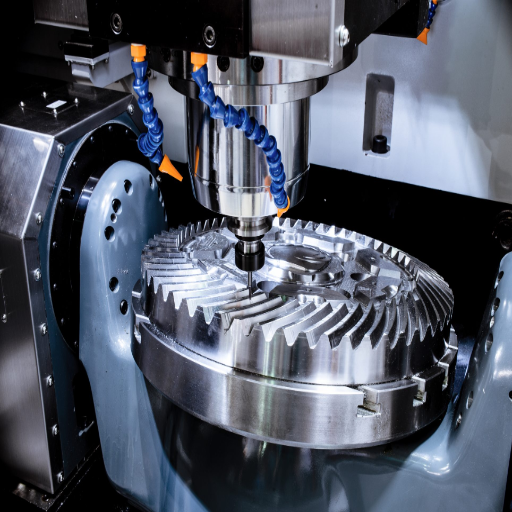
Benefits of CNC Machining
🎯 Precision and Accuracy
CNC machining is one of the most precise and consistent ways of manufacturing when every single part has to adhere to exact specifications with minimal margins for error.
⚡ Efficiency and Productivity
With automated CNC machining processes, production time is significantly reduced, allowing for a faster turnaround time and higher output without compromising quality.
💰 Cost-Effectiveness
CNC machining remains one of the most cost-effective methods of large-scale production, while maintaining high-quality standards and minimizing material wastage and labor costs.
🔄 Versatility and Flexibility
CNC machines can perform intricate work with precision, enabling them to handle a wide range of materials and complex designs, making them suitable for use in many industries and applications.
✅ Quality and Repeatability
The technology ensures that all parts are of consistent quality, which is of utmost importance in industries where reliability and uniformity are crucial.
Advantages of CNC Turning Over Manual Machining
1. 🎯 Higher Level of Precision and Accuracy
Compared to manual machining, CNC turning enjoys a reputation for exceptional precision. From tolerances of ±0.001 inches and beyond, CNC machining is capable of creating intricate and detailed workpieces that consistently meet the highest standards of accuracy. The industries where this precision becomes even more paramount include aerospace, medical, and automotive, as these industries have very tight specifications that must leave no room for compromise.
2. 🔄 Keeping Consistency in Production
Studying a fine feature of the process, CNC turning allows mass production of identical parts with no variation whatsoever. This repeatability ensures excellent quality control, which manual machining sometimes lacks due to human error and fatigue.
3. ⚡ Speeding up Production
With CNC machining, a component can be produced in less time than it would be with a manual operation, thanks to advanced programming and automation. For instance, CNC machines can operate around the clock with minimal supervision, significantly increasing output and reducing lead times.
4. 💰 Greater Cost-Effectiveness for Mass Production
Though CNC turning initially has greater setup costs, it is more profitable in the long term when manufacturing in large quantity runs. By preventing waste from being generated from raw materials and manual labor costs, CNC machining yields long-term savings. Companies have reported that switching from manual to CNC machining has resulted in a reduction of approximately 30% in machining costs.
5. 🔧 Ability to Handle Complex Design
CNC machines can tackle complex geometries and intricate designs that would be difficult, or perhaps impossible, with manual machining. For instance, multi-axis CNC machines provide the efficient manufacture of 3D profiles and features, opening infinite opportunities for innovation and design.
6. 🛠️ Material Ability
Material types are never an issue for CNC turning. It can work with a wide range of materials, including metals, plastics, wood, and composites, remaining flexible to benefit all industries. CNC machining can also mount high-end materials like titanium or Inconel, which are used in aerospace engineering.
7. 🤖 Search In Advanced Technology-Eligible
Modern CNC machines are equipped with features like real-time monitoring, IoT connectivity, and predictive maintenance. This enhances a machine’s uptime and reduces unexpected breakdowns, thereby improving productivity. Moreover, CAD-CAM integration makes for easy and quick design-to-production processes.
8. 🌱 Environment-Friendly Benefits
CNC turning is a green manufacturing process, as it wastes less raw material by cutting accurately and efficiently, thereby utilizing raw materials more effectively. Another advantage related to environmental friendliness with CNC turning is the minimal energy consumption resulting from process efficiency.
Thus, CNC turning, with all these benefits, not only increases efficiency but also helps industries meet the current demands of manufacturing far more effectively than manual machining.
Efficiency in Machining Processes
In my machining processes geared toward efficiency, I utilize CNC turning, an advanced technology that streamlines the production process. Thanks to precise and automated processes, there is minimal wasteful use of materials, reduced energy consumption, and optimized workflows. Productivity can therefore be increased, and modern manufacturing standards may be met with ease.
Long-term Cost Benefits of CNC Machines
💼 Investment & ROI Analysis
The CNC machines thus tend to offer significant long-term cost benefits and can therefore be a worthwhile investment for a manufacturer. When precision is considered, more negligible wastage of material would occur; consequently, there would be a saving of costs on raw materials over time. Automation in CNC machining, on the other hand, allows for less manual intervention, fewer laborers, and hence cost savings in that area. With fewer human errors, there is also a reduced risk of expensive rework. Withstanding a long duration and requiring minimal maintenance would also yield cost benefits. Higher-speed production also enables them to meet tight deadlines while maintaining consistent quality, further advancing future profitability. The high initial investment, however, would be justified on an expense basis and subsequently offset by drawing from cost savings through eventual profits.
🎯 Final Considerations
Understanding the differences between CNC lathes and CNC turning centers is crucial for making informed decisions in modern manufacturing. While CNC lathes offer simplicity and cost-effectiveness for basic turning operations, CNC turning centers provide advanced capabilities for complex, multi-operation manufacturing processes. The choice ultimately depends on your specific production requirements, budget considerations, and long-term manufacturing goals.
As technology continues to evolve, both machine types are becoming more sophisticated, integrating AI, IoT, and advanced automation features that enhance productivity, precision, and efficiency across all manufacturing sectors.
Reference Sources
Upgrading Manual Turning Machine Towards IoT-Based Manufacturing
Optimization of Sustainable Cutting Conditions in Turning Carbon Steel by CNC Turning Machine
Risk Assessment of CNC Machine Service Quality
Frequently Asked Questions (FAQs)
Consider the difference between a CNC lathe and a CNC turning center.
The main difference between a CNC lathe and a CNC turning center lies in their functionality and design. With a CNC lathe, the workpiece is mainly cylindrical, and turning is performed with a single spindle. On the other hand, turning centers provide additional functions, such as milling and drilling, which enable the creation of more complex shapes and features on the workpiece, thereby making turning centers more useful in industrial CNC applications where greater complexity is involved.
What about the machine capabilities of CNC lathes and turning centers?
CNC lathes are designed to perform more standard turning operations and efficiently form cylindrical parts. Turning centers offer advanced features, such as the ability to perform multiple machining operations, including milling and drilling, making them more versatile and capable of handling a wider range of jobs than traditional lathes. This versatility allows the setup to be kept to a minimum, thereby increasing machining efficiency.
What are the advantages that CNC turning centers have over manual lathes?
Increased precision, repeatability, and the ability to be automated are a few benefits of a CNC turning center over manual lathes. With CNC control, machining operations can become more complex, and there is less need for human error. Furthermore, CNC turning centers streamline production by performing multiple operations in a single setup. It means that much less time is spent preparing the machines for the next operation. This kind of production efficiency pays off in high-volume CNC industrial jobs.
What are the different types of CNC turning centers that exist?
There are various types of CNC turning centers, such as vertical turning centers and horizontal turning centers. The vertical turning centers are suited for working on larger and heavier workpieces, while horizontal turning centers are best suited for more diminutive and intricate parts. Each possesses its advantages, which vary depending on the type of machining process involved in your CNC turning operations.
Can a CNC lathe do the same thing as a CNC turning center?
Though there is some overlap in capabilities, a CNC lathe cannot perform all the operations that a CNC turning center can. CNC lathes primarily perform turning operations and may not incorporate the advanced milling and drilling functions typically found in turning centers. When a myriad of machining processes are required, a CNC turning center is often the preferred choice.
What are the main industrial applications for CNC turning?
Quite common CNC turning applications can be found in industries such as automotive, aerospace, and medical device manufacturing. These industries often require exact and reliable components; thus, CNC lathes and turning centers become essential for manufacturing high-quality parts with tight tolerances and intricate geometries.
How do I decide between a CNC lathe and a CNC turning center for my project?
Choosing a CNC lathe or a CNC turning center depends solely on the particularities of your project. If all you have to do is turn cylindrical parts, then a CNC lathe will do. Any type of complex machining that requires processes such as milling and drilling would be best suited for a CNC turning center. Evaluate your machining needs to identify the CNC machine that best suits your requirements.
What is the turning process, and how is it performed on a CNC lathe?
Turn is a subtractive manufacturing process where material is removed from a workpiece to form a given shape. On a CNC lathe, the workpiece is rotated against a cutting tool, which removes material to the final dimension. The process is relatively fast and allows for the tightest control on the dimension and finish of the part being manufactured.