




What is the Difference Between a Slotter and a Shaper Machine?
Having an understanding of machine tools is highly valued in trying to achieve excellence in manufacturing. Slaughtering and shaping are two primary machining operations, but they have different applications. This comprehensive guide will look into the primary characteristics, operational principles, and specific applications of each machine so that one can select the correct machine that suits their manufacturing need.
Introduction to Slotter and Shaper Machines
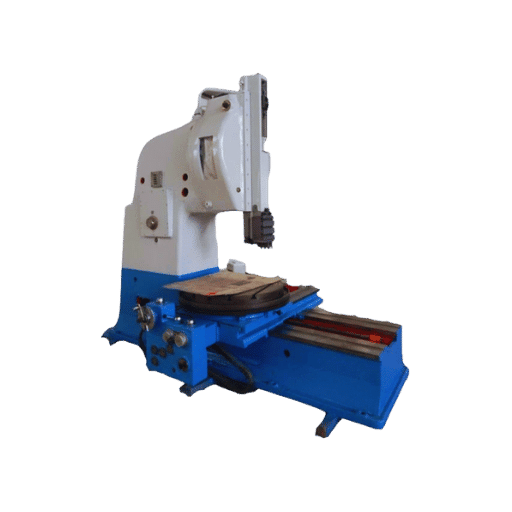
Both the slotter and the shaper machines are utilized in machining for the purpose of material cutting and shaping. The slotter machine, through the upward or downward movement of its tool, is used in cutting internal and external surfaces of parts such as keyways, slots, and grooves. The shaper, on the other hand, is utilized with horizontal movement of its tool to produce flat surfaces or surfaces with other features on the outside.
Key Principle: Both machines use reciprocating tool motion, but they are applied to different work orientations and layouts with varying degrees of complexity.
Importance of Machining Tools in Modern Manufacturing
In contemporary production, machine tools play an important role as they enable die making and ensure high accuracy in the manufacture of parts. They help in the replication of good quality with high efficiency by eliminating most manual activities and their associated errors. The use of machine tools enhances production efficiency by reducing material consumption with minimal losses.
- Enable exploration of a large spectrum of materials
- Allow creation of complex shapes and designs
- Encourage research and development in automotive, aerospace, and medical fields
- Guarantee quality completion within stipulated time
- Drive economic expansion through efficient manufacturing
Role of Slotter and Shaper Machines in Precision Engineering
- Material Reshaping and Extraction: Provide detailed reshaping and removal of materials for flawless operations
- Complex Cuts and Patterns: Enable fabrication of precise complex cuts for specialized details
- Versatility: Handle various operations using materials ranging from metals to non-metals
- Cost Effectiveness: Perform multidirectional functions with minimal machines
- Customization Ability: Modify components for tailored solutions
- Consistency and Accuracy: Maintain high standards in mass production
- Prototyping: Aid in development of prototypes requiring accuracy and intricate details
- Enhanced Durability: Improve longevity and fitting of working parts
Overview of Slotter and Shaper Machines
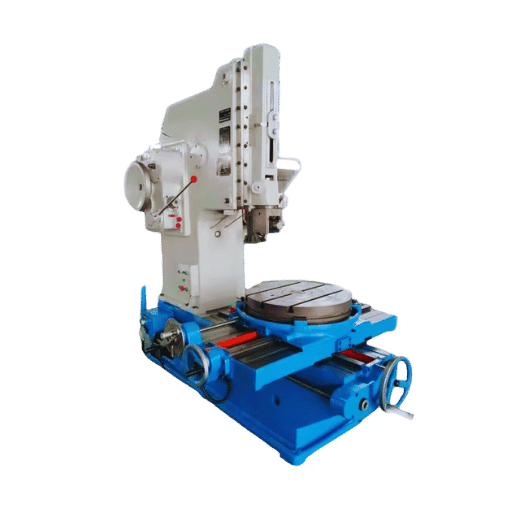
What is a Slotter Machine?
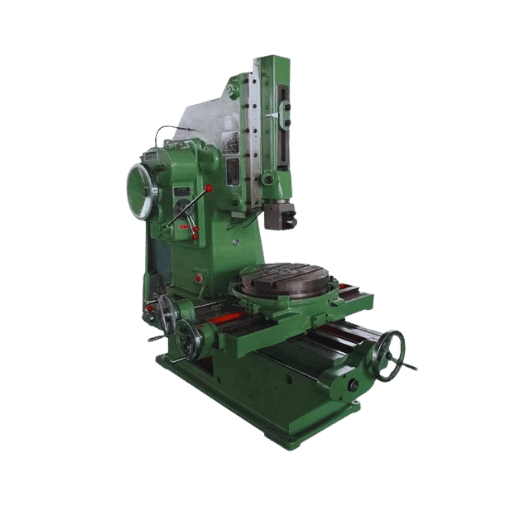
A slotter machine is a type of reciprocating machine utilized for cutting grooves, slots, keyways, and other features in metal or other materials. It operates by repeatedly sliding a single-point cutter up and down, making controlled cuts in the workpiece. Slotters are widely used in industries where fine precision is required for cutting and profiling internal or external surfaces, making them advantageous for machining awkward or inaccessible surfaces.
What is a Shaper Machine?
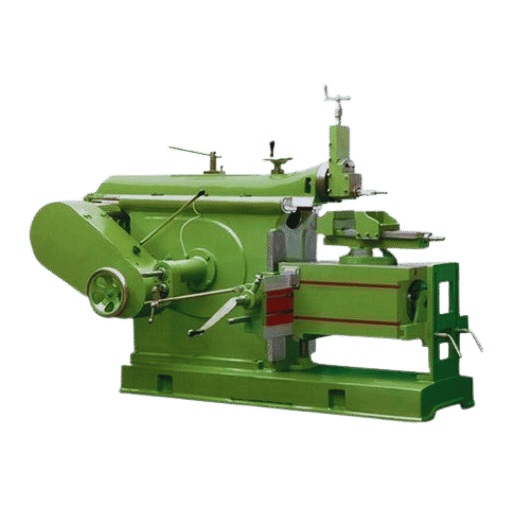
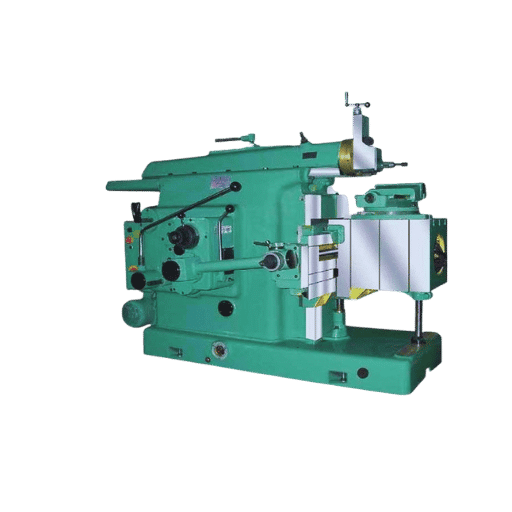
A shaper machine is an adaptable machine tool generally applied for cutting or forming materials such as grooves, patterns, or flat surfaces. Its working principle involves a single-point cutting tool moved in back-and-forth motions along the workpiece, which remains in a fixed position. Shaper machines are used to cut vertical, horizontal, or inclined surfaces with accuracy, and are primarily useful for making long, straight cuts.
Design and Operational Differences
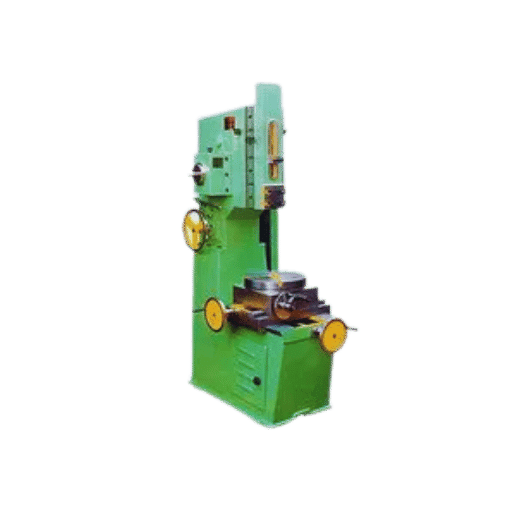
Orientation and Motion: Slotter vs. Shaper
The fundamental differences in orientation and motion are: a slotter operates vertically with reciprocating motion for internal machining, while a shaper operates horizontally with reciprocating motion for external machining.
| Parameter | Slotter | Shaper |
|---|---|---|
| Orientation | Vertical | Horizontal |
| Motion | Up-Down | Back-Forth |
| Cutting Stroke | Downward | Forward |
| Workpiece Position | Vertical Position | Horizontal Position |
| Primary Applications | Internal Grooves | Flat Surfaces |
| Tool Movement | Vertical Ram | Horizontal Ram |
| Common Use | Internal Features | External Features |
Tool and Workpiece Movement
Slotter Tool Movement
The cutting tool displaces in a vertical reciprocating manner, used to create vertical internal slots, keyways, and grooves in a workpiece.
Shaper Tool Movement
The cutting tool displaces in a horizontal reciprocating manner, employed to create flat surfaces or contoured surfaces based on tool orientation.
Slotter Workpiece
Workpiece is arranged on a rotary table or rigid work surface. The table can be tilted or turned for special shapes and angled cutting.
Shaper Workpiece
Workpiece remains stationary on a worktable. The table can be adjusted vertically or moved sideways to control cutting depth.
Size and Structure Comparisons
| Parameter | Slotter | Shaper |
|---|---|---|
| Cut Direction | Vertical | Horizontal |
| Purpose | Internal cuts | External cuts |
| Applications | Keyways, Splines | Flat surfaces, Shoulders |
| Tool Motion | Reciprocating | Reciprocating |
| Precision Level | High | Moderate |
| Machine Size | Compact | Larger |
| Primary Usage | Internal features | External features |
Capabilities and Efficiency
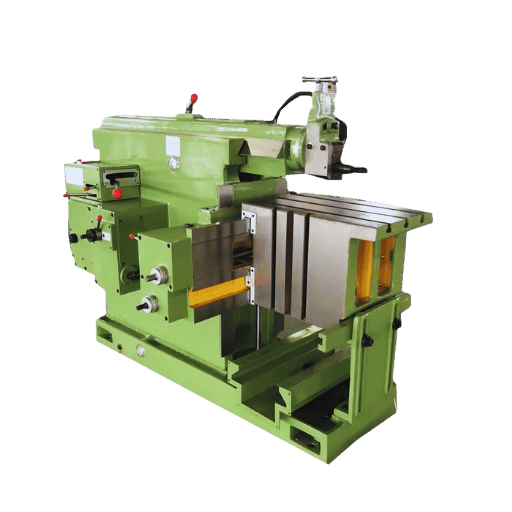
Material Processing: Slotter vs. Shaper
Machining of Surfaces
Shapers: Excel at machining horizontal, vertical, and inclined planes effectively for external surfaces.
Slotters: Specialized for internal machining involving cutting of slots, keyways, and internal gearing.
Mode of Cutting
- Shapers: Linear reciprocating motion with stationary workpiece feed
- Slotters: Vertical reciprocating cut for detailed interior cuts on steady workpieces
Special Features and Applications
- Shapers: Horizontally attached tools, best for flat-shaped parts and larger external surfaces
- Slotters: Vertically positioned tools, ideal for complex details and internal vertical surfaces on smaller workpieces
Speed and Precision Differences
| Aspect | Shaper | Slotter |
|---|---|---|
| Operational Speed | Higher speeds for external machining | Slower speeds for precision accuracy |
| Cutting Precision | Moderate precision for external lines | Higher precision for complex geometries |
| Surface Finish | Moderately smooth for general use | Fine finishes on internal surfaces |
| Tool Control | Linear motion for stability | Vertical stroke for confined areas |
| Application Scope | General operations | Detail-oriented, high-accuracy work |
Versatility of Slotters and Shapers
Slotters and shapers are cutting machines used extensively for machining different types of metals and various operations. Shapers are mainly used for preparing large flat or angled surfaces and external operations on long components. They provide relatively light-duty operations and are highly used on repetitive, wide surface areas. Slotters are used for drawing accurately grooved shapes, drill head holes, keyways, or precise internal cuts. Their designs make them suitable for operations in tight spaces without compromising workpieces.
Key Differences Between Slotter and Shaper Machines
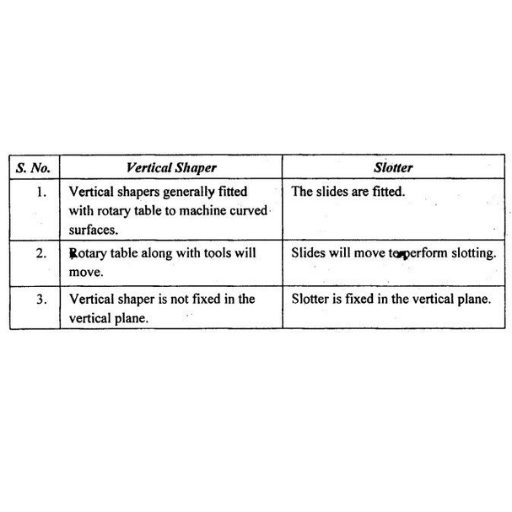
Technical Specifications: Cutting Motion and Ram Orientation
In shaper machines, the cutting action occurs horizontally for shaping external surfaces, while slotter machines perform cutting action vertically for internal features, with key differences in orientation, applications, and workpiece positioning.
Types of Materials Processed
Both machines are adaptable to numerous substrates:
- Mild Steel – Basic steel with evident ease for machining, commonly used
- Tool Steel – Chosen for tough alloy and wear resistance applications
- Cast Iron – Provides rigidity and structural strength for high-shaped objects
- Aluminum – Light, easy-to-machine metal for high technology applications
- Brass – Corrosion-resistant metal that’s easy to cut
- Copper – Soft metal used for ventilation and hydraulic devices
- Stainless Steel – Durable material for appliance applications
- Engineering Grade Plastics – Non-metallic products for lightweight designs
- Titanium – Excellent strength-to-weight ratio for aerospace and medical implants
- Various Alloys – Specialized compositions for specific engineering requirements
Industry Usage: Applications Across Sectors
Aerospace Industry
Processing fine tolerance parts like slots on airframe components and turbine blades
Automotive Industry
Manufacturing critical toleranced pieces such as gear teeth and keyways
Tool and Die Industry
Creating moulds, dies, and complex-shaped precision tools
Construction Equipment
Making component parts for earth-moving machines and structural assemblies
Medical Equipment
Producing small parts with tight tolerances for surgical instruments
Energy Sector
Machining turbine and generator structures for power plants
Real-World Applications and Case Studies
Industry Success Stories
Automotive Industry Success
A slotter created special grooves within vehicle transmission gear systems, enabling more efficient transmission. This process reduced production time by approximately 15% compared to conventional methods.
Aerospace Component Fabrication
Shaping machines manufactured airframe components with tight tolerances for lightweight, strong structures, contributing to aircraft fuel efficiency improvements.
Industrial Equipment Repair
Slotters proved valuable in refurbishing worn-out keyways in large mechanical shafts at manufacturing plants, providing cost-effective repair options without complete shaft replacement.
Market Trends in Slotting and Shaping Machines
The slotting and shaping machine segment is witnessing prosperous advancement due to manufacturing process innovation and increased demand for accurate components. Key driving forces include:
- Implementation of CNC machines (Computer Numeric Control) improving precision and economics
- Eco-friendly measures decreasing workshop waste materials
- Heavy investment from aerospace, automotive, industrial sectors, and green energy
- Integration of robotics and advanced technology reducing business costs
- Increased applicability in manufacturing and processing routines
Expert Insights and User Testimonials
Expert Recommendations
Expert Advice: “When choosing between a slotter and shaper, carefully examine your daily operations and work volume. A slotting machine excels in vertical plane operations for intricate internal features like keyways. A shaper is ideal for horizontal or flat position cutting with easier job accommodation. For smaller volumes and complex internal shapes, choose a slotter. For wider approaches and higher volume production, a shaper is usually more effective.”
User Experience Testimonials
“The slotter executes cutting of internal keyways with such accuracy that operational time and load are minimal. The way it functions has left us completely satisfied with its performance.”
“We chose a shaper for our workshop because of its ability to handle a wide range of materials and workpieces, particularly flat ones. More than durable and simple to operate, this machine has met and surpassed our expectations, proving practical for everyday manufacturing activities.”
Selecting the Right Machine: Decision Guide
Key Selection Criteria
- Analyze Specific Requirements: Be sure to thoroughly list operational considerations and project parameters in order for the solution to meet the intended purposes
- Consider Reliability and Durability: Require machinery known for consistent performance with hardy construction for minimum down-time
- Evaluate Ease of Use: Machines are to be user-friendly, offering features that enhance productivity with minimal time required for training
- Assess Price-to-Value Ratio: Production benefits versus the cost are to be assessed including returns in terms of efficiency and life of production
- Ensure Manufacturer Support: Check that technical support, available parts, and warranty coverage are in place for smooth operation
Frequently Asked Questions (FAQs)
Conclusion
Summary of Key Points
Understanding the differences between slotter and shaper machines is crucial for manufacturing success. Slotters excel at internal keyway cutting, improving labor tasks and productivity with their vertical reciprocating motion. Shapers prove invaluable for machining flat surfaces, offering reliability and ease of use for external operations.
While the two machines still work on precision engineering, the slotter cuts internal features with fine cuts while operating on external surfaces and gives bigger operations with a shaper. One chooses the one depending on the kind of machining application under production volume and the kind of accuracy required.
Considering the working needs, appropriate decisions can be made, and these versatile tools shall certainly improve capabilities and production output in manufacturing.