




In today’s world, lathes form a very important part of manufacturing, which are used in making, cutting and finishing of materials after they have been shaped. Even if you are already an expert machinist, you are still new to the hobby, or just want to know something related to the industry that uses a lot of machines. Knowing the principle of operation of such machines, such as a lathe, can be very helpful and creative. Understanding the basics of lathe machines is the purpose of these tutorial materials, beyond this goal, we will study different lathe machines, as well as the use of these machines in different fields. Starting with a basic turret lathe and progressing to a high-tech CNC machine, we will examine how the advent of these machines has changed the way we do things. Expect the guide to equip you not only with the proper understanding but also with possible ways to use it so that you would want to go to the workshop and create some crafts.
Introduction to Lathe Machines
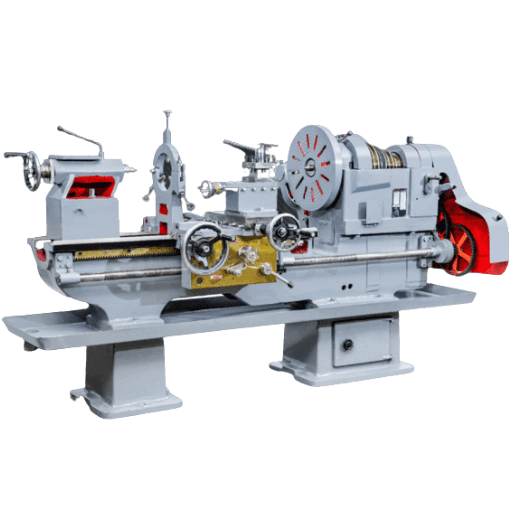
The lathe is a versatile machine tool used to produce a range of engineered surfaces. It falls within this category because it primarily rotates a workpiece against cutting tools (bits) to achieve the required cylindrical shape. Lathes are essential in everyday processes across industries such as manufacturing, automotive, and metal processing, as they produce high-quality parts. The ever-increasing use of technology means that present-day lathes are CNC (Computer Numerical Control) machines, which offer advanced accuracy, capacity, and uniformity, thereby enabling the production of both simple and complex items, both traditionally and conventionally.
What is a Lathe Machine?
Understanding the Basics of Lathe Machines: Lathe machines change the speed of a fixed work tooth while the work rotates the part inside a cutting tool. The pit lathe is designed to perform a range of turning, facing, threading, boring, and other operations, optimizing these capabilities. Large, mature lathes, notably CNC (computer numerical control) models, have undergone dramatic technological advances, enabling automation through programmed instructions and enhancing design complexity with consistent, repeatable results. These machines are essential in sectors that require precision and customization, such as automotive, aerospace, and manufacturing. It is impossible to overstate the importance of lathes for producing symmetrical cylindrical elements in production, or for any other system of making these parts.
History and Evolution of Lathes
The lathe is among the oldest tools in manufacturing history, dating back to ancient Egypt at 1300 BC, and was used with a two-person setup. One person turned the workpiece using a flexible rope, while the other shaped it with a sharp tool. Bow lathes, which offered greater control to artisans, began to appear during the Roman era. During the Middle Ages, pedal-operated lathes were introduced, freeing the hands while the cutting process continued, achieving maximum efficiency.
During the Industrial Revolution, lathe development took a turn, marking the introduction of mechanization and powered lathes. Henry Maudslay, an English engineer, is often assumed to have been the first to build the screw-cutting lathe in the early 19th century, thereby establishing the tolerance and stepping up for the mass production of threaded parts. All in all, the lathe evolved into more useful tools with their primary function being the motorization of components, such as chucks and gears, making them sound powerful.
Computer numerically controlled (CNC) technology has transformed the modern lathe into an exact, highly automated machine, enabling greater design flexibility. This evolution has made the lathe a vital asset across several industries, resulting in the very high precision observed in earlier times becoming a thing of the past. From old humble lathes to CNC machines, lathe technologies have adapted to the said variety of machining processes since the very first humble beginnings of the craft.
💡 Importance of Understanding Lathe Basics
A machinist must know the basics of lathes to get the most value from them and keep safe during their operation. Lathes are crucial in manufacturing and machining, used to shape materials with high precision. Once the machinery’s core components are understood, it’s inevitable that output will increase, errors will decrease, and high-quality workpieces will be produced. Also, using the machinery for such a long time will minimize the risk of accidents. Lathe operation can be covered at the introductory, intermediate, or advanced level; practice is vital during this period for both learners and seasoned machinists.
Key Components of a Lathe
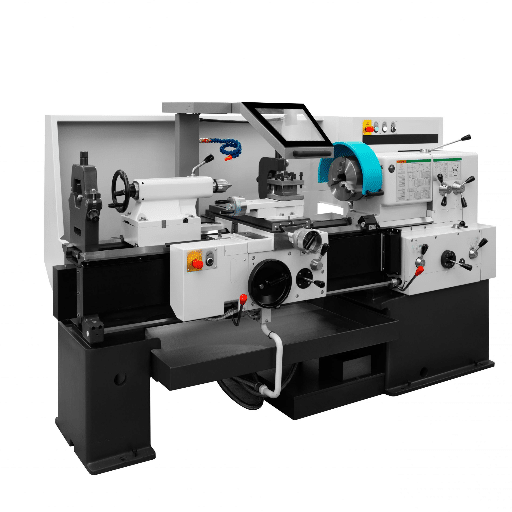
- ⚙️
Headstock: It contains the drive for the spindle that produces rotation required for machining. - ⚙️
Tailstock: Stabilizes the workpiece at the opposite end to perform operations with tools such as drills. - ⚙️
Bed: The basic structure for all components, providing precise alignment and rigidity. - ⚙️
Carriage: Moves along the bed and supports tools for cutting, shaping, or finishing of the workpiece. - ⚙️
Chuck: Acts as a clamping device to affix the workpiece firmly to the spindle. - ⚙️
Tool Post: Precisely supports the cutting tool, ensuring accuracy during machining. - ⚙️
Lead Screw and Feed Rod: Allows for the precise relative travel of the carriage and tool so that the threading operations and the like could be executed.
Headstock: The Heart of the Lathe
The headstock is the central part of the lathe, containing the main spindle and its drive arrangements. Power is thus set in and the workpiece is rotated with great precision; machining becomes practical. Lathes generally have gears or belts in the headstock to control and monitor spindle rotation, allowing spindle speed to be adjusted to accommodate different work materials and machining requirements. The headstock is thoroughly engineered to deliver superior stability and operational consistency, making it the cornerstone of lathe performance.
Tailstock: Supporting the Workpiece
Composed of cardinal components of the lathe machine responsible for supporting the work at the opposite end of the chuck. It also allows the work pieces to have different lengths. Sometimes it is also equipped with a movable quill that holds tools such as drills and reamers for other operations at the same point, such as drilling or tapping. The tailstock is primarily used to ensure balance and proper alignment, minimizing vibration and enhancing precision during machining.
Carriage: The Control Center of Lathe Operations
The carriage is an integral component of a lathe, responsible for holding and guiding the cutting tool during machining. The carriage can move the tool in a linear fashion (long directions of the workpiece) or in a lateral direction (perpendicular to the workpiece) so that exact cuts and finishes can be made. It includes the basic components: the saddle, cross-slide, compound rest, and apron. Hence, the carriage serves as a control, enabling fine adjustments to improve machine accuracy. Modern lathes rely on digitally integrated technologies to enhance the carriage’s unit performance, ensuring precision and smooth motion for intricate jobs and enhancing productivity and efficiency in the manufacturing environment.
Types of Lathe Machines
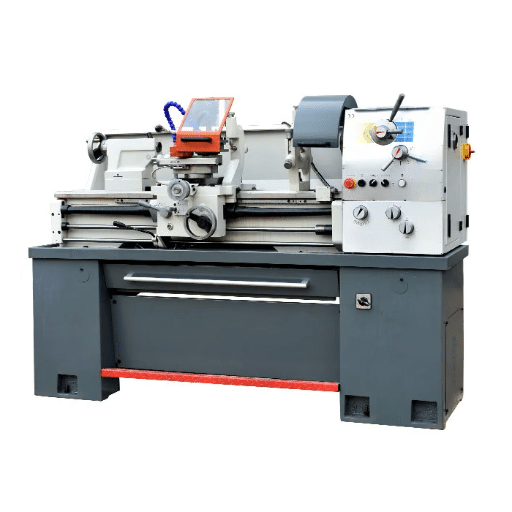
The types of lathe machines include engine lathes, turret lathes, capstan lathes, toolroom lathes, bench lathes, CNC lathes, and special-purpose lathes.
Manual Lathes vs. CNC Lathes
Manual lathes offer hands-on control for simpler tasks, while CNC lathes automate complex, precise operations.
Metal Lathes: Features and Uses
- Versatility: On the contrary, metal lathes can perform a wide range of machining operations, including turning, threading, drilling, and cutting, and are rightly considered essential pieces of machining equipment.
- Precision: With designs meant to ensure high accuracy to maintain a consistent product specification.
- Durability: The materials used in metal lathes deliver excellent durability, enabling them to run for extended periods on the most demanding turning tasks.
- Customization: These machines are highly configurable and extensively accessorized to meet the specific requirements of the project they support.
- Efficiency: metal lathes minimize labor requirements and painstaking production time, and in this respect they differ significantly from manual operations, particularly for mass production.
Specialized Lathes for Different Materials
Technical lathes, such as metal lathes, work with metal only, which requires precision and high tensile strength in the material (e.g., steel, aluminum, brass). However, there are other lathes designed for specific purposes, including wood lathes, which are used to work on timber pieces and produce an ideally refined result. These types, then, also go to and work on the weaker materials — thus avoiding deformation during workflow cattle — in turn producing the tools in a more valid form. Moreover, each lathe, designed for a single material, delivers good performance and quality.
Operating a Lathe: Basics and Techniques

To operate a lathe effectively, three things are now required: detail, setup, and safety compliance. To make sure the job turns out the best way it can, measure and affix the workpiece onto the chuck or spindle. Select the cutting tool that best fits the job, then set the cutting angle by adjusting the tool post. Set the cutting speed and the feed rate based on the type of material being cut as well as the depth of cut. Wear appropriate safety equipment and practice mindfulness throughout processes to ensure precision and safety.
✓ Essential Tips for Beginners on Using a Lathe
- Start with Softer Materials: Practice on softer materials such as aluminum and brass, which are easier to machine and help you develop control before moving on to tougher materials.
- Not to dull it: Your cutting tools need to be sharpened frequently to ensure they always make clean, precise cuts. A blunted tool will only cause poor-quality results and place stress on the machine.
- Know the Operations: Familiarize yourself with all lathe functions and controls, including speed adjustments, feed rates, and emergency stops.
- Measure Twice, Cut Once: Always double-check measurements and setup before launching the cut to prevent errors and material waste.
- Regular Machine Cleaning: Keep the workspace clean by removing chips and dirt that can interfere with cutting paths, causing damage to the lathe and poor operation.
Understanding Lathe Operation and Techniques
The operations on a lathe require a proper mixture of accuracy, dexterity, and the machinist’s understanding of the machine mechanics. It is critical to select the appropriate tool based on the material, its properties, and the required finish. Different cutting tools—depending on material hardness, material composition, and desired finish—are used for other materials: high-speed steel for softer materials and carbide-tipped tools for more complex alloys. Lastly, setting proper cutting speed and feed rate in a coordinated manner to maximize cut quality and tool life is crucial. The modern conveniences of CNC lathes were developed in response to tool wear. Machining accuracy improved significantly, thanks to sophisticated methods that handle intricate, repetitive tasks. Traditional lathes, on the other hand, integrate a range of advanced tools and technologies to enable machinists to achieve higher productivity.
Common Operations Performed on a Lathe
Facing, turning, drilling, and threading are among the critical operations on a lathe.
🔄 Turning
The process of cutting down the external diameter and smoothness of the material alongside the length.
📐 Facing
Helps produce a flat surface at the end of a workpiece, ensuring dimensional accuracy.
⚙️ Drilling
Holes are drilled in the workpiece using a rotating drill bit mounted in the lathe’s tailstock.
🔩 Threading
Cut screw threads on the material to form bolts. The work on these machines forms the basis of lathe work and is essential for several machined parts.
Lathe Safety and Maintenance

A lathe must be operated properly, observing the necessary safety guidelines and maintenance procedures. The most important protective measures are as follows: keep your mouth closed, do not wear goggles or gloves, and secure your clothing and hair so they do not get caught in the machine’s moving parts. Before each operation, thoroughly evaluate the machine’s condition and inspect for loose or damaged components. The workspace should always be kept neat. Regularly lubricate the lathe’s moving parts and replace worn tools to maintain precision and durability. Always follow the rules of operation to prevent accidents and ensure the machinery is secure throughout its working life.
⚠️ Importance of Lathe Safety Practices
Safety practices are crucial when operating a lathe to prevent operator injury and ensure efficient operation. These safety measures actually lower the danger of accidents, such as cuts, entanglements, or flying debris, and in the long run, habitually improve the overall accuracy and quality of the finished work. This is the significance of obeying machine safety precautions like wearing safety gear, keeping a neat shop and regularly inspecting the machinery. Judicial follow-up, in cooperation with good housekeeping, fosters a safe and productive operational environment.
Routine Maintenance for Longevity
To prolong the life of my lathe, I always ensure a strict maintenance schedule is in place. Cleaning the machine after each use prevents debris buildup, which can affect the lathe’s output. It is part of my routine to lubricate the machine as required by the manufacturer, ensuring all moving parts are adequately lubricated, thereby extending their lifespan and minimizing wear costs. A frequent check must be made on key components, including belts, bearings, and tool holders to watch for damage signs, correcting minor issues well before they can escalate. Indeed, one must ensure the machine is positioned efficiently and adjust it if there is even the slightest need. By following that and keeping my direct attention on the manual, I can preserve that lathe for many years to come.
🔧 Maintenance Checklist
- ✓ Clean machine after each use
- ✓ Lubricate moving parts regularly
- ✓ Inspect belts, bearings, and tool holders
- ✓ Check machine alignment and positioning
- ✓ Follow manufacturer’s maintenance manual
Choosing the Right Cutting Tool for Your Lathe
Choosing the right cutting tool for your lathe determines the efficiency, precision, and service life you will get from machining. The decision is based on multiple factors, including the type of cut (turning, threading, or facing) and the required cutting speed and feed. For softer materials such as aluminum, high-speed steel tools will deliver good results at low cost. For materials such as steel or titanium with harsh surfaces, the cutting tool would need carbide or silicon nitride inserts due to their higher hardness and thermal resistance. Think about the way the cutting tool will feed into the workpiece in terms of coatings and geometries—they may contribute significantly to the quality of finishes as well as the tool-life. Assessing applications other than simply looking to the manufacturers’ specifications will inform one in selecting the cutting tool best tailored for one’s needs while reducing wear on the tool and on the lathe.
🔍 Cutting Tool Selection Guide
For Softer Materials (Aluminum, Brass)
→ High-Speed Steel (HSS) tools provide excellent results at economical costs
For Harder Materials (Steel, Titanium)
→ Carbide or Silicon Nitride inserts offer superior hardness and heat resistance
Key Considerations
- Material type and hardness
- Operation type (turning, threading, facing)
- Cutting speed and feed rate
- Tool coatings and geometries
- Manufacturer specifications
Reference Sources
-
A study on Types of Lathe Machine and Operations
Read the paper here -
A BRIEF DISCUSSION ON LATHE
Read the document here -
Lathe Design, Construction and Operation, with Practical Examples of the Lathe Work
Read the book here - Premium Metalworking Lathes for Sale
Frequently Asked Questions (FAQs)
Ready to Start Your Lathe Journey?
With this comprehensive guide, you now have the foundation to understand, operate, and maintain lathe machines safely and effectively. Whether you’re a beginner or an experienced machinist, continuous learning and practice will enhance your skills and craftsmanship.