




The VTL is itself a byword for precision machining and mass production. CNC-powered VTLs give top priority to efficiency, accuracy, and versatility to solve even the toughest problems in machining. So, this post will be an in-depth study into VTLs, discussing how they work, what working principles set them apart, and what industries-benefitting industries such as aerospace, automotive, and energy-rely on them. The article will be of interest to contemporary machinists or even to anyone curious about precision manufacturing, as it explains what makes Vertical Turret Lathes so essential to modern machining.
Introduction to Vertical Turret Lathes

The VTLs are precision machines aimed at handling large, heavy workpieces with utmost efficiency and accuracy. Unlike horizontal lathes, these machines have the workpiece held in a vertical position, thereby using gravity for stabilizing the workpiece during the machining operation. This configuration becomes relevant in performing high-precision works on very bulky components. Depending on the process, VTLs may perform turning, boring, and threading operations. The manufacture of parts that have to be complicated and very reliable is for Automotive, Aerospace, or Energy-type applications.
What is a Vertical Turret Lathe?
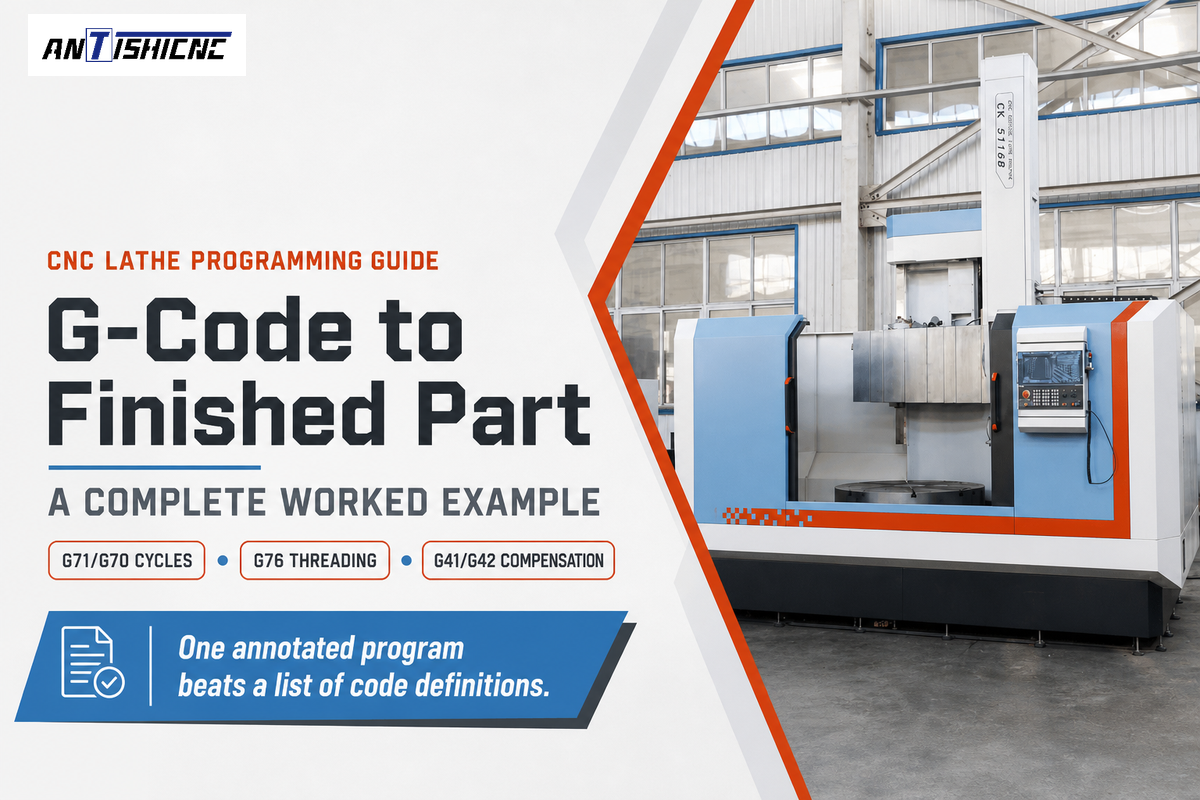
A Vertical Turret Lathe (VTL) is a machine used for the precision turning of heavy and oversized workpieces. Unlike the conventional horizontal lathes, they are oriented vertically so that the force of gravity helps in stabilizing the workpiece during machining. This makes them quite suitable for working on turbine casings, engine housings, and other large cylindrical parts.
VTLs are able to carry out a wide variety of operations because of their turret design, allowing concurrent holding of multiple tools. In this way, turning, boring, facing, threading, and many other processes can be carried out with ease without the need to change the tools manually, improving productivity. CNC-equipped modern VTLs so enhance precision in carrying out all these operations by allowing the machining to be done on set instructions.
Performance data highlight the efficiency of VTLs in an industrial environment. According to the model, VTLs can manipulate workpieces weighing several tons, while machining diameters can range from a handful of feet to more than 40 feet. Advanced VTLs also deliver live tooling and multi-axis capabilities for creating complex geometries with high precision, hence turning VTLs into an indispensable source of reliability and efficiency used in sectors like aerospace, energy, and automotive manufacturing for the production of critical components.
Key Features of Vertical Lathes
- Robust Machining Capabilities
Vertical lathes are suitable for large and heavy workpieces, some coming up with a tremendous capacity of over 100 tons. The design affords machining of diameters of about a few feet to over 40 feet, thereby becoming a vantage choice for machining large components like turbine casings, ship propellers, and industrial machine parts.
- High Precision and Accuracy
Modern vertical lathes are equipped with all the best-advanced modern control systems such as CNC (Computer Numerical Control), rendering tolerances of ±0.001 inch. It guarantees consistency and reliability, especially for aerospace and defense applications where high standards must be met.
- Multi-Axis Functionality
An advanced model has the possibility of multi-axes configurations, such as C-axis and Y-axis configurations, allowing for more complex and elaborate operations for drilling, milling, and contouring. Such versatility removes the need to have so many types of machines, thus cutting down on production time and cost.
- Live Tooling Integration
Many VTLs are bestowed with live tooling to machine complicated geometries in one setup. Such is important for parts that must do fine detail drilling or slotting, thereby allowing the fluid manner of doing things while ensuring quality.
- Durable Construction and Rigidity
Built to minimize vibration and distortion, the vertical lathe makes use of heavy materials such as cast iron or steel. Such robust design gives it stability against machining operations for long durations, especially of hard materials such as titanium or hardened steel.
- Customizable Features
Manufacturers offer a whole range of options for customization, like automatic tool changing, pallet systems, and coolant systems, all aimed at fulfilling particular production requirements with the highest productivity possible within different industries.
- Efficiency Improvements with Automation
Equipped with automated systems, robot loading and unloading systems support production and reduce human intervention. This trend of automation has decreased cycle times and operational costs, which is a prerequisite for being competitive in the current high-demand market.
The amalgamation of these guaranteed features keeps vertical lathes firmly ensconced into the remit of manufacturing ventures of modern nature, having generated an aura of unmatched reliability, versatility, and precision.
Importance of Precision in Machining
Machining precision helps in manufacturing high-level components that satisfy stringent tolerances and industry standards. Parts with tolerances in the order of micrometers are required by industries currently in aerospace, automotive, and medical device manufacturing so that optimal performance is maintained, among other things, for safety. An aerospace application would see grave consequences if components fail because of under-machining precision.
Advances in modern CNC apparatus and inspection technologies are achieving today the highest standards in machining precision. Industry reports state that a modern CNC machine could achieve precision levels ±0.002 mm, which are needed for turbine blade manufacturing or surgical tools. Besides, the adoption of automated in-line inspection systems reduced the error rate by over 30%, thus enabling greater levels of consistency and reliability to be maintained across the production lines.
This increasing demand for precise machining is also supported by the advent of ultra-durable cutting tools and machine learning algorithms that optimize machining parameters in real time. These technologies have been found to cut material waste by as much as 20% and to increase productivity. Therefore, precise machining undoubtedly forms a crucial part of manufacturing today.
Applications of Vertical Turret Lathes in Various Industries
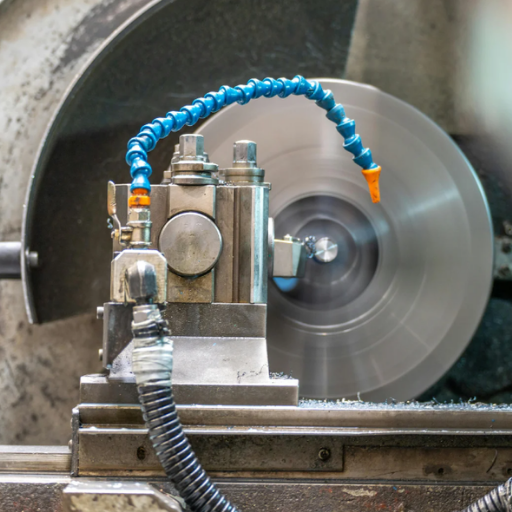
Called vertical turret lathes (VTLs), they are versatile machines with many uses across industries, having the ability to manage large and heavy workpieces with precision.
- Automotive Industry: VTLs machine engine components, brake drums, and gears with high accuracy and consistency under mass production conditions.
- Aerospace Sector: These machines are required for the production of large and complex parts such as turbine casings and aircraft engine components.
- Oil and Gas Industry: VTLs are used in the manufacture of flanges, valves, and pipelines with the prerequisites of heavy-duty construction and accuracy.
- Heavy Machinery: They are employed in the production of parts for construction equipment and industrial machines that require precise engineering.
Their veracity, versatility, and ability to facilitate heavy operations have positioned vertical turret lathes to be essential for contemporary industrial use.
Aerospace Manufacturing
Let’s focus on the aerospace industry, which demands giant-size, complex, and high-precision components. Due to this very requirement, the parts of engine casings and landing gear are produced back home. Due to aerospace engineering being on a very high precision level, even the slightest jog can mean some performance criteria or safety standards.
Recent changes in manufacturing technology have rather improved the effectiveness of VTLs in aerospace applications. CNC-machine controls interfaced with VTLs permitted greater automation and accuracy. It has been indicated by studies that CNC VTLs can hold tolerances of ±0.002 mm, which is a requirement by strict aerospace standards. Also, many aero components require titanium or aluminum materials, which VTLs can work on with very high efficiency because of their rugged construction and well-conceived thermal treatment mechanisms.
The need for lightweight materials and fuel-efficient designs for present-day aircraft has precisely-milled parts and therefore makes VTLs indispensable in these respects. It is this very coupling of futuristic machinery with evolving aerospace needs that gives VTLs the prominent role in developing aerospace into the future.
Energy Sector Utilization
I consider VTLs vital for energy because large, precision components such as turbine casings and other heavy-duty equipment are being manufactured through VTLs, which also handle large-sized workpieces in a highly accurate manner. This ability suits power generation and renewable energy infrastructure perfectly, ensuring the reliable and efficient production of energy.
Automotive Industry Applications
Due to their precision and adaptability in the manufacture of critical components, vertical turning lathes have become of utmost importance in the automotive industry. These machines have open possibilities for machining huge and complicated parts like brake discs, flywheels, and engine components. VTLs allow for precision machining to assure that these parts meet very stringent quality standards for safety and performance.
The automotive sector is experiencing increased electric vehicle (EV) demand, which in turn has spurred the development of lightweight and strong materials. VTLs offer the machining capabilities needed to handle such new materials, from aluminum to advanced composites, and thereby ensure efficient processing. Recent reports in the industry indicate a staggering growth of the automotive machining market in coming years, largely driven by the continued advancements in automation and precision technology. The VTLs, leading this evolution into the CNC-aided machining, are providing manufacturers with shorter production turnaround times and reduced operational expenditure.
Heavy Machinery Manufacturing
Thanks to advances in automation, precise engineering, novel materials, and other factors, the heavy machinery manufacturing industry is seeing huge changes. According to recent data, the global heavy machinery market size was worth approximately $190 billion in 2022 and is projected to be worth more than $250 billion by 2030, growing at a CAGR of almost 4%. Construction activities, infrastructure development projects, and mining equipment enhancement are the main growth drivers.
There is a clear trend of integrating smart technology such as IoT sensors, artificial intelligence, and predictive maintenance systems to optimize equipment performance, reduce downtime, and ensure safety. In addition, the importance of green manufacturing, electric-heavy machinery, and hybrid-heavy machinery scenarios is growing strong ground as industries uphold global goals for sustainability.
There is still enormous demand within heavy machinery key segments, such as earthmoving equipment, lifting machinery, and industrial cranes. The market is presently growing extensively in regions like Asia-Pacific thanks to accelerated urbanization and industrialization, particularly in China and India. North America and Europe are not far behind, however, offering their steady development and technological advance along with infrastructure renovation initiatives.
Overall, the heavy machinery manufacturing area is going through a shift in awareness toward efficiency, sustainability, and innovation to be ready to meet the heavy requirements of various industries worldwide.
CNC Vertical Turret Lathes: Advancements and Integration

CNC Vertical Turret Lathes have seen great advancements in recent years to enable better production opportunities. A modern VTL would now be more accurate by virtue of better control systems and automation, thus allowing them to create parts and components faster and with fewer errors. On another note, manufacturers tend to make use of advanced materials and technology like IoT connectivity and real-time monitoring for performance optimization and maintenance. Such innovations ensure CNC VTLs can perform complex machining while addressing IEEE’s diversification demands with reliability and adaptability.
Introduction to CNC Technology
CNC technology has revolutionized manufacturing processes by offering the ultimate efficiency, precision, and versatility. CNC machines work under the direction of pre-programmed software and code to control the movement of tools. This allows highly complex and consistent parts to be produced. Recent industry reports say that by 2030 the global CNC machine market will exceed $100 billion, propelled by high demand from the automotive, aerospace, and healthcare sectors.
One of the outstanding features of CNC technology has been its enabling of the development of AI with machine learning algorithms. The development permits predictive maintenance, where downtime is reduced by identifying issues that may arise before they do. Further, with the cloud connectivity, data sharing, and remote monitoring become possible, giving further enhancement to workflow efficiency in smart factories.
The evolution of CNC technology indeed offers materials innovation as a highlight. The new machines made it possible to work with advanced composites, alloys, and other high-performance materials in response to the requirements of futuristic industries. In aerospace, CNC machines are capable of producing components that are light yet durable with great accuracy.
In general, CNC technology is ushering modern manufacturing into new horizons as scalable solutions to satisfy the highly competitive industrial demands seen today. Its ability to stay abreast of rapidly changing technologies cements CNC systems’ position at the innovation forefront.
Benefits of CNC Vertical Turret Lathes
The advantages offered by CNC Vertical Turret Lathes (VTL) thereby claim their indispensability in the present manufacturing setup. These machines yield the highest quality components through precision, speed, and versatility while wasting as little as possible. One of the major advantages is machining heavy workpieces without any constraint because of its vertical manner of operation and sturdy design. Industries such as aerospace, automotive, and energy heavily depend upon VTLs to machine complicated geometries in titanium, aluminum, and high-strength alloys.
Tolerances as tight as ±0.0002 inches can ensure maximum accuracy in CNC VTL machines in high-precision applications. Since actions are automated, CNC VTLs help in reducing labor time and cost, thereby increasing the productivity of a shop. In the contemporary world, CNC with the newest software integration can reduce setup time and focus on real-time monitoring, allowing the everyday machining approach to be optimized even for large-volume productions.
Statistics show a steady increase in the adoption of CNC VTLs, with market demand expected to rise at a CAGR of 5%-6% over the foreseeable next five years. This growth attests to their ability to cater to the industrial need for precision machining while keeping the cost factor in check. Through the integration of upgraded technologies, CNC Vertical Turret Lathes take a step further in ensuring productivity and innovation across various industrial sectors.
Integration with IoT for Enhanced Efficiency
Industrial machining processes are being revolutionized by the integration of CNC Vertical Turret Lathes with the Internet of Things. Predictive maintenance is offered by IoT-enabled CNC VTLs through real-time monitoring and data analysis, thus greatly reducing downtime and increasing efficacy. Recent research suggests that manufacturing with IoT is speculated to increase productivity by 25% and reduce equipment failures by almost 30%. With sensors connected and data analytics in place, operators can access critical machine functioning metrics and optimize utilization and workflow precision considerably. Remote operations and remote troubleshooting are also made possible via this seamless connectivity, making the IoT-enabled CNC VTLs network crucial to smart factories.
Precision and Versatility of Vertical Turning
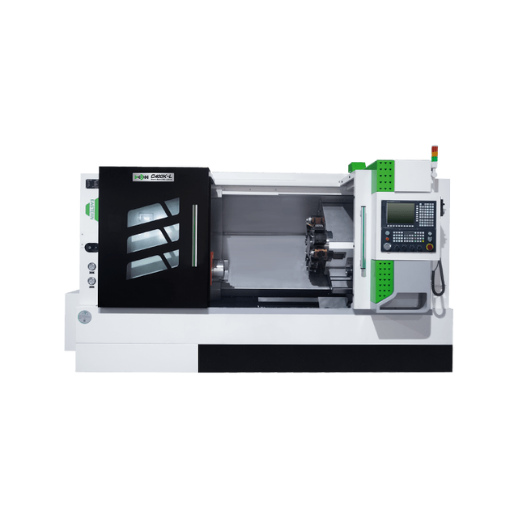
Vertical turning lathes offer unmatched precision and adaptability, and these retain the attractiveness of parameters that may be quite varied in different materials and sizes of components. Therefore, to provide better machining service, these workpieces have support during machining due to their vertical orientation; if workpieces were supported horizontally during machining, they would not provide the required accuracy for heavy workpieces. VTLs have the majority preference in industries like aerospace, automotive, and energy, as these are used for making cuts and shapes where 100% accuracy is needed, which are repeated from production to production.
Precision Machining Techniques
High-speed machining (HSM) came to be in response to the need for attaining machining efficiencies and accuracies like never before. These HSMs are widely used nowadays so that manufacturers can work fast without losing precision. CNC, in turn, advanced to the extent that the operator can program for designs highly intricate and complex, with margin of error being ±0.001 inches. On the other hand, 5 axes CNC machines, or multi-axis machining centers, permit machining of parts from various sides in a single setup, thus cutting down production time by about 30%.
Material science, too, is a player in this field. Cutting tools are more durable when made from high-grade alloys like carbide and ceramic composites. Such materials lengthen tool life and ensure precision while undergoing intensive operation. A further advantage comes with the application of real-time monitoring combined with sensor technology to track wear, vibration, and thermal stability. This allows the operator to make adjustments immediately and reduce waste.
According to industry figures, the global precision machining market stood at over $65 billion in 2022 and is expected to witness a CAGR of 6%-plus from 2022 to 2030. Of course, it grows faster the more the need arises for tighter tolerances, aerospace having tolerances sometimes down to ±0.0001 inches. Likewise, the ability to machine somewhat complex geometries in materials such as titanium and surgical-grade alloys is medical-device manufacturing. These advances point toward the ongoing evolution of precision machining as a key element in the growth of world industries.
Versatility in Tooling and Setup
The art of precision machining is adaptable thanks in part to tooling and setup technologies. CNC machines are modern and versatile tools supporting a wide range of end mills, drill bits, and grinding tools so that manufacturers can work on very dissimilar materials from hardened steel to advanced composites. For instance, the 5-axis CNC machine permits machining features in one setup, thus improving the machining process and reducing total turnaround time.
Moreover, automation and smart software assist in the task of seamless tool changes and adapt the machining processes accordingly. It is worth mentioning that with an automated tool changer in place, idle machine time can be expected to decrease by 30%, which improves productivity on the shop floor. Manufacturers are equipped with this flexibility to quickly switch over from one project type to another, suiting industries such as automotive, energy, and electronics where customization and precision demands are on the rise. Tooling and setup enhancements come together to show how precision machining is growing to address the intricacy of modern manufacturing demands.
Comparative Analysis with Boring Mills
When we compare precision machining with boring mills, several areas of distinction arise, each of them illustrating some aspect in favor of newer machining methods. Typically, boring mills are used for making large, accurate holes on heavy-duty parts and are efficient at that task; they do not, however, offer much flexibility compared to modern machining centers. Precision machining allows for much broader operations such as milling, turning, and very complex geometries, thus providing manufacturers with more versatility.
Advanced CNC machining centers can produce surface finishes up to 0.2 microns and hold tolerances of ±0.0001 inches, which are beyond the capacity of boring mills. Also, because boring mills work for the major part of large-scale components, modern precision machining systems are capable of producing both very intricate to minute parts and large-sized workpieces. The installation of multi-axis capabilities into machining centers makes them highly efficient when compared to boring mills, allowing for simultaneous operations that slash production times by as much as 40%.
The other most important comparison could be the degree of automation. Most contemporary machining centers work hand in hand with robotic loaders and smart sensors to optimize production cycles and minimize human interference. In contrast, boring mills need more manual setup and operation time and thus suffer delays and higher costs. All these factors put precision machining in preference for industries demanding high accuracy and a wide range of applications and an efficient workflow management system.
Benefits of Adopting Vertical Turret Lathes
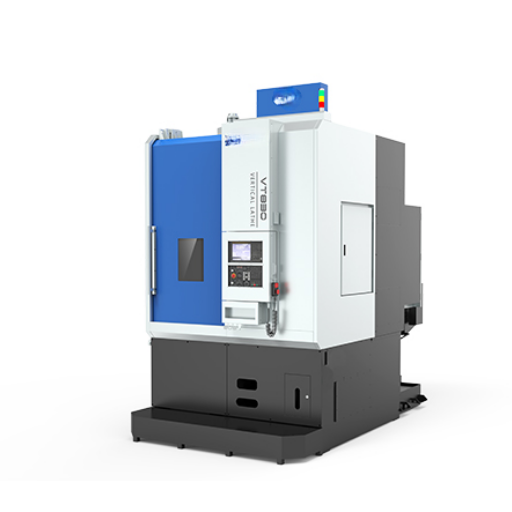
Hence, the center’s vertical turning lathes come with a great number of advantages in manufacturing, especially when handling big and heavy materials. The main benefits of VTL usage are:
- Efficiency in Material Handling: It is capable of supporting and rotating huge and heavy workpieces, thereby increasing the operational efficiency and saving on setup time.
- Space-Saving Design: Owing to its vertical orientation, it occupies less floor space than a conventional horizontal lathe, making it a suitable option for an installation with space constraints.
- Enhanced Stability and Precision: It gives better stability to large and heavy parts and thus better machining accuracy.
- Versatility: VTLs can carry out various machining operations such as turning, facing, boring, and threading, hence diversely usable.
It is the benefit of both the above-mentioned processes to make VTLs an excellent choice for industries needing the machining of large, high-precision components.
Improved Efficiency and Productivity
In Vertical Turning Lathes (VTLs), there occurs their main improvement in efficiency and productivity. The latest VTL machines are adopted with CNC technology; this is the CNC automation of complex operations, which avoids extensive manual interventions. The studies claim that automating processes through CNC systems improves the productivity of machining by an additional 30% since they enable a faster machining speed and reduce the time taken for a machining cycle than when machining is done manually. On the other hand, the vertical orientation of VTLs also facilitates chip removal, allowing gravity to take away chips; therefore, reducing further time losses occurring due to downtime for cleaning or maintenance. Moreover, integrating a multi-tool concept, some VTLs offer fully automatic tool changes so machining time can be reduced even more. These advancements thus help industries such as aerospace, automotive, and energy in optimizing the utilization of resources and ensuring uniformity in production quality.
Reduction of Downtime in Manufacturing
Shift downtime in manufacturing is simply unacceptable, as it adversely affects efficiency and profitability. The loss due to unplanned downtime is stipulated by a study to amount to $260,000 in an hour; therefore, there is a need to develop strategies to avert such occurrences. One of the best methods would be a predictive maintenance setup, which would use IoT sensors and AI algorithms to check on equipment health. Predictive maintenance can help reduce downtime by as much as 30 percent by watching for signs of impending machinery failures.
For the uninterrupted flow of processes, the application of lean manufacturing, along with stock maintenance-assisted inventory systems given their ability to remove bottlenecks as they supply necessary components, will be very advantageous. Advanced automation can assist in further lowering the incidence of human error and delays with operations speed-ups while assisting the setup of manual activities, with the use of robotics and autonomous mobile robots (AMRs). While the mix of these strategies will give rise to a higher resilient and productive manufacturing environment, which will be of strategic advantage.
Enhancement of Product Quality
Product quality must be improved for better customer service and market competition. Quality defects checking has become more suitable against human perception, with recent technologies making way for new fields in manufacturing. For instance, studies indicated that automated inspection quality can achieve an accuracy level exceeding 90%, far higher than what is considered manual perception. SPC applications contributed to an improvement in consistency in production, which consequently minimized variation and ensured that products conform highly to standards. Using these advancements, manufacturers can ensure product reliability and yet reduce waste and rework, contributing to operational efficiency.
The Future of Vertical Turret Lathes and Their Role in Modern Machinery

Being able to process large and heavy workpieces precisely and efficiently keeps vertical turret lathes as a stalwart of modern machinery. With many improvements brought about by automation, CNC technology, and smart sensors, these machines performed flexibly, accurately, and cheaply compared to previous methods. In addition, the aerospace, energy, and automotive industries warrant their importance to manufacture top-end complicated components. With the evolution of machinery, VTLs will continue to evolve and integrate with Industry 4.0 technologies, in order to remain relevant in manufacturing in the near future.
Emerging Trends in Vertical Machining
Rapid changes are occurring in Vertical Machining as manufacturers integrate cutting-edge technology to increase precision, efficiency, and cost-easing. On the forefront is the incorporation of automation and robotics into vertical machining centers (VMCs). Using automated tool changers and robotic arms for assistance ensures continuous production with very little downtime.
Another major trend in machining is the implementation of IoT-based technology for smarter, connected machines. By capturing and analyzing data in real time, these systems help analyze machine performance levels, predict maintenance requirements, and evaluate operational efficiencies. For example, industries see up to a 15% reduction in unplanned downtime through the use of predictive analytics.
High-speed machining (HSM), which was gaining another wave of traction to achieve greater material removal rates while still ensuring good surface quality, has been enjoying strong impetus lately. With 5-axis machining steadily advancing, manufacturers can now carry complex tooling with tighter tolerances, the typical requirements in industries such as aerospace and medical devices.
Sustainability continues affecting trends for machining. Nanofacturers go for energy-efficient VMCs and sustain the environment by evolving environmentally friendly practices such as minimum quantity lubrication (MQL); it is said that these practices can reduce 50% of coolant consumption that also promote greener manufacturing.
Last but not least, newer software innovation-integration software, for example: CAD/CAM-is easing up one workflow, decreasing setup times, and increasing the accuracy of machining. These tools allow simulations and design optimizations so that what is desired in specs is actually met and assured before further product development. Consider now a dynamic technology-based world being created for vertical machining.
Final Thoughts on Investment in VTL Technology
Infusing capital into VTL technology benefits those industries in their pursuit of higher productivity and precision. There are reports of new VTL machines having reduced production cycle times by 30%, which has a direct impact on operational efficiency. Moreover, the number of manufacturers who started witnessing nearly 20% improvements in material utilization due to advanced cutting technology and software optimization is on the rise.
The global VTL market is expected to witness sustained growth with a forecasted CAGR of around 5% by 2030. This growth is being driven by increasing adoption in aerospace, automotive, and heavy equipment manufacturing sectors, where demand for high-tolerance machine components is at a crescendo. Intelligent automation in next-generation VTLs is becoming a boon with features such as predictive maintenance and real-time monitoring of performance.
These improvements, together with the growing availability of hybrid VTL solutions integrating milling and turning operations, guarantee that businesses investing in this technology remain competitive. With a strong focus on sustainability and efficiency, VTL technology is forcing manufacturers to meet the demands of modern industry while lessening their environmental footprint.
Reference Sources
-
ScienceDirect
The ergonomics of vertical turret lathe operation
This study explores the workload and ergonomics of vertical turret lathe operators, providing insights into machine tool design and operation. -
IEEE Xplore
An Automatically Controlled Vertical Turret Lathe
This paper discusses the control systems and automation in vertical turret lathes, offering a technical perspective on their advancements. -
Scientific.net
Dynamics simulation on rigid-flexible coupled sliding guideways in powered tool turret of NC lathe
This research focuses on the dynamics and structural design of powered tool turrets in NC lathes, including vertical configurations. - Top Vertical Turret Lathe Suppliers in China
Frequently Asked Questions (FAQs)
A vertical turret lathe (VTL) is a type of lathe machine that features a vertical orientation for the spindle and workpiece. This design allows for efficient machining of large and heavy components, making it ideal for industries such as aerospace and mechanical engineering. The turret enables multiple cutting operations, enhancing productivity and precision.
What are the advantages of using vertical turret lathes?
Vertical turret lathes excel in providing high precision and rigidity during machining operations. Their design allows for easy setup and mounting of workpieces, including large and heavy components. Additionally, they facilitate multiple cutting operations, reducing downtime and improving efficiency in production processes.
How do vertical turret lathes compare to horizontal lathes?
While horizontal lathes are typically used for smaller workpieces, vertical turret lathes are better suited for larger, medium-sized, and heavy-duty applications. The vertical axis orientation of VTLs allows for better chip removal and visibility during machining, making them preferable for jobs that require high precision and versatility.
What are the common applications of vertical turret lathes?
Vertical turret lathes are commonly used in machining large workpieces such as turbine housings, flanges, and other heavy components. They are also employed in the manufacturing technology of precision parts in various industries, including aerospace, automotive, and energy sectors.
Can I find used vertical turret lathes for sale?
Yes, there is a large selection of used vertical turret lathes available for sale. Many suppliers offer refurbished models that maintain high precision and performance standards. When searching for used equipment, it is advisable to request a quote and review the specifications to ensure it meets your machining requirements.
What is the role of the turret in a vertical turret lathe?
The turret in a vertical turret lathe functions as a mounting tool holder that can index to various positions for different cutting operations. This modular feature allows for quick tool changes and enhances the machine’s efficiency in executing multiple cutting tasks without needing to reconfigure the setup.
Are there CNC vertical turret lathes available?
Yes, CNC vertical turret lathes are widely available and offer advanced automation features for enhanced precision and productivity. These machines incorporate computer numerical control (CNC) technology, allowing for complex machining operations and conversational programming, which simplifies the operation process for users.
What should I consider when purchasing a vertical turret lathe?
When purchasing a vertical turret lathe, consider factors such as the size and weight capacity for your workpieces, the number of axes for machining, and the machine’s specifications for precision and rigidity. Additionally, evaluate the availability of new models versus used vertical turret lathes and consult top brands for reliability and support.
How do I maintain a vertical turret lathe?
Regular maintenance of a vertical turret lathe includes routine inspections, lubrication of moving parts, and ensuring that the spindle and axes are properly aligned. Keeping the machine clean and addressing any mechanical issues promptly will help prolong its lifespan and maintain machining precision.