




The utilization of a small machinist lathe brings a remarkable universe of precision, versatility, and practicality to the work of both hobbyists and professionals. They are not only the perfect answer for a home workshop but also for upgrading one’s industrial production, as these mini tools pack a lot of advantages without consuming space. This piece covers the main points in favor of small machinist lathes, revealing their affordability, efficiency, and accuracy as a common ground for a wide range of machining applications. You will not only learn about the manufacture of elaborate custom parts but also the repair work of minute details that these powerful yet pocket-sized machines can bring about. Do not miss this discussion as we are going to unveil the reasons why a small machinist lathe is a necessary component of your toolbox.
Introduction to Small Machinist Lathes
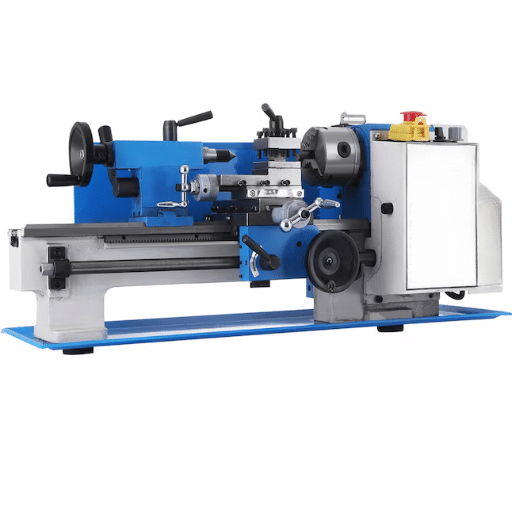
Small machinist lathes are a one-shop-stop, compact machine for cutting, turning, and drilling other items made of metal, wood, or plastic. The greatest advantages of these lathes are that their size is quite small and they give really accurate results which allows you to do some forthcoming jobs for small workshops or the hobbyist. Not to mention that these lathes with their superb level of detail and production craftsmanship can be appropriately maintained for individual components, whatever the case is if your score goes up in the range of repair work, prototypes, or mass production. These lathes are reasonably priced with input all efficiency that draws a machinist of any age-for both the apprentice and the seasoned machinist. Any intricate machining work must opt for machinist-small as it will provide a well-serviced accuracy with fine machining results.
What is a Small Machinist Lathe?
A small machinist lathe is a small, precision-engineered infant that is capable of rotating a work-piece along an axis, thereby allowing the user to perform operations such as cutting, sanding, knurling, drilling, and something similar–possibly forming. Especially useful for little things, these lathes provide the user with a great deal of control in manipulation for detailed work. Their application encompasses all the operations related to metal, wood, and plastic; plus custom-made parts, reconstructive work, or prototypes. The modern-day small lathes are technological wonders with all the latest operating data, speed control, and CNC-system-compatibility enhancing the efficient handling and performance of jobs with a-O precision in manufacture. Small machinist lathes are destined for hobbyists, model makers, small ventures; they are versatile tools needed for the production of fine and perfect jobs.
Types of Small Lathes: Manual vs CNC
Small lathes can be broadly categorized into manual lathes and CNC (Computer Numerical Control) lathes.
| Key Point | Manual Lathe | CNC Lathe |
|---|---|---|
| Control Type | Manual | Automated |
| Precision | Moderate | High |
| Speed | Slower | Faster |
| Cost | Affordable | Expensive |
| Power | Lower | Higher |
| Operation | Hands-on | Programmable |
| Applications | Simple Tasks | Complex Tasks |
| Skill Level | Skilled User | Beginner+ |
| Maintenance | Low | Higher |
| Versatility | Moderate | High |
| Efficiency | Medium | Very High |
Importance of Lathes in Metalworking
Lathes are indispensable in metal processing since they can perform shaping, cutting, and refining of metals accurately and quickly. They are the main machines in the production of cylindrical parts, threads, and intricate shapes, which are crucial in the automotive, aerospace, and manufacturing industries. Manual lathes are the best tools for simple operations and often necessitate the operator’s skillful intervention to control the cutting and shaping process. On the other hand, CNC (computer numeric control) lathes are not only the master of precision but also the speed and complexity of the patterns.
Selecting between manual and CNC lathes depends on project requirement, cost, and the experience the machinist has. Honestly, manual lathes have lower cost and are perfect for low-end work, whilst CNC lathes have faster machining, greater precision, and suited so well to multifaceted jobs. Therefore, lathes are machines that helped in creating a realm simultaneously of endless innovation and unwavering precision in the world of metalworking.
Advantages of Using a Mini Lathe
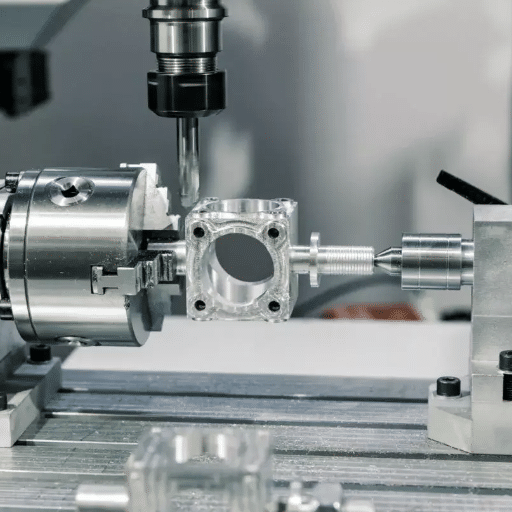
- ✓ Compact Size: Mini lathes are small in size and easy to carry, which makes them perfect for hobbyists or workshops with little space.
- ✓ Affordability: They are a budget-friendly alternative for those who want to try machining without the need to buy larger and more expensive machines.
- ✓ Ease of Use: Mini lathes are very easy to operate and usually have simple controls, so they are suitable for beginners who are just starting to learn lathe operation.
- ✓ Versatility: Mini lathes are small but powerful and can work with a wide range of materials such as wood, plastic, and soft metal, thus giving rise to many kinds of projects.
- ✓ Energy Efficiency: Mini lathes are more energy efficient than the larger ones and their lower power consumption can ultimately lead to reduced operating costs.
High Precision for Intricate Tasks
Mini lathes draw great admiration mainly due to one reason, and that reason is their capacity to provide exceptional precision which gives them the label of being the machines for intricate and detailed tasks. Their small size comes with a major advantage that is the users being able to have finer control, thus allowing them to create very precise components or designs that would require high levels of accuracy. Be it in delicate jewelry making, small mechanical parts repair, or original prototype production, mini lathes keep performing their best, consistently and dependably. This accuracy guarantees that the finished products adhere to very strict tolerances and stay top quality; and thus mini lathes are considered by both professional and amateur users as an essential tool.
Versatility Across Various Materials
These mini-lathes are credited with the ability to work with various materials, which makes it very flexible for a variety of projects. The materials they can work on include metals like aluminum, brass, and steel along with non-metals such as wood, in particular, plastics and acrylic, which causes the mini lathe to practically dominate the game so far as various materials are concerned. While the projects of the people using free will could be anything, such as wood for detailed work on sculpture making, engineering for accurate prototyping, or mechanical parts in the context of repair, hobbyists operating at the zenith of their art make use of mini lathes. Mini-lathe users are hobbyists or impersonating the projects for the weekend of building models, art, or even remodeling gadgets that would necessitate elements of all shapes and sizes-makes them all the more viable as a one-stop solution for makers who play with various materials and do not want to invest in a gamut of different tools.
Long-Term Cost-Effectiveness
A small machinist lathe is one of those equipment whose initial acquisition costs may be high but confers great benefits in the long run mostly due to its multipurpose use and nature. Multiple sets of varying tools can be utilized with it in order to complete multiple tasks without requiring the purchase of many other tools. This does not only mean lesser purchases but the compact tool also means less electricity to run it than a full size machine does. Last but not least, even though it is this petite, imagine that such personal lathes serve millions of artisans, carpenters and hobbyists practically lowering the cost of repairs associated with their re-using. Therefore, it is highly beneficial for both a professional and an amateur, as such initial costs are justified through use and utility of a mini lathe.
Space-Saving Benefits of Small Lathes
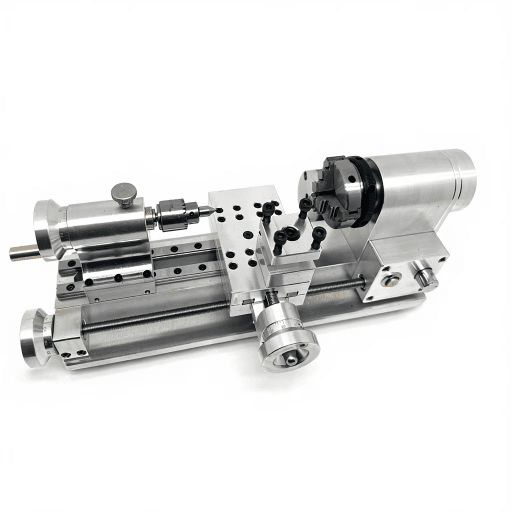
One of the key benefits of using a small machinist lathe is the space saving feature. When you have a small lathe, it can easily fit into smaller workshops or work surfaces that are limited. For weekend hobbyists or professionals who are bound by limited space and need basic machining work, these machines offer a solution. It is important to note that smaller in this case is not synonymous with immaterial, these miniature lathes can still preserve accuracy and have their own place within the scope of appropriate uses.
Compact Design for Specialized Labs
Needless to say, some laboratories are specialized in certain areas that don’t require massive equipment or machinery. Then again, in such cases, the designs of miniature lathes are perfect because they maintain available space while also making the most of it. Light weight and lighter dimensions suggest that it is not only possible but efficient to work with such a lathe in detail which allows unadulterated and meticulous work on projects such as jewelry, prototyping or miniature production etc to be carried out. The fact of their working comes easily within reach also lubricates the usage of these devices while aggravating their limitation in placement.
Ideal for Garage Workshops
Adept in confined spaces, their lathes pack a very useful and contemporary punch. Particularly known for their ability to provide precision toleranced components in small work spaces this gloat satisfaction is being referred to. Lathes for small work ranges, in the performance of their purpose, do shorten the overall working area available to the user, thus enhancing the possibility of fitting in other more useful machines in that work space. A lathe with the users attracts more attention on how well the workspace is designed and functional compared to the quality of the actual work that can be done with the lathe. More and more people are beginning to work in shops with minimal space available and they are clamoring for equipment that can turn out more work in less space. Smaller lathes allow just this. They have precision features that allow work in compact spaces both with and without moving from place to place.
Comparison with Full-Sized Lathes
Small lathes differ from full-sized lathes in size, portability, precision, cost, power, and suitable applications.
| Key Point | Small Lathes | Full-Sized Lathes |
|---|---|---|
| Size | Compact | Large |
| Portability | High | Low |
| Precision | Fine | Varies |
| Cost | Affordable | Expensive |
| Power | Lower | Higher |
| Applications | Hobby/Small Work | Heavy/Diverse |
Industries Benefiting from Small Machinist Lathes
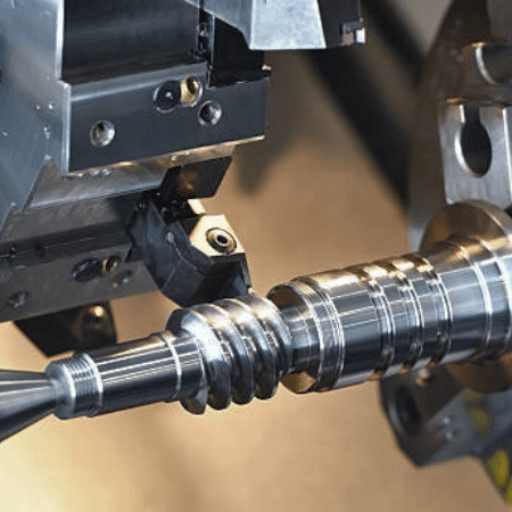
Small lathes are especially useful in sectors where precision and low volume manufacturing are essential. For example, in the jewelry industry, small lathes provide jewelry designers with the capacity to create items with very fine details. Other industries such as model making , and prototyping where miniature parts are used makes use of small lathes. These also comes in handy for schools that do not have enough space to accommodate huge machines in the teaching of machining basics. others, many other areas such as the electronics and repair shops make use of their size and accuracy for some particular applications.
Aerospace Applications
Small machinist lathes have numerous applications in the aerospace industry where precise and highly complex components are needed. Particularly small components including bushings, fittings, or fasteners, which need to be extremely accurate in order to be functional and safe in the plane are easily turned. Thanks to their smaller size, the machines do not sustain costly operations yet they do not lose precision, which characterises the industry of manufacturing components for airframes. The said lathes usually find prominence in prototyping processes or repairs as well as small scale constructions to ensure precision which is at the core of the businesses operations.
Medical Device Manufacturing
Precision and gentleness being the currency in the medical field, especially in manufacturing where neatness is a requirement, miniature machinist lathes perform a particular function—they assist in the production of medical devices. Small lathes in this case are used while forming detailed parts or components such as those in surgical classes, prosthetic forms and dental devices. Without such limits, it’d be pointless to achieve such results since the use of different materials like stainless steel, titanium or high standard plastics would be deemed impossible. In addition, the ability of the machines to offer rapid adaptability owing to their small sizes is a great advantage in the prototyping, and small scale production of new and evolving medical solutions. Such is the combination of almost limitless applicability and precision that explains why small machinist lathes will still be popular in the healthcare industry amongst other fields.
Horology and Watchmaking
Small machinist lathes fintech facilitate horological disciplines particularly existing in precision tool use going into the manufacture of microexacts. These machines enable manufacture of smaller sized and shape parts with high precision such as gears, screws and balance wheels which are very much necessary as far as the functionality of watches goes. Practically, they minimize production of any single product since they can do quite a number of materials including metals and alloys used in high-end watches. There are other benefits of using a small machinist lathe, manufacturing these watches, custom as well as premium watches goes beyond mere functionality, customization and small scale production is a big aspect.
Guide to Selecting the Ideal Small Machinist Lathe
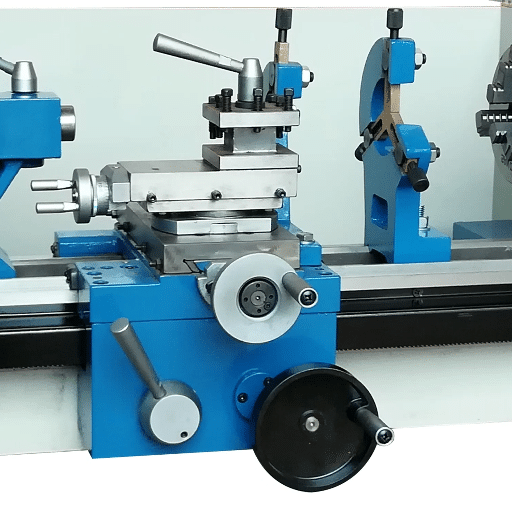
Check the following parameters in the process of choosing the best small machinist lathe. Assess the accuracy and precision of the machine, because it determines the quality of very delicate structures. Find some type which allows the use of wood, metals and plastics for great practical use in very many ways. Some offer greater flexibility for more portability but in this case, consider the issues of small work and portable devices. Moreover, inspect the structure and the construction from the perspective of reducing wear and tear of the device. Last but not the least, look at most of the specifications e.g. speeds, attachments, and price, then narrow down to the lathe that should address the needs.
Key Considerations: Swing Over Bed and Distance Between Centers
It is essential for one will check out the swing over bed and the distance between centers when they are looking for a lathe to buy. There is a cut circle limitation of the swing over bed, which is the largest over bed diameter, meaning that it is the maximum diameter of a raw stock that can rotate on a lathe incorporating any other projections. This particular parameter is reliant on the scope of the work garlic will be doing. For example, swing over bed of larger dimension will be appropriate for work of great magnitude while smaller one will be best fitting for subtle or precise operations.
The distance between centers describes the longest length of material that can be properly positioned in the lathe supported by the head stock and tail stock on its ends. This is significant in works that involve long pieces of materials say spindle turning or rod turning etc.
When it comes to one another’s woodworking, twelve to twenty inches is seen conformance for shoulders and thirty to thirty-six inches as edge to edge distance. The turning welding machine lather machines for metal portraying are smaller in size or have very high precisions based on the difficulty aligned to the particular task. It is very adroitable to postulate the requirements of one’s work for the right type of lathe for one’s needs.
Understanding Spindle Bore Size
The spindle bore diameter corresponds to the bore diametrically spanning the lathe spindle. This diameter infers the largest radius of the workpiece that can be inserted through the spindle allowing passing of longer workpiece sections. This minimizes additional cutting as a larger spindle bore is particularly useful when the material is quite thick or long. It is necessary for efficient and flexible use of the lathe that the spindle bore size that is chosen matches the common dimensions of the materials used. Do not exceed the working requirements with regard to the bore size to enhance the working efficiency.
Technical Applications and Requirements
When choosing a small machinist lathe, one should not disregard his/her technical needs and applications in question. Think about what materials you are planning to work on and how precise you expect your products to be. Knowing the maximum size of the work (in terms of length and diameter for instance) is also necessary when checking if the swing and bed of your lathe will suit your work.
Other evaluations are also important: whether the spindle bore size is adequate for your average working material size, and whether the lathe’s motor power can meet or exceed the resistance of the material. For complex work, or work that needs high accuracy, ensure that the lathe has very good controls and has little or no run out.
In the end, look for other aspects, such as adjustable speed control to expand the range of workability, as well as the structure that will handle work load. It is these factors that match the needs that will ensure that you get the best lathe that works, durability and ease in use of the machine.
Reference Sources
-
A Study on Types of Lathe Machine and Operations – A comprehensive study on various types of lathes, including small bench lathes used for precision work.
-
Lathe Craft: A Study in “Part” Appreciation – Research on craftsmanship and the role of lathes in small-scale production, with insights into machinist perspectives.
-
Micro Cutting in the Micro Lathe Turning System – A study on micro-scale machining using small lathes, focusing on precision and system limitations.
-
Small-Scale Industry at a Crossroads: US Machine Tools in Global Perspective – An analysis of small-scale machine tools, including lathes, in the context of global trade and industry trends.
- Premium Metalworking Lathes for Sale
Frequently Asked Questions (FAQs)
❓ How an engine lathe compares to mini and manual lathes?
Generally, engine lathes are larger and intended for heavier work than mini lathes or manual lathes, but to some extent they do share principles in common. From the viewpoint of the small part you may work–the mini metal lathe or any smaller lathes would be more handy; upon meeting your common expectation, you could move any how toward bigger projects with an engine lathe or better yet with industrial lathes. It all depends on a number of factors, like range of users, materials you are machining, whether it remains the only machine in your shop, or part of a line of other machines like a milling machine or cnc machines.
❓ Can a small metal lathe handle a wide range of materials?
Any high-quality small metal lathe is capable of working on a myriad materials—softer metals to the hardest alloys—and certain wood projects, compared to a lathe meant for just wood, for very specific tasks. A small metal lathe is a really good solution for pretty accurate turning, threading, and facing, given appropriate cutting tools, tool post setup and machining techniques. Of course, they cannot replace those huge industrial lathes needed for heavy works in large items but are great for custom fasteners, prototypes, and precision components.
❓ Is it wiser to invest in a small lathe or begin saving for an industrial machine?
For the majority of small businesses and hobbyists, the best choice is to invest in a small lathe first, as per the operations of its larger counterparts–providing practical benefits at a lesser cost. As an investment in skill and productivity, the purchase of such a machine allows a chance to practice and learn the machining processes before true upgrades along the line. To make the final purchase, you will consider the machine: the type of material that you will cut on it, the size and ease of use it will give you, and whether it will be in operation in these industries that are essentially light production, teaching, or fabrication of customer parts.
❓ Are mini lathes suitable for beginners learning machining techniques?
Yes—mini-lathes are just the perfect machines for a set of beginners because they are safer to learn on, less intimidating than regular-sized engine lathes, and easier to master. They also provide the new users opportunities to put into practice manipulation of lathe parts, post adjustment, and cutting tools without the detrimental factor of cost and space that always pose issues for a full-bodied machine. For this very reason, they would be perfect for those budding skills right in the artistic privacy of their own home shop, small business, or useful classroom setting, provided that the lathe is the only machine available for use altogether!