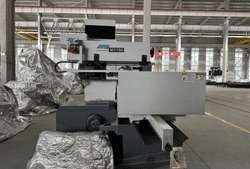


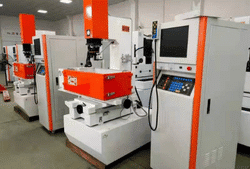
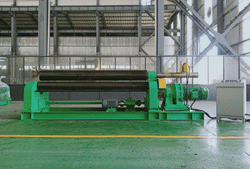

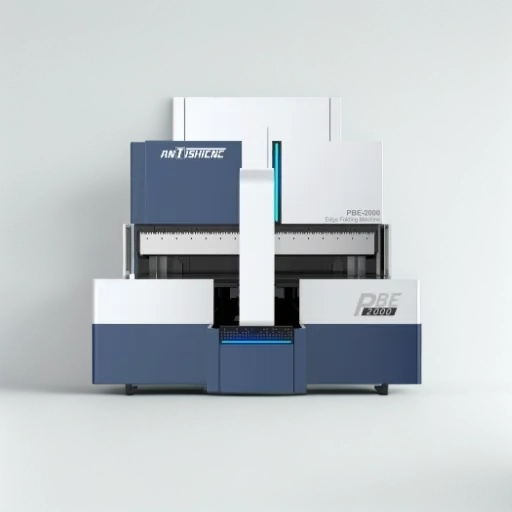


In CNC grinding processes, utmost precision is essential, for which utmost attention is paid to maintaining sufficient accuracy. This is quite a cutting technology combining advanced manufacturing techniques and craftsmanship in prodigious accuracy. Aerospace, automotive, and medical industries are considered worthy contenders to be equipped with CNC grinding machines that accept their performance and dependability with high standards. The following sections will discuss the principal advancements seen in CNC grinding machines and how they have changed the production landscape to be deemed the future for precision grinding. You will explore some engineering wonders that are forging the industry onward and setting new standards of excellence.
Benefits of CNC Grinding Machines

Precision and Efficiency in Manufacturing
CNC grinding machines have revolutionized manufacturing with precise stature and efficiency levels. The machines use computer numerical control (CNC) systems to carry out grinding operations that need fine detailing and repeatability with virtually no human interference. Weighted towards software algorithms and contemporary hardware, these machines have the ability to maintain tolerances within microns for ultimate consistency in production. Coupled with total automation, operations become very efficient in saving material and time; hence the prices go low while productivity shoots. Since AI and IoT keep evolving and getting integrated, CNC grinding machines can not only satisfy current industry demands but are actually setting new benchmarks in the field of precision engineering.
Reduction of Human Error
The former increased CNC grinding machines into manufacturing processes to reduce the potential for human error. By automating intricate tasks that would have normally required significant manual input, these machines minimize discrepancies and enforce repeatability. By way of advanced programming and software, designs can be implemented exquisitely and to their minutest detail.
It has recently come to light that such automation can reduce errors by up to 70%, giving companies the ability to work to rigidly defined quality standards in a timely manner and with a high volume of goods. As these systems mature, real-time monitoring and error detection promise to provide greater accuracy, thus valuing them in modern precision engineering. With the incorporation of AI and analytics, CNC grinding machines now provide unheard-of levels of reliability and ability to eliminate human errors.
Reduction of Cost and Material Waste
Not only precise but also highly cost-effective, CNC grinding machines help reduce material waste by efficiently completing cutting and grinding processes, making optimum use of available resources and thereby reducing operational cost.
Based on data recently gathered through online search, CNC technology has been improved to help industries in reduction in raw material waste since about 30-50% depending upon the industry. Sustainability is gaining traction in today’s manufacturing world, with companies trying to balance environmentally friendly practices with economically sound choices.
Applications Across Various Industries

Automotive Industry Applications
The automotive industry remains a major beneficiary of CNC developments in terms of precision and efficiency in manufacturing. According to the most recent data obtained from search engine, CNC technology has empowered manufacturers to produce very intricate and precise components, including those for engines, transmission assemblies, and custom-designed prototypes. The benefits that accrue from innovation to reduction in errors eventually lead to automotive performance and safety standards. Also, the use of CNC machining in the industry is a great enabler for sustainability efforts, as it helps reduce wastage of materials and time for materials procurement. Such a superb mix of top-notch precision, efficiency, and consciousness about the environment explains the current importance accorded to CNC machining in the automotive sector.
Aerospace Component Manufacturing
The aerospace industry needs the utmost precision and reliability, and advanced manufacturing techniques thereby form an integral part of the production chain. CNC machining is granted wide authority in the manufacture of turbine blades, structural components, and engine housings in high-performance aerospace application. The importance of the components calls for safety and quality standards that by an inch or so have tolerances, always on the best available, for working establishment purposes.
Key Aerospace Applications:
- Turbine blades
- Structural components
- Engine housings
- Lightweight composite parts
With the newest advancements in data analytics and machine learning technologies, manufacturers can treat these technologies to optimize production workflows. These data-driven insights-from search engine data-will tell about the trends in material innovations or machining techniques so the companies working in these fields can capitalize on those emerging demands. For example, the prominence of lightweight materials such as titanium and carbon fiber has led to some modifications towards very specialized CNC processes for these new composites. Somehow, the machining technology and data analytics combined let the aerospace sector keep alive on the track of innovation carrying forward its unshakable trust towards safety and high performance.
Production of Medical and Surgical Tools
The production of medical and surgical tools demands the highest precision and reliability since the very instruments save lives and improve patient quality of life. Advanced CNC machining is the basis for manufacturing such instruments as scalpels, forceps, and implants with impeccable precision and in accordance with the medical standards involved.
In addition, newer technologies such as multi-axis machining and micro-machining have contributed to the development of very complex and minimally invasive devices that meet the requirements of present-day surgical procedures. That is to say; this constant innovation is key to ensuring that medical practitioners are in possession of the means with which to pursue advanced delivery of healthcare.
Key Features to Look for When Purchasing a CNC Grinding Machine

Measuring Accuracy and Speed
Arguably, CNC grinding being a machine, there are two major considerations to begin with: accuracy and speed. Being the first and foremost concern, the precision of the CNC grinding machine ensures the utmost quality of finishing subjected to stringent tolerances considered in aerospace, medical, or automotive manufacturing. On the other hand, if it is high speed, then that means a good throughput and shorter cycle time on the shop floor, where meeting a very tight production schedule is a bigger concern.
Strict tolerance compliance
Reduced cycle time
Developments that have taken place in CNC technology have made it possible for the machine to optimize either speed or accuracy through elaborate control systems, along with sensors and automated adjustments. Meanwhile, while conducting one’s research, use data obtained from search engines on performance analyses of models, user reviews, and manufacturer specifications so as to arrive at the most suitable choice for one’s particular operational needs. This is to ensure that one is choosing a first-rate machine in terms of performance and efficiency.
Software Compatibility Considerations
More importantly, for integration within the operations, potential software compatibility should be considered when choosing a machine. Knowing whether the OS requirements, firmware upgrades, and third-party software are accommodated freeze search engine results. Compatibility with some industry protocol or widely used software suite, for instance, may considerably enhance practicability and diminish downtime during setup. Also, a search on search engine for user reviews and developer forums might provide answers to some of the most troubling questions about present conflicts or maybe resolved, future reliability, and updates to the software environment.
After-Sales Service and Training: How They Matter
After-sales service and training are a very important component of the whole customer experience; it makes it possible for users to realize maximum value from their investment. Good after-sales service continues offering support, troubleshooting, and software upgrades on time, as the alternative extends downtime. Comprehensive training, on the other hand, provides users with the know-how of using software proficiently; thereby lessening the endeavor of time.
According to recent data from search engine, companies offering reinforced after-sales support and well-structured training programmes tend to have greater customer satisfaction and retention rates. Market confidence can thereby be established, beginning with the solution to the user’s concern and developing the competencies of the user.
Advancements in CNC Technology

Integration of AI into CNC Grinding Machines
AI integration in CNC grinding machines has revolutionized the manufacturing process by imparting a whole new level of precision, efficiency, and adaptability. AI systems using advanced algorithms sift through large quantities of machine and process data, use it to vary the parameters in real-time, to make sure an optimum parameter is maintained autonomously.
In fact, according to the latest reports via search engine, AI-enhanced CNC technology is purported to increase the productivity of CNC grinding plants while reducing machine downtime. Such developments pose an important question: Does AI detract from or enhance the overall effectiveness of CNC grinding machines?
AI enhances CNC grinding effectiveness by improving accuracy, warning for more proactive intervention, and minimizing material waste. Using machine learning algorithms for predictive maintenance, it identifies potential failures and halts expensive interruptions. Working on the basis of a production plan, AI setups swiftly consider various production requirements, thus offering scalability of the process while assuring consistency in quality. The manufacturer, equipped with AI, is able to compete in a fast-changing industry, by driving innovation and yet maintaining the standard of production.
IoT Connectivity and Automation
IoT connectivity and automation create a fusion that revolutionizes modern manufacturing, thus ensuring the efficiency and connectivity never thought before. IoT-enabled devices, aided with smart sensors and real-time communication, enable manufacturers with real-time data collection, data-based analysis, and instant decision-making. Such a connectivity structure imparts insight into machines, energy consumption, production, and supply chains for their optimization. Automation technologies also act as autonomous paths for these systems to coordinate workflows, diminish inefficiency, and curb underperformance.
- Real-time monitoring capabilities
- Predictive maintenance insights
- Reduced operational costs
- Enhanced equipment uptime
Once recent trends and data analyzed in light of search engine responses are taken into consideration, the usual questions tend to be along the lines of how IoT optimizes operations and engages prediction. The answer involves real-time monitoring and predictive maintenance. That is IoT systems provide decision-makers with actionable insights to prevent equipment from going down and, thus, reducing operational costs. Combining automation with IoT provides for seamless interconnection between their systems while laying down an infrastructure for smart factories to dynamically respond to demand variations and market condition fluctuations in the near future.
Shaping Smarter Machines for Modern Manufacturing
The scenario goes on like this: How can the smarter machines really change modern manufacturing when paired with all that knowledge lying along that search engine? The answer goes on like so: Machine learning algorithms and decision-making processes are enhanced by the huge databases filled with real-time information.
Enhanced efficiency • Reduced waste • Market responsiveness
By delivering the mass of search trends and analytics from engine alongside to machine systems, the manufacturer can start looking out for consumer demands, forecast market shifts, and outline the production schedules accordingly. This mixing together of IoT, automation, and ultra-modern data analytics from platforms such as engine creates a live ecosystem where machines are not just general reactive, but also predictive and highly adaptable. Such an approach guarantees that manufacturers will be efficient with reduced wastage and manufacturing that swiftly responds to global and local market needs.
Tips for Maintenance and Optimizing Performance

Actionable Maintenance Recommendations
- Have Predictive Maintenance Implemented
Make use of cloud-based analytics and IoT-enabled sensors to figure out when a machine may really fail. Other than that, you may handle issues before they get serious by keeping tabs on current trends from the search engine platform, such as frequently reported types of equipment problems or their new maintenance methods. - Observe Performance Indicators
Utilize real-time monitoring systems to inspect performance indicators such as temperature, vibration, and energy consumption. Check these values with any recent data shown through tools on deviations or arising problems not yet obvious on-site. - Keep Up With New Maintenance Strategies
Analyze from time to time via search engine new evolving maintenance methods and technological updates. You can keep your approach synced to those state-of-the-art approaches shared worldwide and possibly help better localize your existing approaches for further improvement. - Give Data-Backed Training to Staff
Ensure that your maintenance crew is given training based on the trends and patterns identified so far using the search platform alongside an understanding of how to iron out such problems using existing solutions to prevent them from experiencing any downtime.
Troubleshooting Common Issues
Maintenance matters, especially the common ones, could best be addressed if current information were available on a search engine. For instance, a question from end-users has to be: “How can I minimize unexpected equipment failures?”
Predictive maintenance, in conjunction with search trends, should enable one to detect common points of failure and counteract them. As an illustration of this, one can use search engine data to detect an increased number of queries arising about an issue with equipment so that they become able to anticipate potential problems that have not yet reached their full phase of growth. Preventive maintenance commits downtime to as much a minimum as possible by regular inspection, early replacement of parts, and good data usage. So always keep an eye on search insights so your troubleshooting is always up to date and stylishly quick.
The Importance of Regular Software Updates and Cleaning
The observing strategy of keeping your software updated and cleaned is vital for System Performance and longevity. Updates usually come along with key security fixes or patches, bug fixes, enhancing new features, and so on, so the software paradigm can defend themselves from existing vulnerabilities and keep up with an ever-evolving technology frame. Simultaneously, regular cleaning, such as cleaning the cache files or removing unneeded programs, will make the system performance better through freeing up much required system resources.
- Enhanced security protection
- Improved system performance
- Bug fixes and stability
- Access to new features
Prevents you from addressing the walls of problems on your systems, thus increasing reliability and efficiency, after the maintenance routines of software combined with the latest search information from the search engine. In the end, software maintenance combined with search data-based intelligent decision-making guarantees to keep your systems secure and perform best.
FAQ
What are CNC grinding machines?
A CNC grinding machine is a machine whose grinding has been numerically controlled by a computer. The purpose is to remove material from workpieces with extreme precision whereas tight tolerances and the best possible surface finishes may be demanded. These machines perform any type of grinding operation, such as cylindrical grinding or surface grinding. CNC grinders are an advance in technology, assisting in improving productivity and consistency in manufacturing of precision components. A CNC-based system provides for repeatable setups and, therefore, is equally well suited to the manufacture of either small or large production runs.
How does a CNC grinder function?
The grinding wheel is turned against the workpiece to remove material in the CNC grinding process. Depending on the CNC program, this movement is accurately controlled along with wherever else the wheel or workpiece needs to move. Various operations may thus be carried out on the CNC grinder, such as OD grinding and ID grinding, depending upon the geometry to which the workpiece is ground. The grinding wheel can be controlled in speed, rotation, and feed to become the best for that particular grinding operation. CNC grinders are mostly equipped with lubrication and cooling conveniences necessary to maintain the grinding wheel and surface quality.
What grinding operations can be done on a CNC grinding machine?
CNC grinding machines can do cylindrical, surface, and centerless grinding. The grinding process varies depending on the act that is shaping the outside diameter of a workpiece or producing a precise surface finish. Cylindrical grinding is machining of curves and round surfaces, whereas surface grinding produces plano surfaces. Hence CNCs possess a very versatile nature that a manufacturer uses to convert it into a platform for the automation of several grinding works and materials processing, thereby providing an engineering solution to many industries.
What are the advantages of CNC grinding machines?
The advantages of CNC grinding machines are numerous-they offer accuracy, repeatability, as well as quick production. With these grinding machines, handling tight tolerances is of utmost importance, especially when producing high-quality precision parts. Automation reduced human errors caused during the minute intricacies of grinding. CNC grinding machines may also be configured to accomplish several other tasks within a single setup, thereby saving operational time and cutting down on operational costs as well. With all the operational capabilities of the CNC grinding machine, a manufacturer cannot fail to achieve an improved level of productivity and surface finish.
What one has to keep in mind while selecting a CNC grinding machine?
Concerning selecting a CNC grinding machine, one should take into account the type of grinding operation which one is going to need; the material that one is going to be working on; and, last but not least, the level of precision required with regard to the piece. One should consider more about the machine, such as spindle speed, wheel size, adjustments, etc. Look for some automatic lubrication system that can support the workings of the machine properly; look for very sophisticated CNC controls. Check out the reputation of the manufacturer first and keep supported service in your mind; the operational efficiency will benefit greatly by the presence of reliable machinery and reliable support.