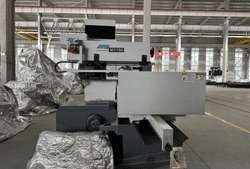





Surface grinding is a crucial process in fine manufacturing, providing materials with exact specifications for flatness, roughness, and aesthetic finish. At the heart of surface grinding is a surface grinder, a complex and sophisticated machine that enables flawless precision and repeatability of operations on a wide range of materials.
The surface grinder is an absolute must for anybody involved in metal fabrication, aerospace, or toolmaking. This comprehensive guide provides insight into all aspects of surface grinding machines by exploring their composition, principle of operation, and applications. After reading this article, you should have a deeper appreciation for this essential modern manufacturing tool and understand how it efficiently produces smooth surfaces with finesse.
Overview of Surface Grinders

Definition and Purpose of Surface Grinding
It is a fine shape-disciplined manufacturing procedure carrying an abrasive rotational wheel in a motion to abrade the material from the workpiece. The resultant surface is flat, clean, and of supreme finish. The process finds application in manufacturing and engineering, wherein imparting high dimensional accuracy and surface integrity to the components that could be used in machines, tools, or any precision instruments is of utmost importance.
Key Fact: Surface grinding is capable of producing dimensional tolerance as close as ±0.0001” (±0.0025mm), depending on the machine and application used.
Surface grinding works on the very stringent tolerance preparation of the workpiece, which could go as narrow as ±0.0001 inch (±0.0025mm), depending on the machine and application. The versatile process can serve to:
- Steel components
- Aluminum parts
- Various brittle materials such as ceramics
- Precision instruments and tools
Recent advances in CNC grinder technology and major improvements in abrasive materials have enhanced the benefits of precision surface grinding. Modern grinding machines generally feature:
- Automatic wheel dressing systems
- Adaptive control systems
- Advanced coolant systems
- Superior surface finish quality
- Extended grinding tool life
Market Growth: Industry reports records the observations that the global grinding machines market would grow with a CAGR of 4.6% from 2023 to 2028 as the demand for ultra-precision machining increases.
Types of Surface Grinders: Manual, Automatic, and CNC
| Type | Operation | Best For | Key Advantages |
|---|---|---|---|
| Manual Surface Grinders | Human-operated with handwheels | Small jobs, maintenance work | Low cost, versatile, simple operation |
| Automatic Surface Grinders | Automated feed and table movement | Mid to high-volume production | Improved productivity, minimal operator fatigue |
| CNC Surface Grinders | Computer-controlled operations | Complex geometry, ultra-precision | Maximum accuracy, repeatability, IoT integration |
Manual Surface Grinders
Manual surface grinders are operated manually, especially to perform smaller jobs or maintenance work where full automation is not deemed requisite. Such machines allow the grinding process to be manually controlled by way of handwheels that move the workpiece or the grinding wheel. Manual surface grinders offer a price advantage and have a wide range of uses along with small-scale manufacturing applications, but they are rather inefficient compared to automated ones.
Automatic Surface Grinders
The automatic surface grinder feeds the grinding wheel and table movement automatically, hugely enhancing output rate and, consequently, lessening operator fatigue. Mid- to high-volume productions in which the utmost degree of repeatability and precision are necessary are their concern. With programmable features, automatic grinders are capable of surfacing complex finishes with a minimum amount of intervention from the operator.
CNC Surface Grinders
CNC surface grinders are the most advanced and precise grinding tool technological advances. Being able to pre-program the grinding operations to control each parameter to the utmost accuracy and repeatability, they do very well with tasks that involve complex geometries, large productions, and ultra-precision, making them most suited for aerospace and medical manufacturing.
Innovation Trend: Current trends saw the emergence of IoT-enabled sensors, machine learning algorithms, and automation solutions for improving efficiency, reducing downtime, and providing real-time data analysis.
Key Components of a Surface Grinding Machine

Several key components of a surface grinding machine operate in unison to achieve utmost precision and productivity. The major components and their functions are detailed thus:
1. Grinding Wheel
The grinding wheel is the main working element of a surface grinder. Made of abrasive materials of various compositions-angle aluminum oxide, silicon carbide, or diamond-grinding wheels consist of an abrasive working principle for material removal and surface finish.
| Abrasive Type | Best For | Applications |
|---|---|---|
| Aluminum Oxide | Ferrous metals | Steel, cast iron grinding |
| Silicon Carbide | Non-ferrous materials | Aluminum, brass, ceramics |
| Diamond/CBN | Hard materials | Hardened steel, aerospace alloys |
Grit Size Guide:
- Coarse grit (16-24): Rapid material removal
- Fine grit (120-150): Surface finishing and polishing
2. Worktable
The worktable is that platform on which the actual workpiece sits during a surface grinding process. It is able to travel in both longitudinal and lateral directions to position the workpiece within a tolerance of microns.
- Manual vs. Automatic: CNC-controlled tables provide increased automation and repeatability
- Size and Load Capacity: Determines the scope of operations, from small bench-top to large industrial applications
3. Magnetic Chuck
During grinding operations, the magnetic chuck will hold ferrous workpieces firmly on the worktable. This is to allow for precise positioning while restricting movement or vibration during operations-the magnetic chuck may work on the principle of electromagnetic force or permanent magnetic force.
- Variable strength options for different workpiece sizes
- Alternatives: Mechanical vise or vacuum chuck for non-ferrous workpieces
4. Spindle
Rotation is given to the grinding wheel by the spindle, which also maintains correct speed and torque values throughout the operation. This should be ensured for stability in the machine and cutting efficiency in aggressive grinding.
- High-speed spindle: For ultra-fine grinding applications
- Standard-speed spindle: For general grinding operations
- Cooling systems: Oil flow or air flow cooling for thermal stability
5. Control System
Nowadays, surface grinders feature CNC and PLC systems to make the entire process automated and more accurate in the application, while an operator can input the parameters of feed rate, depth of cut, and grinding angles.
- User Interface: Intuitive touch panels or specialized software
- Data Integration: IoT capabilities for real-time monitoring and predictive maintenance
6. Coolant System
The coolant system eliminates heat generated from friction during grinding operations, maintains surface quality, and enhances tool life.
| Coolant Type | Application | Benefits |
|---|---|---|
| Water-based | General surface grinding | Cost-effective, good cooling |
| Oil-based | Super precision machining | Superior lubrication, better finish |
7. Base and Column
The base and column provide structural support to the machine, thus ensuring stability and minimizing vibrations. The usual material from which they are formed is cast iron, giving them more rigidity in high-speed or deep-cut grinding operations.
8. Wheel Dresser
A wheel dresser is used for dressing the grinding wheel to maintain its sharpness and shape, such as removing glaze or debris from the surface. Accurate dressing is important if consistent results are desired.
- Manual vs. Automatic: Automatic systems maximize efficiency and reduce downtime
- Diamond-tipped dressers: Most commonly used for precise wheel restoration
9. Safety Systems
Modern surface grinders come equipped with inbuilt safety systems that essentially are concerned with protection of human life. It includes interlocking, emergency stop buttons, and protective screening to ensure operator safety.
- Dust management: Built-in extractors or optional enclosures
- Monitoring systems: Vibration or temperature sensors for anomaly detection
How Surface Grinders Work

Grinding Process Systematically Explained
Surface grinding is an extremely precise and controlled machining operation in which a rotary abrasive wheel grinds off material from the surface of a workpiece within specified tolerances for a fine surface finish.
- Setting of the Workpiece: The work table is clamped with the workpiece with the help of a magnetic chuck or another mechanical fixture.
- Selection of Wheel: The wheel is chosen according to the material and finish requirements.
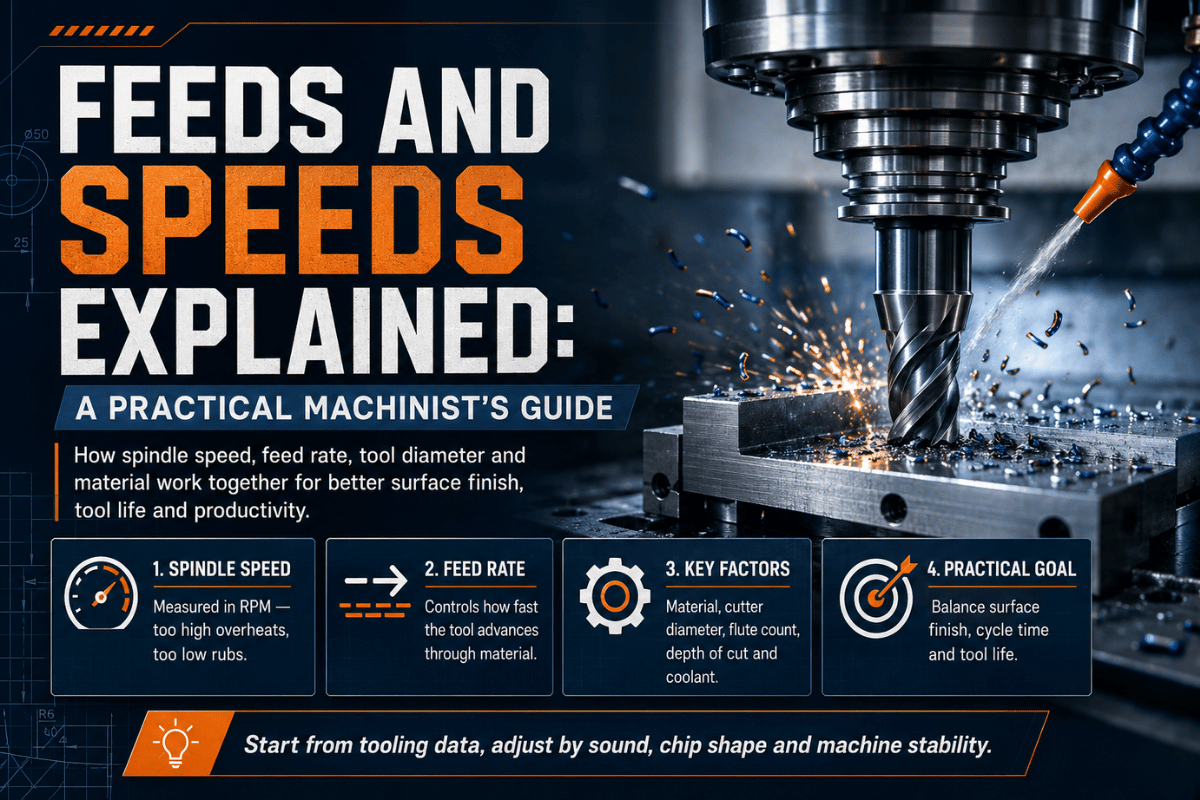
- Parameter Setting: Wheel speed, feed rate, and depth of cut have to be set.
- Beginning the Operation: The wheel moves at a high speed and touches the workpiece.
- Removal of Material: Thin layers of material are taken off by abrasive action.
- Surface Finishing: Several passes of grinding achieve desired surface finishing.
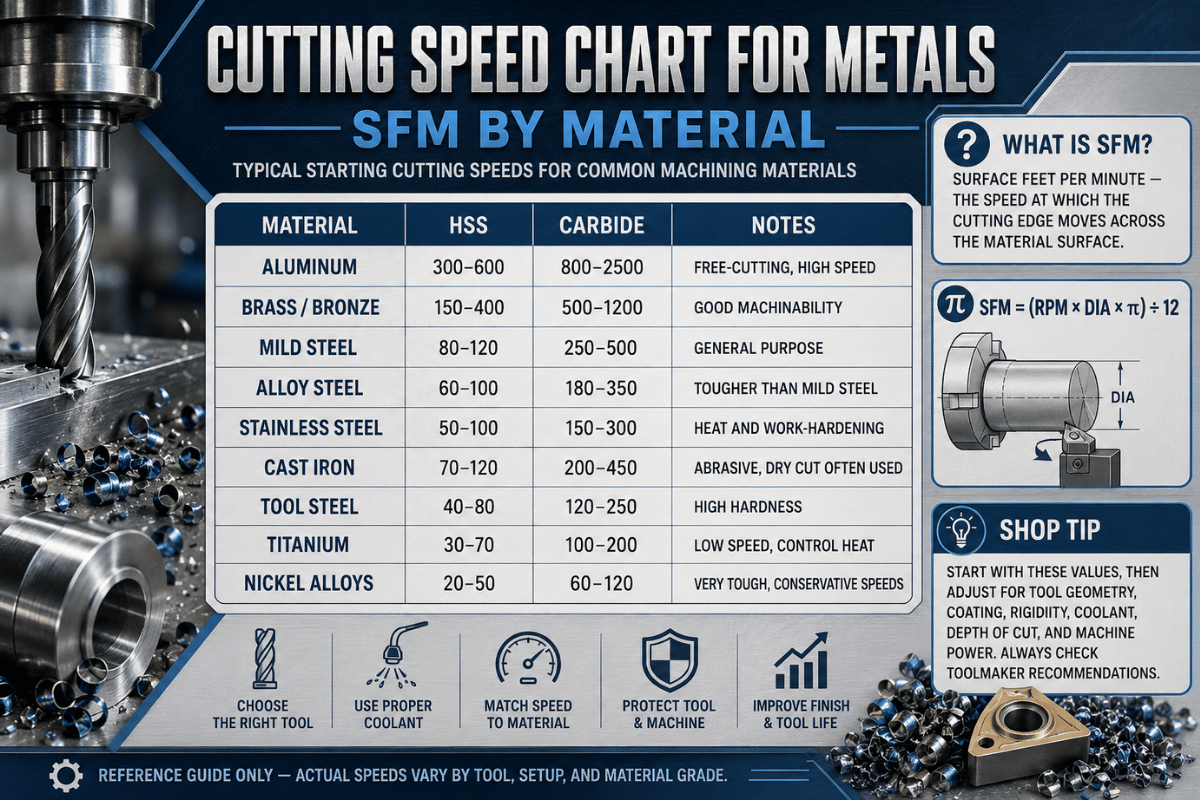
They usually work in the 5000-6000 SFM range for ideal and exact operation.
Some of the important parameters for grinding processes are:
- Wheel Speed (SFM) – Surface feet per minute of the wheel.
- Feed Rate- Rate at which workpiece passes the grinding wheel.
- Depth of Cut- Thickness of material removed in one pass of grinding.
- Abrasive Type- Color of abrasive or sharpness and severity in material removal.
Accuracy: Modern surface grinding can provide for ±0.005 mm accuracy with surface roughness of Ra 0.2 µm.
The Role of the Grinding Wheel in Surface Grinding
The grinding wheel is one of the basic essentials of surface grinding and largely affects the quality, rate of production, and precision of the final product. The modern grinding wheel consists of abrasive grains bonded together with resin, metal, or vitrified glass, depending upon the type under consideration.
Advanced Materials for Wheels
Developments in technology have allowed the grinding wheels to be manufactured from very advanced materials:
- CBN (Cubic Boron Nitride): Used for hard materials and high-alloy steels
- Diamond Abrasives: The best choice for aerospace materials
- Aluminum Oxide: Good for general ferrous metal grinding
- Silicon Carbide: Good for non-ferrous materials
Benchmark of Performance: Surface roughness down to Ra 0.1–0.3 µm depending on the application can be obtained with CBN-based wheels.
Wheel Design Specifications
| Specification | Impact on Performance | Application |
|---|---|---|
| Porosity | Coolant penetration and chip clearance | Reduces thermal damage |
| Grit Size (#80-#600) | Surface finish quality | Finer grits for aerospace applications |
| Bond Type | Wheel strength and release rate | Matched to material being ground |
Wheel Dressing Techniques
Wheel dressing is essential for restoring the grinding wheel’s cutting power by removing loading and ensuring precise surface finish. The most popular dressing methods include:
Single-Point Diamond Dressing
- Uses a single diamond point tool traversing the wheel surface
- Ideal for coarse grinding wheels requiring precision
- Recommended Parameters: Traverse speeds of 3-10 inches per minute
- Dressing Depth: 0.001″-0.010″ per pass for uniformity
Multi-Point Diamond Dressing
- Features multiple diamonds in a matrix configuration
- Best for high-volume processes
- Provides consistent results and minimizes uneven wheel wear
- Stabilizes grinding results for aerospace and automotive applications
Rotary Dressing Systems
- Uses a rotary diamond roll for precise wheel shaping
- Excellent for complex shapes and high-precision grinding
- Accuracy: Achieves precision within ±0.001″
- Maximizes throughput with faster cycle times through automation
Stationary Dressing Tools
- Fixed diamond or carbide tools for manual wheel dressing
- Cost-effective option for low-volume operations
- Requires low-pressure settings and shallow dressing cuts
Dressing Parameters and Optimization
Critical parameters for optimal wheel performance:
| Parameter | High Setting | Low Setting | Application |
|---|---|---|---|
| Overlap Ratio | >4 (Fine texture) | <4 (Coarse texture) | Finishing vs. Roughing |
| Feed Rate | Faster dressing | Precise control | Production vs. Precision |
| Depth of Cut | Aggressive renewal | Fine adjustment | Wheel conditioning |
Applications of Surface Grinding
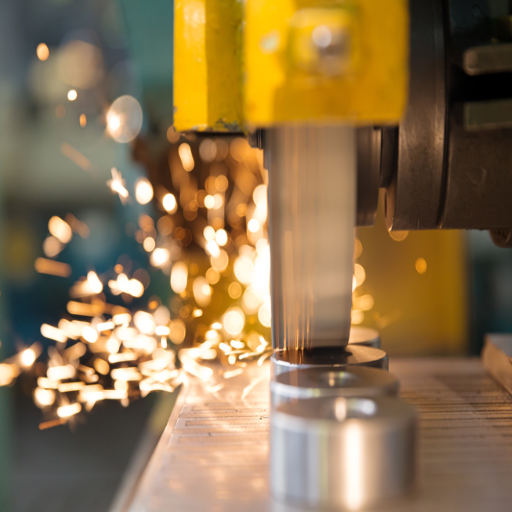
Industries Utilizing Surface Grinding Techniques
Surface grinding is a specialized and critical process used across various industries requiring precision, durability, and high-quality finishes. Here are the major industries and their applications:
Automotive Industry
Critical components requiring precise machining:
- Engine blocks and cylinder heads
- Transmission parts
- Precision gears
- High-performance and EV engine components
Market Growth: 4.2% CAGR (2023-2028)
Aerospace Industry
Ultra-precision components for aircraft:
- Turbine blades
- Landing gear components
- Structural panels
- Titanium and composite materials
Market Projection: $1 trillion by 2030
Tool and Die Manufacturing
High-tolerance tooling applications:
- Injection molding tools
- Stamping dies
- Metal-working tools
- Mirror finish requirements
Market Value: $40 billion (2022)
Medical Industry
Biocompatible precision devices:
- Surgical instruments
- Artificial joints and implants
- Dental implants
- Robotic surgical instruments
Market Forecast: $964 billion by 2030
Heavy Machinery
Durable industrial components:
- Hydraulic cylinders
- Machine beds
- Wear-resistant tooling
- Construction equipment parts
Electronics-Semiconductor
Precision microelectronic components:
- Silicon wafers
- Circuit boards
- Microelectronic components
- Ultra-precision grinding applications
Market Projection: $1+ trillion by 2030
Manufacturing Examples of Parts and Components
Surface grinding finds application in manufacturing numerous precision components across industries:
| Industry | Components | Materials | Tolerance Requirements |
|---|---|---|---|
| Aerospace | Turbine blades, engine casings | Titanium, advanced composites | Ultra-high precision |
| Automotive | Cylinder heads, camshafts, brake discs | Cast iron, steel alloys | High-performance standards |
| Medical | Surgical instruments, implants | Stainless steel, cobalt-chromium | Biocompatibility requirements |
| Electronics | Circuit boards, silicon wafers | Silicon, ceramic substrates | Nanometer-scale finishes |
Technology Advancement: Latest CNC surface grinding systems maintain tolerances within ±0.001 mm, emphasizing the critical role of surface grinding in modern manufacturing.
Benefits of Precision Grinding in Various Fields
Aerospace Industry
- Tolerance Achievement: ±0.001 mm precision
- Surface Finish: Ra 0.1 µm
- Performance: Drag reduction and better fuel efficiency
- Safety: Safe and reliable in the most extreme conditions
- Component Life: Service life up to 15% enhanced
- Performance: Transmission performance enhanced
- Quality: Wear resistance uniform throughout
- Safety: With regard to vehicle safety and performance
Medical Devices
- Biocompatibility: Better surface finishes
- Precision: Complex geometry capability
- Performance: Wear reduction for joint replacements
- Quality: Microfinish specifications
Tool and Die Making
- Precision: Exact requirements for dimensions
- Repeatability: Repeatable manufacturing processes
- Complex Shapes: Capability for intricate geometries
- Standards: Rigorous industry compliance
Statistical Performance Data
- Market Growth: Precision grinding markets projected to register a CAGR of 5.2% (2023-2030)
- Material Efficiency: Reduction of 20% in material wastage
- Manufacturing Efficiency: Improvement of 30% in overall efficiency
- Quality Enhancement: Continuous nano-level surface finishes
Maintaining Your Surface Grinder
Regular Maintenance Tips for Longevity
Smooth operation and increased lifespan of surface grinders depend upon proper maintenance. Here are the critical maintenance practices with practical views from the industry:
Cleaning and Inspection on a Daily Basis
- Clean thoroughly every evening before closing
- Dust out all dust, debris, and coolant residues
- Give special attention to the table, spindle, and moving parts
- Effects: Rigorous daily cleaning can bring a 25% reduction in mechanical failures over 5 years
Lubrication of Moving Parts
- Lubricate the guideway, spindle bearings, and lead screws as needed
- Use lubricants recommended by manufacturers
- Check oil level at intervals
- Effect: Routine lubrication maintenance extends the life of machines by 40%
Checking for Wheel Balance and Dress
- Check grinding wheels for wear and balance
- Dress the surface of wheels so that consistent finishes are maintained
- It is advised to balance wheels every week and use dressers as necessary.
- System Coolant Maintenance
- Ensure flow rate of coolant is maintained to avoid overheating
- Change coolant as per manufacturer’s recommendations
- Clean filters so that they do not get clogged
- Effects: When coolant system is dirty, machining accuracy can be affected by 15%
Control and Calibration of Alignment Check
- Align table, spindle, and other critical components (periodically)
- Meet precision measurement by laser alignment techniques
- Avoid geometric inaccuracies using good alignment
- Efficiency: Quarterly calibration maintains 98% accuracy during the lifetime of the machine
Electrical System Check
- Check inspections on connections and wiring concerning security systems
- Check if any loose connections or damaged wiring exist
- Steps of checks on any safety systems
- Frequency: In a preventive manner, electrical inspection should be repeated twice a year
Documentation and Record Keeping
- Keep comprehensive maintenance records
- Track dates of inspections, replacements, and performance
- Uncover patterns that may influence predictive maintenance
- Schedule repairs preemptively so as to limit their downtime
Advanced maintenance: IoT-based predictive maintenance tools supported with various sensors increase productivity and reduce unplanned outages by 30%.
Common Problems and Troubleshooting Methods
Surface grinders require careful maintenance to operate with high accuracy. Several problems are frequently encountered, and quick troubleshooting is vital for maintaining quality and equipment lifespan.
| Problem | Causes | Troubleshooting Solutions | Prevention |
|---|---|---|---|
| Irregular Grinding Patterns | Uneven wheel wear, misalignment, vibration | • Dress wheel regularly with diamond dresser • Check table and grinding head alignment • Add vibration-damping pads |
Regular wheel maintenance, proper mounting |
| Workpiece Overheating | Excessive feed rate, insufficient coolant, dull wheel | • Reduce feed rate • Check coolant system for blockages • Replace or dress dull grinding wheel |
Proper coolant flow, appropriate feed rates |
| Chatter Marks | Loose components, unbalanced wheel, worn bearings | • Tighten all machine components • Balance grinding wheel after mounting • Inspect and replace worn spindle bearings |
Regular component inspection, proper wheel balancing |
| Surface Burns/Swirl Marks | High wheel speed, insufficient lubrication, excessive pressure | • Decrease wheel speed • Ensure proper lubrication distribution • Adjust grinding pressure |
Optimal operating parameters, adequate lubrication |
Detailed Troubleshooting Procedures
Irregular Grinding Patterns
Causes: Uneven wear of grinding wheel, improper alignment of table, or machine vibration.
Solutions:
- Check grinding wheel for wear and dress regularly with diamond dresser
- Studies show that dressing extends wheel life by up to 40%
- Ensure table and grinding head alignment using dial indicator
- Verify stable machine mounting – vibration-damping pads can reduce inconsistencies by 25%
Overheating of Workpiece
Causes: Excessive feed rate, insufficient coolant flow, or dull grinding wheel.
Solutions:
- Reduce feed rate to allow heat dissipation time
- Examine coolant system for blockages from supply to contact area
- Proper coolant application reduces heat distortion by 50%
- Replace or dress dull grinding wheel to improve cutting ability
Machine Downtime Due to Component Failure
Causes: Lack of predictive maintenance and excessive wear on critical components.
Solutions:
- Implement IoT-based predictive maintenance systems
- Real-time monitoring can reduce unplanned downtimes by 30%
- Regular inspection and replacement of wear components
- Follow manufacturer’s maintenance schedule
Advanced Diagnostic Tools
Integration of modern technologies enhances troubleshooting capabilities:
- Vibration Analyzers: Detect bearing wear and imbalance issues
- Thermal Imaging Cameras: Identify overheating components
- IoT Sensors: Continuous monitoring of machine health parameters
- Data Analytics: Predictive maintenance scheduling
Boosting Efficiency and Performance
Maximizing efficiency and performance in surface grinders requires implementing best practices combined with technological advancement. Here are key strategies for industrial applications:
Automation and IoT Integration
- Automation Benefits: Eliminates human error and provides consistent operations
- IoT Monitoring: Real-time machine status, wear patterns, and failure prediction
- Cost Reduction: Predictive maintenance reduces downtime and costs by 20-25%
- Data Analytics: Optimization based on historical performance data
CNC Implementation
- Precision Enhancement: CNC control manages complex geometries with minimal manual intervention
- Accuracy Improvement: 30% improvement in machining accuracy over manual workflows
- Repeatability: Consistent results across production runs
- Complex Operations: Advanced programming capabilities for intricate parts
Energy Efficiency Optimization
| Technology | Energy Savings | Benefits | Applications |
|---|---|---|---|
| Variable-Frequency Drives (VFDs) | 15-20% power reduction | Load-matched motor speed | All motor-driven components |
| Advanced Grinding Wheels | Reduced power consumption | Extended tool life, better efficiency | CBN and diamond wheels |
| Optimized Coolant Systems | Reduced pump energy | Better heat management | Precision grinding operations |
Advanced Materials and Tools
- CBN and Diamond Wheels: Increased cutting efficiency and tool life
- High-Performance Abrasives: Better performance with hard and abrasive materials
- Specialized Coolants: Enhanced lubrication and heat dissipation
- Precision Fixtures: Improved workpiece holding and positioning
Operator Training and Optimization
- Machine Optimization Techniques: Training in advanced operating procedures
- Data Interpretation: Understanding monitoring tool outputs
- Early Problem Detection: Identifying inefficiencies before they become critical
- Continuous Improvement: Ongoing skill development and knowledge updates
Performance Results: Combining these techniques with strict maintenance guidelines can significantly improve performance capacity and extend equipment lifespan, leading to 25-40% overall efficiency gains.
Frequently Asked Questions
How does a surface grinding machine work?
The grinding operation involves an abrasive wheel dressed and rotated over a flat workpiece surface. The machine is normally fitted with a magnetic chuck that holds the workpiece firmly during grinding operations while the wheel rotates at high speeds. Thin layers of the material are being removed by the grinding wheel face till the desired finish is reached. The depth of cut can be adjusted as per workpiece requirements for rough grinding or precision finishing. Surface grinders today are fitted with modern technology to ensure high precision and efficiency.
How is the grinding wheel important in surface grinding?
A grinding wheel, being involved in the surface grinding process, is indeed an essential tool that carries out material removal from the surface of the workpiece. Grinding wheels may be made from abrasive mediums such as aluminum oxide or silicon carbide for various materials from cast iron to aluminum. The wheel specifications vary according to application requirements and must be inspected periodically so that clogging problems do not arise. The grinding wheel continually removes material by abrasive action while rotating; hence, the surface finish of the workpiece will be smooth. The speed and condition of the grinding wheel will determine the efficiency of grinding operation.
What materials can surface grinders work on?
Surface grinders work on many materials, including metals such as cast iron and aluminum, with the abrasive wheel selection also depending on the material being ground. The kind of abrasive material used influences the grinding rate and the finish obtained from the grinding process. Diamond and CBN grinding wheels are suitable for hard materials, while aluminum oxide wheels are more suited to grinding softer metals. The type of grinding wheel and the workpiece both get selected as per the application. This versatility becomes a necessity for surface grinding in manufacturing.
How important is setup in a surface grinder?
Setup of surface grinding is of paramount importance for obtaining the precise result. Proper work alignment on the magnetic chuck assures holding during grinding. Any irregularities in machine set-up or alignment will create an uneven surface, thus affecting the finishing quality. Parameters such as grinding wheel positioning, depth of cut settings, and number of passes go to affect the final finish. Therefore, proper preparation and more attention to machine setting must precede any grinding operation.
Why is operator intervention considered important in surface grinding?
Operator intervention holds paramount importance in surface grinding. However, in modern times, most machines require relatively little manual intervention. Operators should check that the grinding wheel is maintained adequately and dress the wheel to prevent clogging of the surface from dust or debris if needed. Surface grinding has high potential for automation, but it is the skillful operators who maximize the efficiency and output quality. Customer issues arising at a later stage are the biggest cost item; if operators see these issues in time, they can save large sums of money for the company. Thus, the operators’ expertise will ensure a successful grinding world.
Conclusion
Modern precision manufacturing heavily relies on surface grinding, with some going as far as saying it is a quintessential feature of high-end manufacturing processes. It brings together the attainment of stringent tolerances, achieving surface finishes, and ensuring dimensional accuracy of components in various materials and applications. That is to say that surface grinding has been steadily changing, molding, and incorporating new advancements over time, just as components in aerospace, manufactured to nanometer-level accuracy, and automotive parts, which go for rough use and fine detailing, change over time.
With the advent of CNC control, IoT monitoring, and better abrasive materials emerge new possibilities by which surface grinding can be performed. From manual craft to a fully automated process able to satisfy the most demanding manufacturing specifications-the transformation of surface grinding is complete. In the wake of mounting demands placed upon manufacturing processes, surface grinding technology will continue to develop, incorporating features of AI, machine learning, and predictive maintenance.
Evolution, composition, and application of surface grinding machines are fundamental in a manufacturing industry that seeks to stay ahead in operation optimization and the attainment of world-class quality standards. Proper maintenance supports smart manipulation, and technological adoption secures surface-grinding machines to remain the center pillar in a precision manufacturing domain.
Reference Sources
-
Grinding | Subtractive Processes
- Source: MIT (Massachusetts Institute of Technology)
- Link to Website
- Explains the grinding process and how the wheel interacts with the material.
-
Clausing Surface Grinder Procedure
- Source: Purdue University
- Link to PDF
- Provides detailed procedural guidelines for operating a surface grinder.
-
Course Content and Outcomes Guides (CCOG)
- Source: Portland Community College
- Link to Website
- Discusses the use of surface grinding for achieving close tolerances and improved finishes.
-
Energy Prediction Models and Distributed Analysis
- Source: PubMed Central (PMC)
- Link to Article
- Analyzes material removal stages in grinding processes.
-
Crush Grinding
- Source: OSTI (Office of Scientific and Technical Information)
- Link to Document
- Explores the dual role of machine motors in grinding processes.