





Understanding Bench Grinders
What is a Bench Grinder?
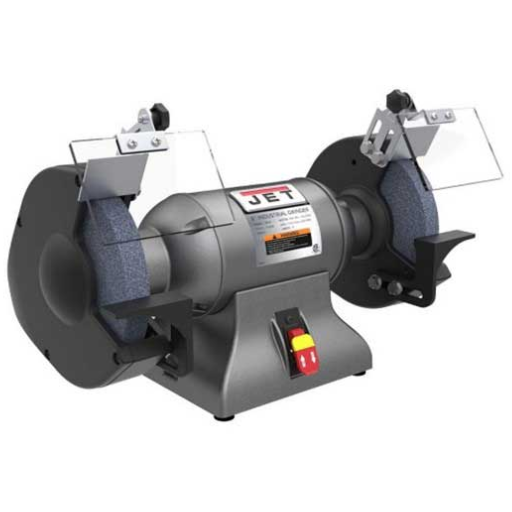
A bench grinder is a power tool considered stationary. It comprises a motor that drives abrasive wheels, which spin at extremely fast speeds. These wheels perform various tasks: they sharpen tools, shape metals, rust out metals, or simply smooth surfaces. Unlike many tools, bench grinders can feature heavily depending on the utility of the workshop: they are in garages and industries, too!
Market Insight: The 6-inch grinder always seems to maintain popularity as it strikes the right equilibrium between price and performance. Prices range anywhere from $50 to $200, depending on the brand and specifications.
A modern-day grinder gives users the option of fine-tuning the speed. When the need arises, turning at lower speeds is most suitable for careful sharpening. High-speed operation, conversely, would include bridging more material removal.
Types of Bench Grinders
Regular Bench Grinder
This is the most common type, consisting of two grinding wheels, both of different grit sizes. It has an operating speed between 3,000 and 3,600 revolutions per minute, sharpening tools, grinding off rust, and shaping metal.
Variable Speed Bench Grinder
As the name goes, the speeds can be controlled for versatility. The slower speeds allow precise work on delicate materials; higher speeds afford aggressive stock removal. This is a favorite among experienced craftsmen.
Wet Bench Grinder
The water tank is utilized to cool the grinding wheel and to protect the workpieces from heat. It should be used especially in the sharpening of knives and scissors, ensuring dust control and suppression of sparks.
Industrial Bench Grinder
Heavy-duty machines, having motors rated over 1 HP, and with wheel diameters between 8-10 inches depending on the manufacturer. In general, these are machines used on commercial applications and intense metalworking.
Mini Bench Grinder
These are very light and small for small work and tight spaces. It is a favorite machine for hobbyists, jewelers, and DIYers for minute polishing work.
Bench Polisher Grinder
Specialized for buffing and polishing, the bench polisher grinder uses polishing wheels instead of grinding wheels loaded with abrasive compounds. Application areas include metal surfaces, jewelry, and automotive.
Key Features of 6-Inch Bench Grinders
| Feature | Specification | Benefit |
|---|---|---|
| Motor Power | 1/3 HP to 3/4 HP | Sufficient torque for moderate grinding and polishing tasks |
| Speed | 3,450 RPM (standard) / 2,000-3,400 RPM (variable) | Precise control for different materials |
| Wheel Types | Coarse and fine grinding wheels | Versatility for grinding, sharpening, and finishing |
| Safety Features | Adjustable eye shields, spark guards, tool rests | Enhanced safety and precision during operation |
| Construction | Cast iron or heavy-duty steel | Longevity and stability during use |
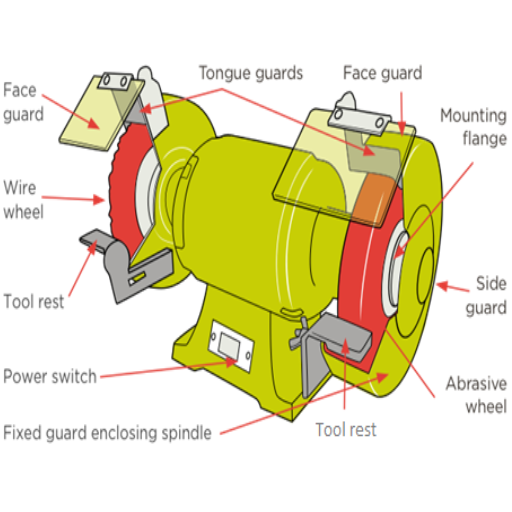
Components of a Bench Grinder
Uses and Types of Grinding Wheels
The grinding stone is the heart of a bench grinder, with several types of grinding wheels serving various purposes:
- Aluminum Oxide Wheels: Used for the most common applications of sharpening tools and general grinding
- Silicon Carbide Wheels: Work best for grinding non-ferrous metals like aluminum and brass
- Diamond Wheels: For precision work and cutting of materials that are very hard, such as ceramic and tungsten carbide
- Wire Wheels: Great for polishing and removing rust from metal surfaces
- CBN Wheels: An option that lasts long with less heat development and is gaining in popularity
Power and Speed of Motors
Motor power and speed significantly influence grinding tool selection and usage:
| Grinder Type | Speed Range (RPM) | Power Range | Best Applications |
|---|---|---|---|
| Angle Grinders | 8,000 – 10,000 | 800 – 1,200 watts | Heavy cutting and material removal |
| Bench Grinders | 3,000 – 3,600 | Variable options available | Polishing, sharpening, finishing |
Using a Bench Grinder Safely
Safety Essentials
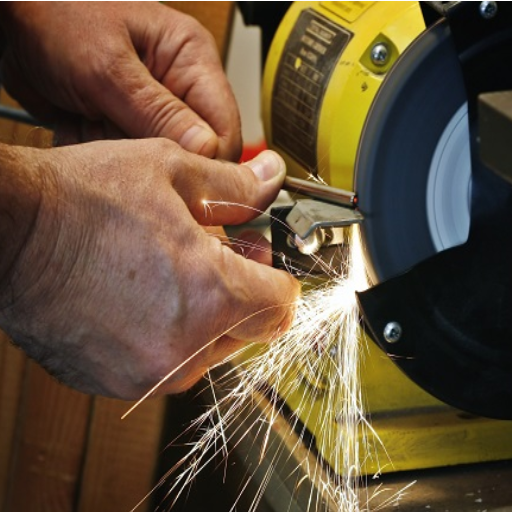
Essential safety supplies are:
- Safety goggles or face shield – Protect the eyes from flying particles and sparks
- Sturdy gloves – Provide protection to the hands against accidental contact with the grinding surface
- Hearing protection – Provided that there is prolonged exposure, this prevents hearing damage
- Dust mask or respirator – This must be worn when fine particles arise during grinding
- Non-slip, closed-toed shoes – Give stability to the feet while providing protection to them
General Safety Practices
- Inspect before use: Look at the wheel condition and proper mounting.
- Verify RPM ratings: Make sure the wheel is marked for the maximum RPM of the grinder.
- Set watertight clearances: Tool rests shall be set within 1/8 inch of the grinding wheels.
- Keep the work area clean: Apart from clutter, it may cause accidents.
- Use proper training: Operator shall be trained as required by OSHA.
What Not to Do When Grinding
- Working without PPE (70% of workplace eye injuries are preventable)
- Using wrong grinder or wheel type
- Applying excessive pressure
- Skipping wheel inspection
- Neglecting machine maintenance
- Grinding without work rest
- Operating in poorly ventilated areas
Techniques for Effective Grinding
Basic Grinding Methods
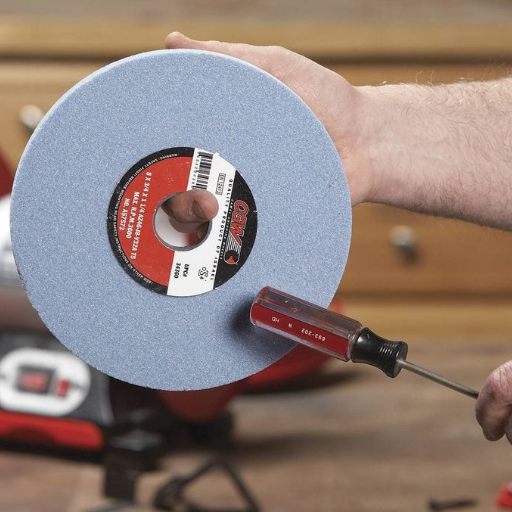
- Choose Correct Grinder: Match tool with material and task requirements
- Select Correct Abrasive Wheel: Aluminum oxide for metals, silicon carbide for non-ferrous materials
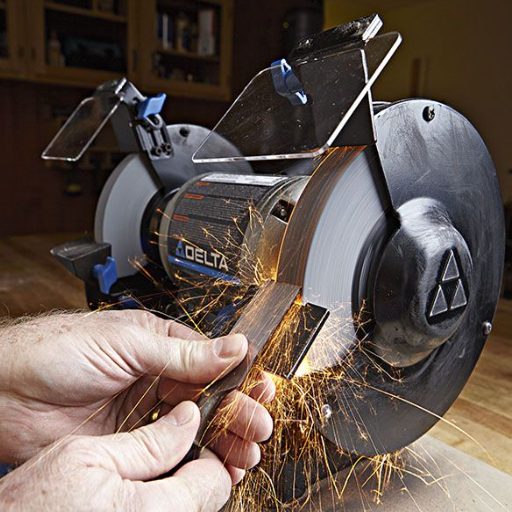
- Apply Pressure in Moderation: Light to medium pressure maximizes abrasive performance
- Maintain Ideal Angle: 15-30 degrees is the accepted value for varying treatments on the metals
- Keep Moving: Resists overheating and helps in even finish of surface
- Regular Maintenance: Clean, check, and replace worn parts
Advanced Grinding Methods
High-Efficiency Deep Grinding (HEDG)
Uses high wheel speeds with large depths of cut for up to 4 times reduction in machining time, maintaining tight tolerances.
Electrochemical Grinding (ECG)
Electrochemical technique is combined with abrasive grinding for working on difficult materials such as stainless steel and superalloys.
Creep Feed Grinding
Deep cuts and slow feed rates are used for geopolymers, decreasing cycle time by 50%.
Hybrid Grinding Technologies
Combines various processes, such as laser-assisted grinding, for improvement in cutting speed and surface finish by 30%.
Woodturning Applications
Bench grinders excel in woodturning applications for sharpening and maintaining tools:
- CBN Sharpening Wheels: Last up to 10x longer than traditional aluminum oxide wheels
- Low-Speed Operation: 1,750 RPM models prevent heat buildup and tool damage
- Precision Jigs: Keeping in mind all the aspects of the proper grinding angles for the consistent shaping of the tool
- Versatile Applications: Adaptable to sharpen gouges, chisels, and scrapers
Maintenance of Bench Grinders
Regular Cleaning and Inspection
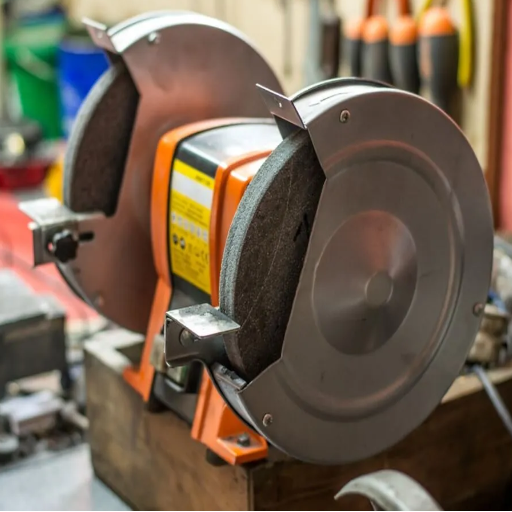
Proper maintenance ensures safety and optimal performance:
- Safety First: Always unplug grinder before maintenance
- Clean Thoroughly: Remove dust and debris with brush or compressed air
- Inspect Wheels: Check for cracks, chips, or wear using the “ring test”
- Check Alignment: Ensure tool rests are within 1/8 inch of wheel
- Verify Balance: Unbalanced wheels cause vibration and premature wear
Troubleshooting Common Problems
| Problem | Cause | Solution |
|---|---|---|
| Excessive Vibration | Unbalanced or uneven wheels | Check mounting, replace if worn or unbalanced |
| Overheating | Extended use or excessive pressure | Allow cooling breaks, reduce pressure |
| Wheel Glazing | Wheel surface becomes smooth | Dress the wheel to restore abrasive quality |
| Won’t Start | Electrical fault or bad capacitor | Check power, inspect capacitor, consult manual |
| Uneven Material Removal | Misaligned tool rest or damaged wheel | Adjust tool rest, replace damaged wheels |
| Burning Marks | Excessive pressure or wrong wheel type | Reduce pressure, use appropriate wheel |
Choosing the Right Bench Grinder
Factors to Consider
| Factor | Considerations | Recommendations |
|---|---|---|
| Wheel Size | 6-inch for DIY, 8-inch for heavy-duty | 6-inch offers best balance for most users |
| Motor Power | 1/3 HP to 1+ HP available | 3/4 HP minimum for demanding tasks |
| Speed (RPM) | 3,000-3,600 RPM standard | Variable speed adds versatility |
| Construction | Cast iron vs. steel vs. plastic | Cast iron for durability and vibration control |
| Safety Features | Guards, shields, tool rests | Look for adjustable and robust safety features |
Top Recommendations for 6-Inch Bench Grinders
DEWALT DW756
⅝ HP motor, 3450 RPM
Known for reliability and durability, ideal for heavy-duty tasks with excellent spacing for grinding applications.
WEN 4276
2.1 amp motor with flexible work light
Budget-friendly option popular with professionals and hobbyists, includes integrated lighting for visibility.
Jet JBG-6W
½ HP with wire wheel capability
Versatile tool for both grinding and wire wheel operations, featuring robust cast iron construction.
Rikon 80-600V
1,750 RPM slow speed
Perfect for precision sharpening without overheating, includes adjustable eye shields for enhanced safety.
SKIL 3380-01
2.1-amp motor with LED lights
Features dual adjustable tool rests and LED work lights above each wheel for improved visibility.
Budget vs Performance
Frequently Asked Questions
What is a bench grinder? How does it work?
Bench grinders are very powerful in their method, sharpening into the shaping and polishing of metals and other substances. Two grinding wheels are mounted on a pedestal, above which was to mount the work for accuracy and stability. Normally, a standard bench grinder RPM is 3450, which is more than sufficient for a good number of home jobs and applications.
How does one select grinding wheels for my bench grinder?
It depends on the offered material finish. CBN grinding wheels are preferable for metal applications because of longer life and higher heat resistance. Buffing and wire wheels would work for polishing. Grit selection is extremely important: finer grits would polish, coarse ones would remove stock. Match the wheel specifications with your grinder.
Can a bench grinder be employed in wood turning?
Indeed, bench grinders serve as great sharpening tools for wood turning chisels, gouges, and other assorted tools. Use the proper grinding wheels designed for wood-turning purposes in order to avoid overheating. While sharpening, one must properly position the tool rest for precision. This, in fact, is of great use to any woodworker trying to feel sharp tools for sharp cutting.
What are safe measures during operating a bench-grinder?
Always suited for appropriate PPE, including spectacles and gloves. Set tool rests at a recommended distance to avert vibrations. Confirms the wheels for cracks and damage prior to usage. Overworking can set a material hot; avoid it. Keep the working bench clean and always observe instructions for safe operation of a bench-grinder laid out by its manufacturer.
Why should a variable-speed bench grinder be chosen?
Since variable speed means operators can choose the speed of the RPM for any job they are carrying out. Low speeds mean they are best suited for delicate work where heat is to be avoided, and high speeds mean fast removal of material. This kind of control allows the grinding wheel to last longer than with unrestricted high speed and make quality work- which is really what high-level professionals and serious hobbyists will want to have.
Reference Sources
-
Optimization of Fault Prediction by AI in Industrial Equipment: Analysis of the Operating Parameters of a Bench Grinder
This research focuses on monitoring and optimizing bench grinder operations using AI, providing insights into industrial applications and fault prediction.
Link to the source -
Grinding Plane-Irons with Bench Grinder
This paper discusses the importance of maintaining bench grinding wheels, including dressing and truing techniques, to ensure optimal performance.
Link to the source -
Development and Evaluation of Portable Tool Bit Sharpening Holder for Bench Grinder
This study explores the development of a tool bit sharpening holder for bench grinders, highlighting its applications in metal fabrication and machine shops.
Link to the source