




The right lathe can make a huge difference regarding precision machining and craftsmanship. Selecting the ideal lathe for your needs is a crucial decision that impacts your productivity, accuracy, and, ultimately, your success, whether you are a professional machinist or just starting to explore machine tools. This guide simplifies the process by helping you learn the main points to consider, the different types and features, the budget, and the intended applications. By the end of this article, you will be knowledgeable enough to confidently buy the best lathe for your projects, thus avoiding costly traps and guaranteeing lasting satisfaction.
Understanding the Basics of Lathes
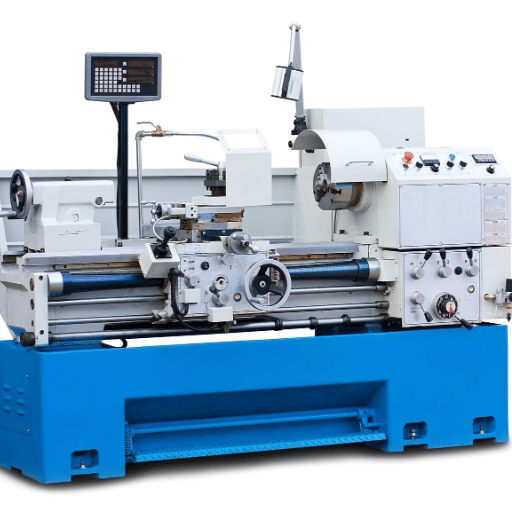
Lathes are multifunctional machines that allow one to create, cut, and polish materials by rotating the workpiece against a fixed cutting tool. They are mainly used in woodworking, metalworking, and plastic molding. Lathes basically have major parts such as headstock, tailstock, bed, and carriage which play their specific roles in the entire process. The headstock supports the material and allows it to turn, while the tailstock provides backing. The bed handles positioning, and the carriage secures the cutting tool for accurate profiling. Getting these basics right is a prerequisite for making the right choice and using a lathe effectively.
What is a Lathe?
A lathe is one of the most adaptable machines, used to cut and shape materials with great precision by making the workpiece rotate against a fixed cutting tool. The operation of this machine is based on the principle of cutting material with a cutting force, enabling the production of items that are perfectly symmetrical around an axis, such as cylinders, cones, or threads. Lathes are very popular in the manufacturing, woodworking, and metalworking industries because of the extensive range of operations they can perform with great accuracy such as turning, drilling, knurling, and threading.
Nowadays, modern lathes are equipped with computerized numerical control (CNC), which automates machining processes and makes them highly accurate, thereby boosting productivity and consistency in industrial applications to a great extent. The versatility and accuracy of lathes make them indispensable tools for producing parts for the automotive, aerospace, and other major industries.
Key Components of a Lathe
Bed
The part of the lathe that supports and aligns all other parts, providing the foundational structure for the entire machine.
Headstock
Houses the spindle and the motor that drive the workpiece throughout the machining process.
Tailstock
Placed opposite to the headstock, keeping tools or supporting the end of the workpiece securely.
Carriage
The component travels along the bed and contains the tool post, enabling accurate cutting and shaping.
Tool Post
Secures the cutting tools in place and lets adjustments be made whenever necessary during operation.
Chuck
A device that is capable of gripping and holding the workpiece very tightly while machining operations are performed.
Lead Screw
Permits the automatic and steady movement of the carriage for threading and cutting operations.
Feed Rod
Makes it easier for the technician to move the carriage to perform basic operations manually.
Note: All parts of the lathe work in harmony to ensure that the machine operates efficiently, is versatile, and delivers accurate results.
Features to Look for in a Lathe
Essential Features Checklist
- ✓
Swing Over Bed — The largest workpiece the lathe can support is determined by the swing over bed, which also determines the lathe’s capacity. - ✓
Horsepower of the Motor — It ensures the lathe has sufficient power for various materials and workloads. - ✓
Speed Options — Having several speed settings increases the versatility and precision of machining operations. - ✓
Bed Length — Dictates the maximum length of the workpiece the lathe can support. - ✓
Sturdiness and Build Quality — A heavy, strong construction reduces vibrations to a minimum and ensures accurate operation.
Types of Lathes

There are various types of lathes, including engine lathes, turret lathes, CNC lathes, toolroom lathes, bench lathes, and special-purpose lathes. Each type serves distinct purposes and offers unique advantages depending on your specific needs.
Engine Lathes: Versatility in Machine Shops
Engine lathes are versatile and the most common type of lathes in machine shops worldwide. Their adaptability is their turning ability, threading, drilling, and knurling, all performed at the same time which made them the best for both the inexperienced and the professional. They have manual controls and thus provide precision by hand where the operator can work with all kinds of materials, including metals, plastics, and wood.
Engine lathes do not lose their importance in modern manufacturing because of their flexibility and capability to adapt to different production needs. Even with technological advancements, manual operation remains easy to customize workpieces, especially for low-volume or one-off projects. Thus, they become very valuable in areas such as prototyping and repair work where strict specifications are required. However, their relatively simple design, coupled with low maintenance requirements, also accounts for their presence in machine shops.
Turret Lathes: Efficiency in Production
The turret lathes are designed to enhance production efficiency by allowing a single workpiece to undergo multiple operations in sequence using the machine tools. The rotating turret which can hold different tools, is at the heart of the machine. The downtime caused by changing tools is thus significantly reduced and so is the cycle time. That is why they are suited for high-volume production, where product uniformity and fast delivery are of utmost importance. Besides, their ability to perform operations one after the other without moving the workpiece ensures accuracy and boosts productivity. As such, turret lathes are indispensable in industries that require the production of large quantities of the same part.
CNC Lathes: Precision and Automation
CNC (Computer Numerical Control) lathes have been developed to be the most precise and automated machines in modern manufacturing. These machines are programmed through computer systems to operate with great accuracy and repeatability. CNC lathes, by digital command, can manufacture complicated designs and parts with little human intervention, thus, cutting down on errors and making quality control easier. Besides, their ability to process different kinds of materials, from metals and plastics to composites, gives them a place in almost all industries, like aerospace, automotive, and medical manufacturing, where quality and precision are crucial.
Why Are CNC Lathes More Efficient Than Traditional Ones?
They perform complex, repetitive tasks through automation, resulting in a drastic reduction in both production time and labor costs. The lathes feature multi-axis motion and real-time operation monitoring, enabling high-speed operation without sacrificing accuracy. Moreover, storing and recalling programs for individual components ensures near-perfect product replication, particularly in batch production. In a way, innovation and efficiency have been combined, and CNC lathes have changed the face of modern machining, thus setting a new standard for accuracy and productivity.
Factors to Consider When Choosing a Lathe
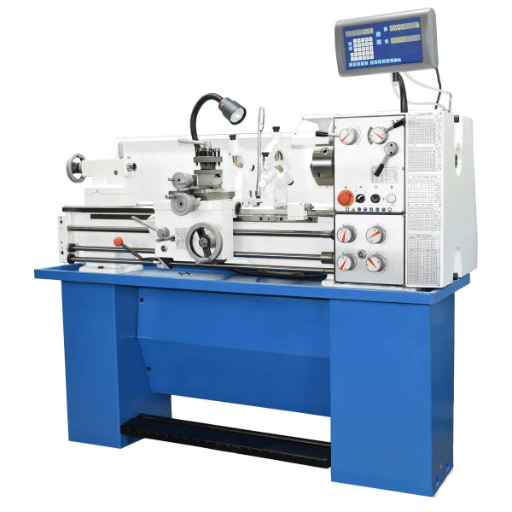
Key Decision Factors
Type of Lathe
Decide between a manual, CNC, or hybrid lathe based on your production needs and the level of sophistication of your components to be made.
Size and Capacity
Identify the dimensions of the lathe and check if its swing, bed length, and chuck size are suitable for your project’s materials and measurements.
Spindle Speed and Power
Look through the different spindle speed ranges and motor powers so that you can be sure the lathe will take care of the necessary machining speeds and cutting forces.
Material Compatibility
Check that the lathe is suitable for the materials that you use most often, for instance, metals, plastics, or wood.
Control Systems and Features
Take into account the overall operation of the machine, including user-friendly control systems, programmability, or software compatibility for CNC lathes.
Lathe Size and Capacity
One essential factor in determining lathe size and capacity is the maximum workpiece size the lathe can handle. It takes into account the swing, the maximum diameter of the lathe that can be used, and the distance between centers which sets the maximum length of the workpiece. It is critical to check the lathe’s capacity relative to the size of the materials and parts you usually work with so you won’t encounter any limitations during operation. In case you work on different sizes of project, it is better to choose a lathe with a wide-ranging capacity that is versatile to meet various requirements.
Understanding Swing and Distance Between Centers
The swing and distance between centers are the two major determinants of a lathe’s capacity to work with. Swing is, in fact, the diameter of the material that the lathe can turn without interference and it is measured from the spindle center to the lathe bed and is then doubled. If the lathe were considered a revolving device, this measurement would be the maximum size of the revolving object the device could operate without flaws. The distance between centers measures, on the contrary, the maximum material length that can be held between the headstock and tailstock.
💡 Pro Tip: Matching Specifications to Projects
Always compare these specifications to your project requirements when selecting a lathe. A small lathe with limited swing and distance between centers would be enough if most of the work you do involves small pieces. If you are dealing with a mixture of small and large pieces, go for a lathe with a broader range of swings and center distances. Knowing these dimensions allows one to maximize both performance and efficiency, which, in turn, means one can deliver tasks reliably without risking either overworking or underworking the equipment.
Choosing the Right Bed Material
Stability and durability are the two main factors to consider when choosing the bed material for a lathe. One of the options is cast iron which is often used because of its ability to dampen vibrations excellently and to keep precision for long periods. Steel beds are suitable for light work or small machines as they offer strength and stability but at a lower weight. Consider both the job you will do and the conditions in your workspace when selecting a material that ensures the best reliability and performance.
Budget Considerations for Buying a Lathe

When planning your budget for a lathe, it is essential to weigh its cost against the needed features and longevity for your projects to achieve a balance. Lathes of higher grade, made from high-quality materials like cast iron, often offer better support and accuracy but come with a higher price tag. On the other hand, you can buy mid-range or even entry-level equipment with steel parts for less money if your requirements are not very significant. To make a well-rounded investment, always consider additional costs for tools, maintenance, and future upgrades.
Entry-Level vs. Professional-Grade Machines
When considering budget factors for entry-level vs. professional-grade lathes, key aspects include cost, materials, precision, durability, and additional expenses.
Cost-Effective Features to Consider
When buying a lathe, it is always advisable to list the cost-effective features first to achieve the best performance-to-price ratio. The following aspects should be the primary focus:
Variable Speed Control
This feature allows the machine to operate at different speeds according to the material being processed and thus it does not need frequent upgrades.
Build Quality
It is better to use durable materials such as cast iron which provide stability and eliminate vibrations.
Tool Compatibility
Make sure the lathe accepts standard, inexpensive accessories and attachments.
User-Friendly Design
Features such as a user-friendly control panel and fast setup can help save time and simplify operations.
Basic Safety Features
Automatic shut-off and strong shields are some of the safety features that should be integrated and which are very important for long-term use.
By focusing on these characteristics, one is sure to achieve a balance between cost and performance, making the machine a wise and practical investment.
Long-Term Investment and Maintenance Costs
A lathe not only has a purchase price but also long-term ownership costs, so it’s imperative to weigh all these factors when buying. Among other things, maintenance will usually be the most significant part of these expenses, since regular cleaning and oiling, replacing worn parts, and even professional inspections are required to keep the machine operating at its best. A lathe that gets all the necessary treatment can last for several decades, while neglect can lead to costly repairs or the whole machine being replaced far too soon.
Moreover, the electricity consumption and the spending on compatible accessories or upgrades should be included in the overall budget. By choosing lathes with robust components and easy-to-find replacement parts, the buyers will not only save on the long run but also improve the machine’s trustworthiness. For a hobbyist or a small business, it’s wise to consider the total cost of ownership alongside productivity gains to ensure the investment is sound and cost-effective.
Tailored Advice for Different Users

For Hobbyists
The best choice would be compact, user-friendly lathes with only the necessary features to handle small-scale projects efficiently. Prioritize lower cost and easier maintenance so that the total cost consists of only initial and ongoing expenses.
For Small Business Owners
Mid-range lathes with a wide variety of capabilities and much stronger durability would be the best choice as they could handle continuous usage. Try to find models that offer an excellent balance of performance and price, are reliable, and provide a wide range of customization options.
For Industrial Users
The best move would be to buy high-performance lathes designed for heavy-duty operations. Put on top of your list the advanced features, automation options, and robust designs that ensure efficiency and long-term productivity in large-scale production.
Beginners: What to Look For
If you are starting, you should consider a lathe that is easy to operate and simple to use. Focus on models with straightforward controls and strong safety features to make the learning process easier. Smaller, compact and cheap lathes, which are meant for hobbyists or beginners, should be the ones to focus your attention on. Look at the alternatives that provide you with a detailed manual, support resources, and warranty coverage to make maintenance and set-up easier for you. Moreover, it would be wise to select a lathe that can handle a variety of basic materials and operations, so you can practice and improve your skills without feeling stressed.
Hobbyists: Best Options for Home Workshops
When it comes to home workshops, hobbyists should prioritize compact benchtop lathes, which are functional and not too expensive. These lathes are usually used for minor woodturning, such as bowls, pens, or small furniture parts. Seek for variable speed controls, strong construction, and the ability to work with a variety of tools and attachments as features. Check that the machine can be accommodated in your workspace and that it has an easy-to-use operation to make your projects more straightforward and to bring out your creativity more.
Professional Machinists: High-End Lathe Features
The best lathes for professional machinists are equipped with state-of-the-art features that deliver the highest degree of accuracy, the fastest production times, and the ability to perform a wide range of machining with a single machine. CNC (Computer Numerical Control) is one of the main capabilities that these machines often have. That means the lathe is fully automated and operation can be done with extreme accuracy. Other features may also consist of big swings, robust construction to prevent vibrations during high-speed operations and the ability to work with different kinds of cutting tools and materials. Picking a lathe that meets the project requirements would lead to getting the best performance and also long-term reliability.
Reference Sources
-
Machining Procedures and Lathe Operations
A detailed guide to lathe operations and tool shapes helps in understanding lathe selection.
Read the guide here -
Introduction to Lathe Machines
A document explaining the unique features and operations of lathes, particularly for woodworking.
Access the document here -
CNC Lathe Resources
A resource on selecting tools and understanding CNC lathe operations, provided by the University of Florida.
View the resource here
Frequently Asked Questions (FAQs)
What factors should I consider when selecting a new lathe?
Among the factors that should be taken into account are the type of turning that you are planning to do such as metalworking or woodworking, the size of the blanks and workpieces that you intend to turn, the length of the lathe bed, and if you need a benchtop lathe, midi, mini lathe, or a full size lathe. Power of the motor (1 hp motor or higher for heavier jobs), low-speed torque, and electronic variable speed are all aspects to consider as well as whether the work will require a swivel or outboard turning capability. Also, remember to include chucks and other accessories, the quality of the carriage and cross-slide, and your budget when deciding whether to go for a new lathe, a good used lathe, or a specific model like a Rikon for bowl turning or general lathe work.
Which tools and toolposts should I purchase for lathe work?
Begin with a basic set: a good toolpost or tool turret (if available), high-quality gouges for wood lathe work including bowl turning, and HSS or carbide turning tools for a metal lathe. Add a cross-slide-mounted tool for accurate cuts, a faceplate for working with irregular stock, and chucks that fit the spindle. For smaller lathes or mini-lathe setups, get matching accessories in the same size; for a full-size lathe, look for interchangeable tooling to cover a wide range of projects.
What features of the spindle are most important when buying a lathe?
The top spindle features are spindle bore size, speed range, taper type (Morse or MT), and if the lathe is equipped with electronic variable speed control. A larger spindle bore and robust bearings permit through-spindle work and accommodate larger workpieces, while a variable-speed drive helps maintain cutting conditions for different materials. For heavy-duty or large lathe projects, spindle torque and cooling/maintenance access should be prioritized.
Should I go for a new lathe or opt for a good used lathe?
Acquisition of a new lathe ensures warranty coverage, cutting-edge features such as electronic variable speed and improved tool turrets, and a predictable condition. A good used lathe can be an affordable option if it is well-maintained, has almost no spindle runout, and the bed and headstocks are in good shape. Check for wear on the carriage and cross-slide, test torque performance (especially at low speeds), and ensure that the availability of accessories aligns with your needs so that you can purchase the most suitable setup for your price range.
What lathe size should I consider for the projects I am going to undertake?
Base your decision on the size of the workpieces: smaller lathes and benchtop lathe models fit nicely for hobby bowl turning, small lathe projects, and mini lathe tasks; a full-size lathe or big lathe is a must for larger blanks and metalworking jobs. Keep in mind the maximum diameter over the bed, the swing over the cross-slide, the distance between centers, and whether you need outboard turning. Further, consider the intended speed range, torque, and whether accessories such as chucks and a faceplate are available to support your projects.
Final Thoughts
Choosing the right lathe is a significant investment that requires careful consideration of your specific needs, budget constraints, and long-term goals. Whether you’re a beginner exploring the world of machining, a hobbyist perfecting your craft, or a professional seeking industrial-grade precision, understanding the fundamentals outlined in this guide will help you make an informed decision that serves you well for years to come.