




Intended for precise cylindrical or conical shaping of metal, the plate rolling machine occupies a distinguished position in the manufacturing and fabrication industries. But what really happens inside this fascinating machine and why does it matter for so many diverse applications? The article dives deep into the intricacies of plate rolling machines to provide an unequivocal understanding of the principles behind their working and engineering. Perhaps you are a seasoned contractor, an enthusiast, or technically fresh in metalworking: This insight into how plate roll machines run, their flexibility, and importance would prove handy. From here, take a step further to unravel the physical mechanisms that convert flat metal sheets into perfectly curved structures with such ease.
Article Contents
Introduction to Plate Rolling Machines
An Overview of Plate Roll Machines
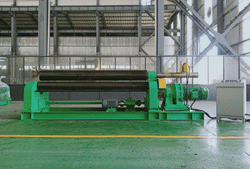
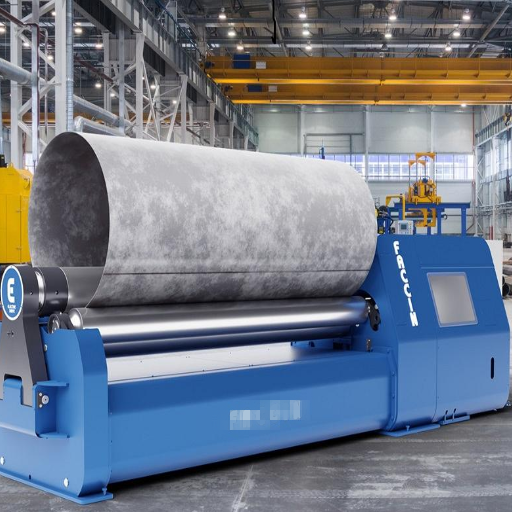
Plate rolls are specialized machines used in metalworking to form flat sheets of metal into cylindrical, dished, or similar complex shapes. The machines make use of a combination of rolling and bending techniques, usually through three or four rolls. The metal passes between the rollers, where pressure is applied gradually until the desired curvature or shape is obtained.
According to recent information, due to their versatility, efficiency, and precision, plate roll machinery has now become one of the indispensable machines for industries like shipbuilding, manufacturing, automotive, and construction. Modern plate roll machines come loaded with digital controls and automation features to an extent where the machines would enjoy even greater accuracy and operational flexibility. These advances allow them to deal with a general gamut of materials such as steel, aluminum, and alloys and thus be made available for different applications.
Importance of Plate Bending in Various Industries
Plate bending holds an essential position in many industries since it helps in the fabrication of strong, functional, and intricately shaped metal parts. Large, curved metal panels are required in the shipbuilding industry for constructing hulls that have to face enormous pressure and adverse marine conditions. Similarly, the automobile industry requires precisely bent plates for vehicle body panels that guarantee aerodynamic properties as well as structural integrity.
Plate bending specifically registers demand in renewable energy projects, particularly wind turbine manufacturing and support structures for solar panels. This shows that the process is adaptable to modern needs and assists greatly in the realization of green technology. Moreover, in the wake of automated plate rolling machines, industries can today take the production route for saving waste and expense, thereby establishing plate bending as an ever-pertinent face of global industrialism.
Key Terminology in Metal Plate Rolling
- Bend Radius:
The minimum radius to which a material can be bent without cracking and is, therefore, an important consideration in ensuring the quality and serviceability of the bent plate. - Pre-bending:
A step during plate rolling in which the edges of the metal are bent in advance to reduce flats and to ensure that the curvature is uniform across the entire plate. - Roller Calibration:
Aligning and adjusting the rollers to obtain true readings for the plate roll and ensure consistent results. - Springback:
The metal plate after bending action goes a little way in return and come to its original position. This factor of springback has to be given due consideration to fit for manufacture. - Plate Thickness:
An important measurement from which parameters such as force and type of rolling equipment required to bend the metal plate are usually derived.
Contemporary improvements in plate rolling, alongside the growing software-driven technologies, have thus optimized these very processes with regard to precision and minimizing material wastage. Recent data indicates an increase in interest over “smart” plate rolling systems that employ machine learning to forecast outcome, adjust processes in real time, reduce the cost of production further, and improve quality. This shows the enlarged presence of advanced plate rolling in sectors like aerospace, renewable energy, and infrastructure development.
Working Principles of Plate Rolling Machines
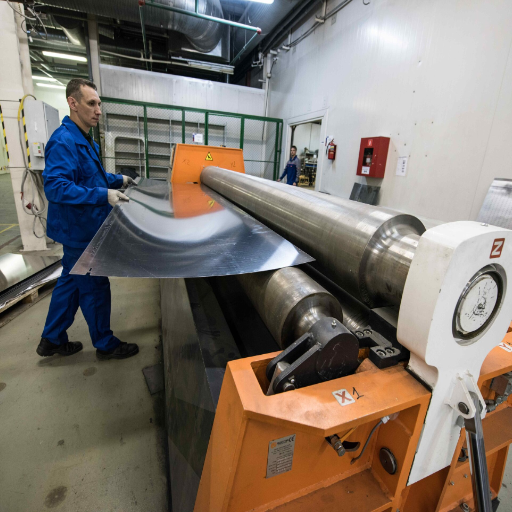
Mechanisms Behind the Plate Rolling Process
Plate rolling machines function on the principle of force application through rollers, which shapes and bends metal plates into the desired form. The alloys are either bent or shaped depending upon three or four roll configurations-the plate passes between them to get the required curvature. A tensile and compressive process is cause and effect to the final shape, such as cylinders, cones, and more complex profiles. Recently, this mechanism has been remedied by implementing intelligent systems operating on machine learning principles. From the recent search data, interest in such “smart” systems that optimize roller positioning and pressure settings in real time would now continue to gain traction. Innovations permit adjustments on the fly considering material properties and design parameters, thus providing precision, conserving energy, and limiting waste-all in all. This coalescence of traditional engineering principles with leading-edge technology provides a complete overhaul for plate rolling processes across industries.
Understanding Bending Forces in Metal Plate Rolling
The operating bending forces in metal plate rolling change the length of the sheet metal, so a bending force has to be properly designed. Influencing factors considered are yield strength of material, thickness, and diameter of the rollers used. In simple terms, in the application of bending forces, the force must have somewhat resisted from the deformation of the material; otherwise, it should basically not cross the elastic limit, provided crossing will either crack the material or plastically bend it out to damage.
“While manual machines had to be judged by the rate of production and rates of the workpiece itself, today we are more concerned with the quality and precision obtained in a certain amount of time.” – Brad Barnes, Modern Metals
This being the case, the technology in question must achieve control of the bending forces and provide for the instantaneous automatic adjustment of these forces to obtain real-time corrections and deviations from the process.
The advent of highly modern depictions of rolling methods allows for the defining of any error which might slant the process and becoming readily understood by the system, so that, in the absence of one, the process consequently corrects itself, in contrast with the manual trials in which such an error commonly ends finally with swinging from tolerances.
Saving time and ensuring product conformity to stringent industrial standards due to the understanding and control of bending forces in such technological fields finds application in manufacturing all sorts of products used in automotive, construction, and aerospace.
Rollers in Plate Bending Machines
Rollers represent one of the most important components of plate bending machinery, being intimately implicated in shaping and forming metal plates to definitive measurements. The working of these rollers includes the application of pressure and movement to the metal in a controlled manner to effect a desired change in curvature. With the help of the search engine data, it has revealed that recent rollers are made with the aid of new materials and coating technologies to increase their durability and precision. Furthermore, from the perspective of roller technology, these innovations now allow better deformation control so that bending is uniformly executed and the creation of surface and form defects are minimized.
The introduction of fully automated and motorized rollers has given more edge to the machine in handling harder and thicker materials. Variable roller patterns have now come into machine design: from three-roll set-ups to four-roll set configurations, with all sorts of possibilities in between for different bending patterns ranging from simple arc to more complex cylindrical bending. These changes prove the importance of a roller that takes flat plates and forms them into primary components needed for shipbuilding, energy, and likewise commercial uses.
Types of Plate Rolling Machines
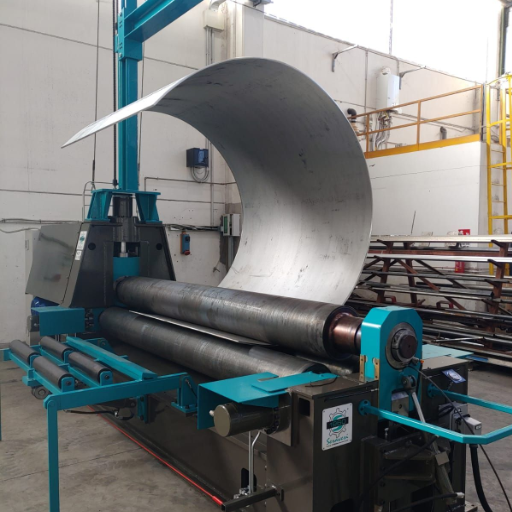
Introduction to Different Types of Plate Roll Machines
Plate roll machines, an indispensable set of metal fabrication tools, are designed to bend and shape metal plates into cylindrical or curved configurations. The tailor-made types of roll machines go with different industrial requirements and material specifications. The major types of plate roll machines are three-roll, four-roll, and variable geometry.
Three-Roll Machines
Known to be versatile and used in many industries, three-roll plate roll machines typically consist of two fixed rollers and one adjustable roller capable of performing pre-bending as well as rolling operations. They are designed for medium-thickness materials and are cheaper for general use.
Four-Roll Machines
Being provided with an added roller, four-roll plate rolls machines offer higher precision and efficiency. Their design also assures better control of plate alignment and allows for more complex bending operations on a job. They are also used in certain industries requiring very high accuracy, such as aerospace and energy.
Variable Geometry Machines
Variable geometry plate roll machines are specialized mechanical tools that are good in bending very thick or large-diameter plates. By adjusting the positioning of the bottom rollers, they can handle extreme loads into a state of minimum energy requirement. They are in use in heavy-duty jobs like shipbuilding or pressure vessel fabrication.
It is highly recommendable to understand what capabilities each type possesses before making a choice for the application. Building on this, the plate roll machines are being promoted with an emphasis on performance, energy saving, and accuracy to best suit the new industries.
Four-Roll Plate Bending Machine Features
The four-roll plate bending machine is an accurate, efficient, and handy metal-forming tool. It has four rolls, of which the top one is mainly employed as the pinching roll to hold the material while the two side rolls do all the bending work with absolute accuracy. Also, having the pre-bending feature is one advantage since it does away with flat edges by bringing the plate into a bend near its first edge, thus reducing material wastage.
With the very best for the user, these machines also come fully automated and with CNC integration for minute adjustments required in complicated work. They handle generally thin aluminum sheets and thick steel plates, which provide them with an ample capability to work in different industrial jobs. Safety improvements such as overload protection and roll alignment systems ensure working reliability. A sturdy design with the latest technology makes the four-roll type plate bender capable of fulfilling all requirements of modern metal fabrication and its supporting industries such as aerospace, construction, and automotive.
Comparative Analysis of Various Plate Rolling Machines
Over the Internet, through a search aggregation, the following was observed: The variable geometry plate rolls are trending for thicker and difficult materials. These machines consist of movable rolls that move dynamically to accommodate flexibilities, for example, in cases where heavy-duty applications are required for the production of wind turbines and large infrastructure. Hence, CNC plate rolling machines are increasingly used in industries because these machines roll plates with a high degree of precision, automatically perform many operations, thereby reducing labor cost, and, above all, ensuring consistent results every time.
In the final analysis, what one calls “best” in plate rolling machine depends on the requirements of a certain project: what kind of materials are used, production volume, and cost constraints. By knowing the peculiar characteristics and features of each machine-type, industries can ensure that their choices translate directly into performance and efficiency.
Applications of Plate Rolling Machines
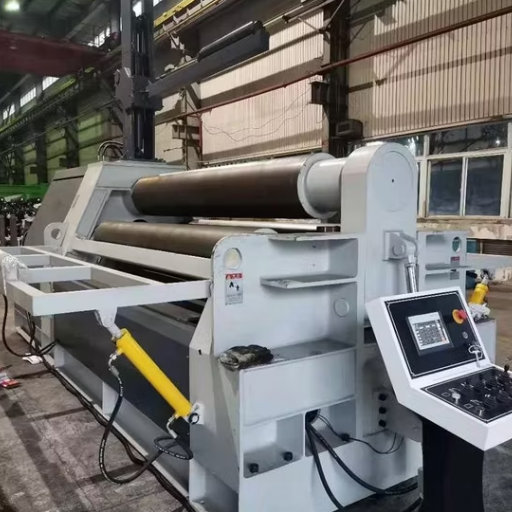
Industrial Uses in Construction and Manufacturing
Plate roll formers find their application in the construction and manufacturing sectors. They are utilized to curve metal sheets into cylindrical, conical, or any other curved form as part of the teams of activities that go into building a bridge, a storage tank, or a pipe line. They will roll it somewhat thin for further fabrication into pressure boiler components. Shipbuilders will use them to roll but thin materials suitable for ship-building requirements, and thin materials for aerospace are rolled using these machines as well. The very modern plate rolling machines are CNC controlled and provide the manufacturers with high accuracy and repeatability; hence, very little scrap is generated with high output.
Given the latest data from search engine queries, we observe an emphasis placed on the search queries related to “plate rolling machine applications” to render metal components for renewable systems such as wind turbine generators or solar panel frames. This therefore, shows the increased demand for plate rolling machines in sustainable development works or projects, further stressing the need for these machines in invoking industries in solving present modern-day challenges.
Plate Rolling for the Automotive Sector
The role of plate roll machines in the automotive sector is to equip the production of many critical components, including chassis, frames, and body panels. “Plate rolling machine uses in automotive production,” according to the latest data from the search engine, would reveal the significance of these machines in manufacturing lightweight and durable parts to improve vehicle performance and fuel efficiency. These machines allow metal sheets to be formed with precision; this is true, considering the increasing demand for vehicles designed with innovation and aerodynamics. This becomes important when the automotive industry focuses on electric and hybrid types of vehicles, keeping efficiency and conservation as their top priorities.
Aerospace and Energy Industry Applications
Metal forming machines have so much import in aerospace and energy; accuracy and reliability are essential. Such machines are used for manufacture of turbine blades, aircraft panels, and engine parts that need to fulfill stringent criteria for safety and performance. With metal forming technology, light aerospace materials can be processed into complex shapes, all-perfect for aluminum and titanium. On the other hand, this technology produces solid parts for wind turbines, power plants, and renewable energy systems, thus facilitating the coming of clean energy. The various capabilities and accuracies that the metal forming machines provide keep them relevant in these industries as they grow and mature.
Advantages of Using Plate Rolling Machines
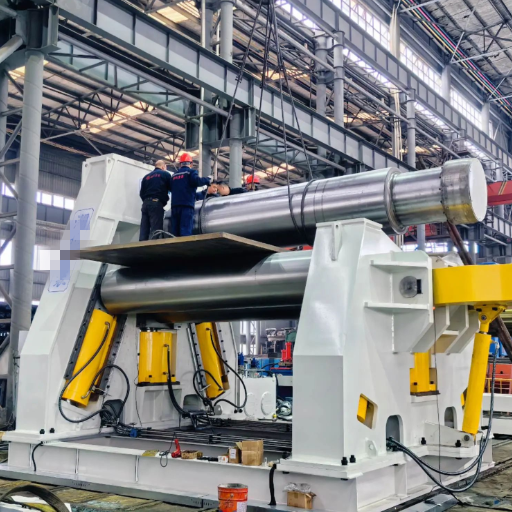
Improved Efficiency and Precision for Metal Forming
In plate rolling, achieving higher levels of efficiency and precision in metal working is of absolutely paramount importance. Using technologies such as CNC (computer numerical control), these machines allow the operators to obtain consistent and extremely precise results. Automation and fine control reduce errors due to human intervention, thus also reducing the time to produce and wasting materials. The maximum flexibility of the machine is demonstrated by being able to work with all possible thicknesses and sizes of materials to produce piping installations that range from industrial sizes to that of automobile components. So, with the integration of new technologies and continuous evolution in engineering, plate rolling machines set up the criteria for quality and performance in metal forming processes.
Versatility of Plate Bending Machines
The applications of bending machines are very versatile and are spread across the different industries such as construction, manufacturing, aerospace, and shipbuilding. Recent analysis has suggested that demand would build around the ability of these machines to handle metals of all varieties, including steel, aluminum, and copper, with precise dimensions and dimensions of consistency. Moreover, with CNC technology integrated into the machines, custom-made jobs could be passed through with almost no effort getting complex shapes such as cones and ellipses.
From the recent search trends shared, it is clear that plate bending machines deserve listings by industries that ensure the productive output while being energy efficient. Models with modern hydraulic systems and an eco-green nature-with automatic working features-are fast gaining in demand. The fact increases the acceptance of this modern plate bending machine as demanded by changing market needs and, thus, maintaining its relevance in production environments.
Key Advantages Summary
🎯 Precision
CNC control ensures consistent, accurate results
⚡ Efficiency
Automated processes reduce production time
🔄 Versatility
Handles multiple materials and thicknesses
♻️ Sustainability
Reduces waste through precise operations
Problems and Limitations of Plate Rolling Machines
In trying to satisfy the needs of modern industrial applications, plate rolling machines have gone through considerable reformation. Yet, they still have some problems and limitations. A major one is that mentioned by the search trends lately-the high upfront investment cost required to purchase advanced models with automated features or those considered eco-friendly. Smaller manufacturers often find themselves unable to justify the expenses, especially if the machine will see underutilization in a low-production setup.
The other conspicuous limitation is the operation complexity featured in traditional mechanical roll mills. Inexperienced and untrained operators may hardly cope to gain precision, thereby wasting materials and loss in production. The maintenance of the machine alone can become another headache, considering that intelligent, in-built hydraulic or electronic systems are usually expensive and time-consuming. Such make the operational challenge even bigger.
There arose also material limitations as certain plate rolling machines may not be fitted for extremely thick or high-strength materials without a bespoke configuration, limiting its use in more heavy-duty industries. Some, however, fail to detect that inconsistency in precision still exists in the rolling of plates of varying thickness despite the advancements.
Lastly, search data reflect a continuous concern with buyers linked to energy consumption of older or less-efficient models, marking the path to sustainability and energy efficiency in the future. Solving these would help keep the plate rolling machines from becoming impractical and unworthy of the name in manufacturing environments.
Frequently Asked Questions
📚 Reference Sources
ResearchGate – Design of Plate Rolling Machine Based on Trio Motion Controller
This paper discusses the principles and mechanical structure of plate rolling machines, providing insights into their design and operation.
Nature – Design and Development of High Precision Four Roll CNC Plate Rolling Machine
This study explores the design and development of a high-precision four-roll CNC plate rolling machine, focusing on its mechanical structure and applications.
Bendmak USA – Plate Rolling Machines: Understanding Your Options
This resource provides an overview of plate rolling machines, including their components, working principles, and applications.
Understanding Plate Rolling Technology
Plate rolling machines represent a cornerstone technology in modern manufacturing, offering precision, efficiency, and versatility across multiple industries. From automotive to aerospace, construction to renewable energy, these machines continue to evolve with advancing technology, smart systems, and sustainable practices, making them indispensable tools for shaping our industrial future.