



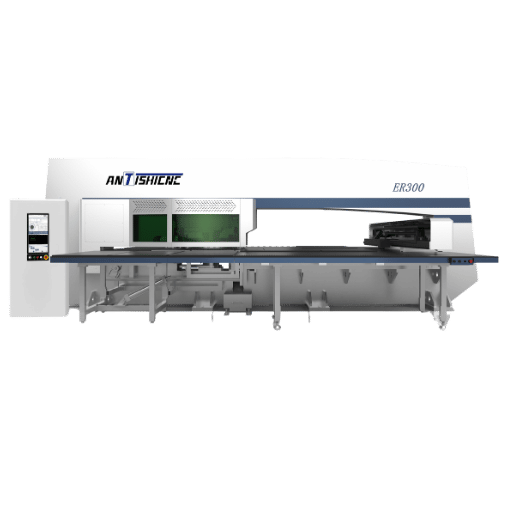
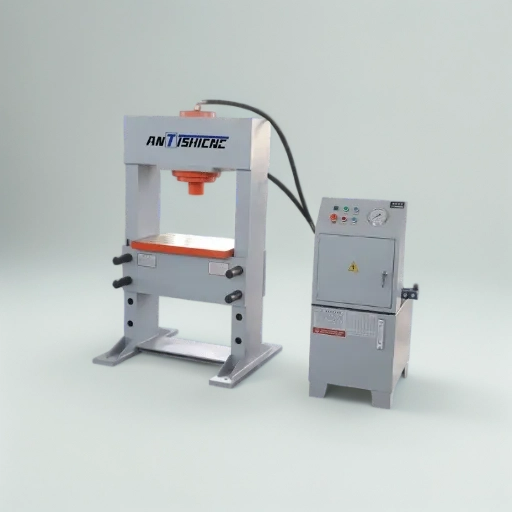


Machining titanium is mostly a fight against heat at the cutting edge. Even with a powerful CNC, a sharp carbide tool, and a clean program, tool life can collapse if surface speed, chip load, engagement, and fluid delivery are not treated as one system.
Quick Specs for Machining Titanium
| Main failure mode | Heat trapped near the cutting edge, then tool wear, galling, work hardening, or chatter. |
|---|---|
| Common alloy concern | Grade 5, also known as Ti-6Al-4V, because it is common in high-value parts and keeps strength at temperature. |
| Best first tool choice | Sharp carbide end mill, secure holder, enough flute space for titanium chips, and a coating matched to heat. |
| Machine priority | Rigidity, low-end torque, stable workholding, chip evacuation, and coolant aimed into the cut. |
| Safety watchpoint | Solid titanium stock is not the same risk as fine titanium dust. Dust, fines, and some chip conditions need separate fire controls. |
Challenges of Machining Titanium: Tool Wear, Heat, and Difficult-to-Machine Behavior

Titanium difficult to machine is not a mystery once you follow the heat path. Aluminum gives heat to the chip and machine structure more freely. Titanium keeps much of it close to the shear zone, so the cutting tool takes more thermal stress. In one 2024 open-access study on finish turning Ti-6Al-4V, low thermal conductivity, high chemical reactivity, high strength at elevated temperature, and work hardening are described as linked causes of rapid wear and surface damage.
How difficult is it to machine titanium?
It is difficult enough that a shop should treat the first pass as a controlled test, not a production promise. Hardness alone does not explain the problem. When the cutting edge is dull, it can rub, push heat generated during titanium machining back into the workpiece, and leave a hardened skin for the next pass. That is the common problem when machining titanium: the next cut starts worse than the last one.
Pure titanium can feel different from Grade 5 or other alloy families. Commercially pure titanium may cut with lower strength demands, while Ti-6Al-4V brings a tougher mix of vanadium, aluminium, heat, and adhesion. That is why the same mill, holder, and coolant setting can behave well on one grade and poorly on another.
The hardness of titanium is only part of the story. Grades of titanium include commercially pure titanium, Grade 5, and other aerospace or medical alloy choices. Titanium is also available in plate, bar, billet, casting, and near-net forms; titanium is available in more forms than one machine setup can cover well. That variety can make titanium planning look simple on paper, but titanium is extremely sensitive to rubbing, heat, and weak fixturing once the tool enters the cut. For examples of available product forms, review titanium bar, plate and tube from TiAlloy and specify the required grade and supplied condition before selecting the machining setup.
For CNC machining titanium, watch four early signals: the chip color changing from silver to straw or blue, a squeal that appears only at a corner, burr growth on an exit edge, and tool flank wear that arrives before the expected tool life. Any one of those can mean the machining process is rubbing more than cutting. Heat wins fast. Rubbing makes it worse.
Feeds and Speeds in the Titanium Machining Process: Machining Parameters for Milling Titanium
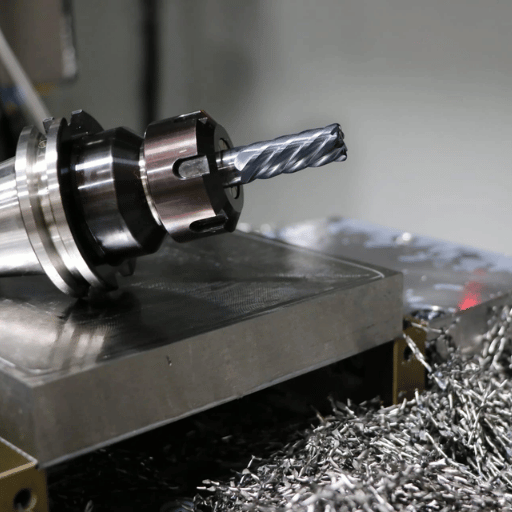
The safest way to set feeds and speeds is to stop treating cutting speed as the only lever. In this guide, the 4-Variable Titanium Heat Trap means surface speed, chip load, radial engagement, and coolant delivery working together. Change one. The other three may need to move.
Research from NIST on tool-chip interface temperature studied Ti-6Al-4V cutting speeds from 20 m/min to 100 m/min and found that temperature measurement changes with speed and chip location. That range is research context, not a blanket prescription for every cutter.
4-Variable Heat Trap Baseline Test
Run the first project as a baseline test, not as a throughput promise. For a coupon or scrap feature, document a 20 m/min starting trial, a 0.05 mm/tooth feed, a 0.25 mm radial step-over, a 6 mm axial cut, and a 10 mm wall or rib if the real part has thin geometry. If the VMC sheet lists 7.5 kW, 11 kW, or 18.5 kW spindle ratings, compare power at the actual rpm instead of quoting only the catalog peak. Log burr height at 0.1 mm, wall movement at 0.02 mm, and whether output remains stable for 1 hour before you quote a 20-piece pilot. Add a stop rule: if burr height grows past 0.2 mm, wall drift reaches 0.05 mm, or spindle-load trend rises more than 10% within 2 hours, pause before scaling the batch. These numbers are a controlled checklist, not universal machining parameters; confirm the final setup with the cutter maker and the material certificate.
| Variable | If It Is Too Aggressive | If It Is Too Light | Practical Check |
|---|---|---|---|
| Surface speed | High temperatures rise fast and the tool coating can fail early. | At that point, edge rubbing can appear, especially with a small chip. | Start low, listen for chatter, then inspect edge wear after a short path. |
| Chip load | Force spikes, deflection, and corner damage show up. | Rubbing can work harden the surface. | Look for consistent chips, not dust, powder, or torn flakes. |
| Radial engagement | More heat stays in the tool and workpiece. | Cycle time grows and chatter can appear in thin walls. | Use a stable toolpath and keep engagement predictable. |
| Coolant delivery | Poor aim can shock or miss the edge while flooding the table. | Heat stays at the edge and chips recut. | Aim flow at entry and chip exit, then inspect chip evacuation. |
For milling titanium, keep a record of each test cut: alloy, tool diameter, flute count, coating, stickout, radial width, axial depth, spindle speeds, feed rate, chip color, tool wear, and surface finish. Thirty seconds of notes can save a second broken end mill. Photos help too. A chip tray picture and a worn-edge picture often show more than a memory of how the cut sounded. Record it. Stop early.
These machining tips are basic, but they matter. Working with titanium rewards machining techniques that keep a real chip moving and punish any pass that lets the edge rub. Using high-pressure coolant can reduce heat when the machine, holder, and enclosure support it, while a stable toolpath can reduce heat generation even without changing the pump.
Machining Tips for Cutting Tools, Coatings, and Coolant for Titanium Alloy Workpieces
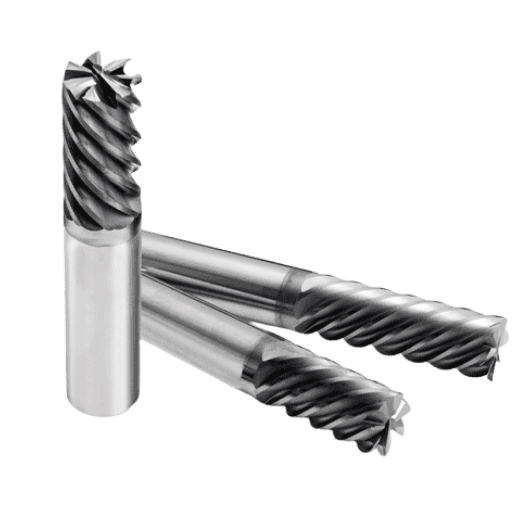
Choose the cutting tool after you know the part geometry. Deep pockets, thin ribs, interrupted edges, and drilled holes do not ask the tool for the same job. Titanium chips are springy and hot; flute space and edge strength matter as much as catalog hardness. Chips tell the story.
Carbide is the default starting point for many titanium machining jobs because it keeps a sharp edge under heat better than high-speed steel. High speed steel still appears in low-speed manual work or special cases, but it is rarely the first choice when tool life and repeatability matter on CNC equipment.
| Job Condition | Tool Direction | Coating / Edge Note | Fluid Note |
|---|---|---|---|
| Slotting | Use flute space and chip clearance before adding speed. | TiAlN, aluminum titanium nitride, or titanium aluminum nitride may help when heat is managed. | Push chips out of the slot before they recut. |
| Side milling | Lower engagement with steady chip thickness is safer than a heavy full-width cut. | Sharp tool geometry matters more than a worn premium grade. | Use high-pressure coolant when the machine and holder support it. |
| Drilling | Avoid dwell; clear chips before the margin rubs. | For drilling, a sharp point and polished flute can beat a general-purpose drill. | Through-tool delivery is valuable for deeper holes. |
| Finishing | Keep radial load light but not rubbing. | Use a fresh edge; finish passes punish a chipped corner. | Keep temperature steady to protect size and surface. |
Research on lubrication methods for titanium alloys describes MQL and cryogenic approaches as ways to reduce fluid volume or improve heat control in certain cuts. One review notes MQL below 1 L/h compared with flood systems above 100 L/h, and lists high-pressure cooling examples around 18.5 to 24 L/min. Treat those numbers as scale markers, not as setup instructions for every machine. A shop that cannot deliver fluid to the edge should not copy a high-pressure recipe from a paper, because the pump rating, nozzle position, holder path, enclosure control, and chip route decide what actually reaches the cut.
Allowing the titanium to dwell at the bottom of a slot, pause in a corner, or rub during spring passes is where many machining operations go wrong. If a tool begins to smear instead of shear, stop and reset the cut before trying to make titanium behave with more feed alone.
Machine Titanium on a VMC: CNC Machining Titanium Checklist
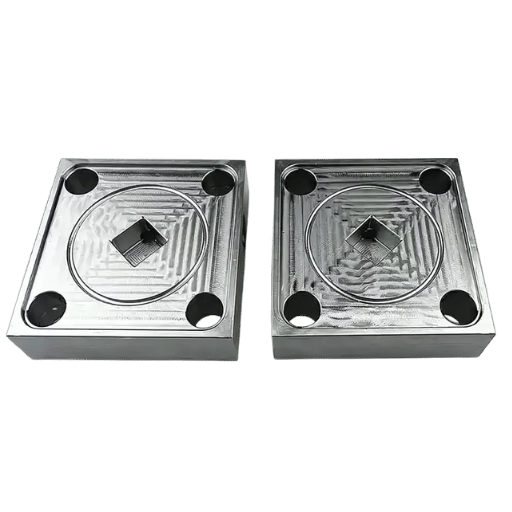
To machine titanium on a VMC, start with the machine structure. On the live ANTISHICNC metal milling machine page, titanium appears among compatible materials for the milling-machine line, but compatibility is only the first filter. Buyers still have to match the part to machine mass, spindle taper, axis travel, torque, tool capacity, and fixture space. Rigidity comes first.
For production CNC machining, review the VMC category first. For repeatable pocketing, drilling, and face work in one setup, a vertical machining center such as the VMC1050 can make sense. Manual or lower-volume jobs may fit a universal milling machine when the workpiece is simpler and the shop accepts lower automation.
What do you need to machine titanium?
- Machine frame and spindle connection rigid enough to avoid amplifying tool deflection.
- Enough low-speed torque to run lower cutting speeds without stalling the cut.
- Holder, vise, fixture, and workpiece stack arranged to keep stickout short.
- Coolant nozzles or through-tool delivery aimed where the chip leaves.
- Inspection plan for burrs, taper, thin walls, and hole size.
If the part has large bores or heavy box geometry, compare a boring and milling machine. If the titanium job is mostly hole preparation, a radial drilling machine may support secondary work. If the geometry is round, a CNC lathe machine may be the better first machine, with milling reserved for flats, slots, and cross holes.
Titanium vs Other Machining Operations: Milling, Turning, EDM, and Waterjet
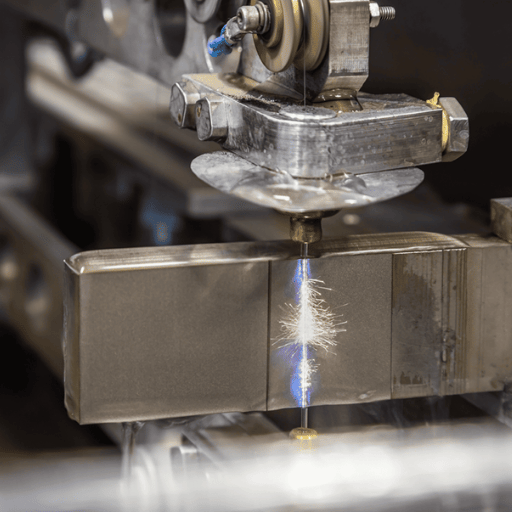
Titanium can be machined several ways. Process choice depends on geometry, tolerance, heat input, edge condition, and batch size. Milling is flexible, but it is not always the lowest-risk first step.
| Process | Best Fit | Heat / Edge Risk | Machine Link |
|---|---|---|---|
| CNC milling | Pockets, slots, faces, bolt patterns, 3-axis and 4-axis work. | Tool heat, chatter, burrs, recut chips. | VMC line |
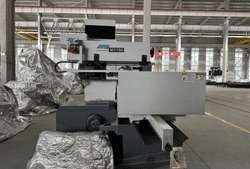
| Manual milling | Repair, simple one-off features, low-volume fitting. | Feed inconsistency can rub the edge. | vertical turret mill |
| Turning | Round parts, shafts, spacers, bushings. | Notch wear and heat at shoulder transitions. | turning lathes |
| Boring | Large holes, housings, box parts. | Long bars can chatter if support is weak. | CNC milling boring machine guide |
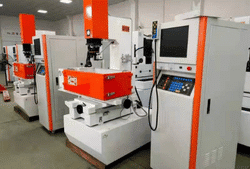
| EDM drilling | Small holes, hard-to-drill features, broken-tool recovery. | Recast layer may need review for medical or aerospace specs. | EDM drilling machine |
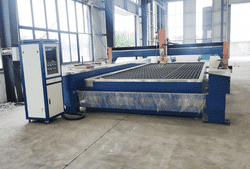
| Waterjet | Plate blanks, near-net profiles, heat-sensitive edges. | Taper and abrasive marks may need finish milling. | CNC waterjet cutting machine |
| Sawing | Bar and plate preparation before CNC work. | Work hardening at the cut face can affect the next op. | Prep process |
| Grinding | Fine finish, flatness, final stock cleanup. | Heat tint or burn risk must be controlled. | Finish process |
| Plasma | Rough separation when edge quality is secondary. | High heat-affected zone compared with cold cutting routes. | Only when downstream cleanup is acceptable. |
If the buyer is still choosing equipment, read horizontal vs vertical milling machines, the universal horizontal milling machine guide, and the slot milling guide before locking a titanium process route.
Fire Risk, Titanium Chips, and Inspection Checks
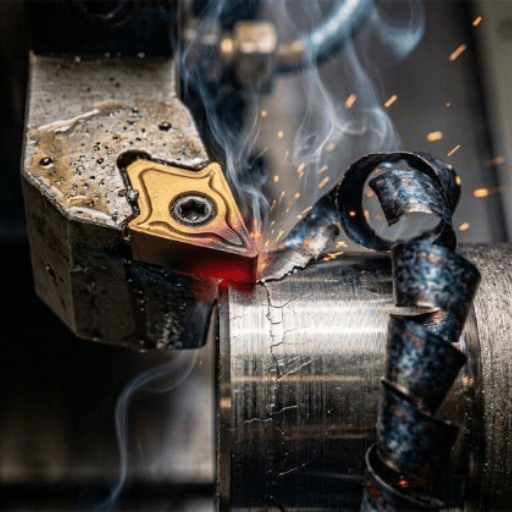
What are the risks of machining titanium? Put them in four boxes: worker safety, chip and dust control, tool failure, and part-quality drift. Fire risk is often overstated for solid stock and understated for fine dust. OSHA’s combustible dust overview says combustible material can burn rapidly when finely divided, and dust suspended in air at the right concentration can explode. OSHA also cites a 2010 titanium dust explosion in West Virginia that killed three workers. Dust is different.
The Chemical Safety Board keeps a combustible dust hazard investigation resource for dust explosions across industrial settings, while OSHA frames combustible dust as a fire and explosion hazard that needs prevention work before an incident. Treat fine titanium dust as a separate hazard review, not a normal chip-handling detail.
Engineering Note: Do not copy a dust plan from steel or aluminum work. Review chip size, dust collector design, housekeeping, extinguisher class, coolant condition, and local rules. OSHA and CSB materials are starting points for the safety review; the final plan still belongs with the shop’s qualified safety lead.
Inspection should start earlier than the final CMM check. Use a loupe on the cutting edge, track burr growth, and inspect high-contact walls before the job reaches full batch size. If the part has thin ribs, measure them warm and after temperature stabilizes. If a hole is drilled after heavy milling, check whether previous passes hardened the entry surface. Inspect early.
For face operations and flatness planning, the face milling guide can help with cutter-path thinking. If the job involves small equipment selection, compare the mini milling machine discussion against the rigidity demands of titanium before buying too light.
Make Titanium Parts for Aerospace and Medical Work
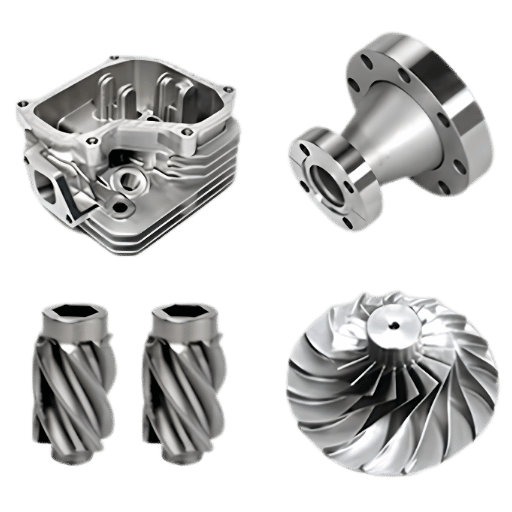
Aerospace and medical applications keep demand for titanium capability steady because the material solves problems that many metals do not. In 2019, a lubrication review noted that titanium alloys are attractive in aeronautical and aerospace industries because of mechanical properties and light weight, and a 2024 tool-wear paper pointed to broad use in automotive, aerospace, and medicine.
That does not mean every shop should buy a machine only for titanium. It means machine buyers who already quote aerospace brackets, medical fixtures, corrosion-resistant hardware, or lightweight motion parts should ask whether their next mill can handle titanium cutting without turning every job into a tooling experiment. No forecast is needed.
For ANTISHICNC readers, the practical path is simple: define the hardest titanium part you expect to make in the next 12 months, then choose the machine around that part. Light features may fit a general-purpose mill. Repeatable production may need a heavier VMC. Large housings may push the buyer toward boring/milling equipment. Let the equipment choice follow the part, not the other way around.
FAQ: Machining Titanium
How difficult is it to machine titanium?
Harder than many steels or aluminum. Heat stays near the edge, the material can work harden, and tool wear can rise fast.
What do you need to machine titanium?
You need a rigid machine, secure workholding, a sharp tool, a controlled feed rate, chip evacuation, and fluid aimed at the cutting zone. If the part is production work, a VMC with enough torque, travel, and coolant control is usually easier to manage than a light manual mill. The holder and fixture matter too; long stickout can turn a good machine into a noisy one.
What are the risks of machining titanium?
Main risks include fast tool wear, chatter, work hardening, burrs, dimensional movement, and chip or dust hazards. Solid titanium stock is not the same as fine titanium dust.
What coolant is best for titanium machining?
There is no single answer. Flood systems, high-pressure coolant, MQL, and cryogenic methods all appear in titanium research and shop practice. For most buyers, the first question is whether the chosen machine can deliver fluid to the edge and remove chips from the cut. A weak nozzle that wets the enclosure but misses the tool is not heat control. Deep holes may need through-tool delivery, while open side milling may only need well-aimed flow and chip clearance.
What end mill coating works for titanium alloy?
TiAlN, also called titanium aluminum nitride, is common when heat is controlled. Coating alone will not save a poor setup.
Can a standard milling machine cut titanium?
Yes, a standard milling machine can cut titanium in some light or simple work, but spindle power is only one filter. Check rigidity, torque at lower speed, tool holding, fluid aim, and whether the operator can feed steadily without rubbing. For production, compare a VMC before accepting slow manual cuts as the long-term plan.
Is titanium harder to machine than stainless steel?
Often, yes, but the answer depends on the exact alloy and operation. Titanium’s low thermal conductivity and reactivity can punish a cutting edge even when its measured hardness does not look extreme. Stainless steel brings its own problems, including work hardening and built-up edge, yet titanium tends to be less forgiving when heat control is weak. A shop moving from stainless to Grade 5 should not reuse the same speed, chip load, and inspection plan without a test cut. Start with lower heat input, keep a real chip, and stop early to inspect the edge.
Next Step for Machine Buyers
If titanium is part of your job mix, start with the part drawing and the worst feature: deepest pocket, longest slot, smallest hole, thinnest wall, or tightest finish requirement. Then match that feature to the machine, not just to the catalog power rating.
Review ANTISHICNC metal milling machines, compare the VMC models, and contact the team with the material grade, drawing, expected batch size, and target tolerance. That gives the application team enough context to discuss machine style, spindle choice, and workholding direction without guessing.
References and Sources
- 2024 PMC article on Ti-6Al-4V tool wear under MQL conditions.
- 2019 PMC overview of lubrication methods for titanium alloy machining.
- NIST publication on tool-chip interface temperature while machining Ti-6Al-4V.
- OSHA combustible dust overview.
- Chemical Safety Board combustible dust hazard investigation resource.